12 minutes ago
The EP report: Kosovo visa liberalisation soon completes
Periskopi(4 years ago)
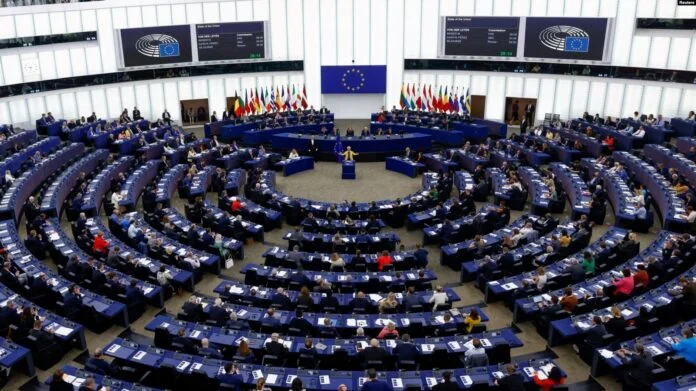
(4 years ago)The European Parliament (PE) is expected to demand that continued membership talks between Serbia and the European Union (BE) be conditioned with the deployment of sanctions from Belgrade to Russia. This requirement is part of a draft report for the EU enlargement strategy prepared by Tonino Picula, the Social Democrat MP from Croatia, who is reporting [...]
This requirement is part of a draft report for the EU enlargement strategy prepared by Tonino Picalla, the Social Democrat MP from Croatia, who is reporting The EP's for this strategy.
The proposal also said that “should become a priority for the countries to adjust from the enlargement process to the common EU foreign and security policy and continue membership negotiations with Serbia, only if this country joins EU sanctions on Russia”.
Serbia has voted several UN resolutions condemning Ukraine's Russian invasion, but has so far not joined the European bloc's sanctions on Moscow.
Even earlier. The EP has asked Serbia to impose Moscow sanctions. But, in this draft report for the first time, the dedication of membership talks is cited with the establishment of punitive measures against Russia.
Serbia, along with Turkey, is the only states that are part of the enlargement process, which so far has not supported Western sanctions against Russia due to the invasion of Ukraine.
In recent days, disappointment has been voiced in several EU counties with Serbia's behaviour after Belgrade last week signed a foreign policy consultation agreement with the Russian Federation.
Even the United States expressed concern about this agreement, as US Ambassador to Belgrade Christopher Hill said that by the time the invasion of Ukraine is continuing, no one would need “to sign something with Russia”.
But, Serbia has said such an agreement, the Serbian Foreign Ministry has signed with Russia since 1996, every two years.
The EP draft report, which will be debated in October at the Foreign Policy Commission, requires that visa liberalisation for Kosovo be completed as soon as possible.
But in October, the European Council has decided on the issue of visa liberalisation for Kosovo.
According to the document, it is required that the EU engage more with the Kosovo and Serbian authorities that through dialogue mediated by the bloc, states reach a comprehensive, legally binding agreement on normalisation of reports.
It also highlights support for the European aspirations of Western Balkan countries, but also for Ukraine, Moldova, and Georgia.
Through the document prepared by the EP, it also calls for “to speed up the integration process of those countries proving strategic orientation and steadfast devotion to European reforms, consolidation of democracy and harmonisation with EU foreign policy”.
The EP wants to be rewarded for the progress of candidate states that have harmonised their policies with those of the EU and to sanction any relations.
“Must ensure that temporary integration steps do not replace it, but help the final goal that should be full membership in the EU”, the draft report said.
The document drafted by rapporteur Picalla requires that the membership negotiations process between the EU and Turkey be suspended in line with the negotiating framework, until Ankara again engages with Brussels and proves clear progress in reforms. But, the European Parliament requires that with Turkey there be “essential partnerships in the areas of common interest”.
The enlargement strategy, according to the EP, should also propose a “special partnership with those states that are not intended to join the European bloc or meet the criteria for membership.
The EP also reiterates that the enlargement process should be a process where each state is assessed on the basis of individual merits in which constitutional policy remains in force. This condition should focus especially on respecting the principles of democracy, the independence of the judiciary, the fight against corruption and organised crime, respecting fundamental human rights and media freedom.
Of the six Western Balkan states, only Serbia and Montenegro are more advanced in the membership process. These two states have opened several chapters in the process of membership negotiations. Northern Macedonia and Albania have opened the negotiation process this year, while Kosovo and Bosnia and Herzegovina remain last in the region on their way to the EU, as neither has yet to receive candidate status. / REL