7 hours ago
Sky News: Europe is seeing a new crisis in the Balkans, this country in conflict shooting
Periskopi(4 years ago)
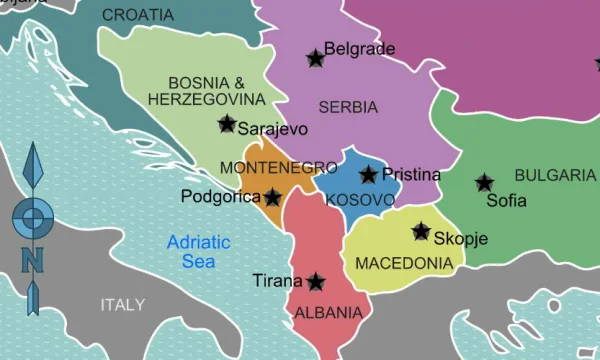
(4 years ago)In the Balkans, Europe is looking at how a crisis is developing slowly. So writes SkyNews, while adding that it is a known problem in a familiar country, but now with the added prospect of Russian intervention. Thirty years after her terrible war, Bosnia has been caught in a complex, unstable dispute involving [...]
Thirty years after her terrible war, Bosnia has been caught in a complex, unstable dispute involving ethnic divisions, religious rivalry, denial of genocide, terrible memories, and the disturbing suspicion that Moscow is promoting things.
It is a land formed by centuries of ethnic and religious divisions and still struggles to face its own broken identity. But it is modern history that is so vulnerable, the various wounds left behind by three and a half years of brutal war in the 1990s. There were 100,000 deaths in a country of only four million people.
Bosnia's biggest problems are ongoing trauma, dangerous tensions that still divide this country, and feelings that it can turn to the path of catastrophic war. That nothing has ever changed.
To understand how many of those divisions are, we leave Sarajevo and drive for a few hours. Shortly before you reach the border with Serbia, find the town of Srebrenica. It was here that more than 8,000 Muslim men and boys were killed by Bosnian Serbs in July 1995.
An act of almost unfathomable brutality, led by Ratko Mladic. He assured the natives that they would be safe and then ordered a shocking wave of violence that began scandalously, in the eyes of United Nations troops.
The fear of many people in Western Europe is that Russia is looking for new countries to push attention away from what is happening in Ukraine and extend European unity, and that Bosnia, with its divisions and instability, may seem to be the perfect candidate. Throughout history, the Balkans have often been the location of violence.
So can it happen again? Can Bosnia really turn into conflict and division? The answer, disturbing, is a “maybe” cautiously, says Sky.