24 minutes ago
Kurti: KS plates do not return, reciprocity for documents
Periskopi(4 years ago)
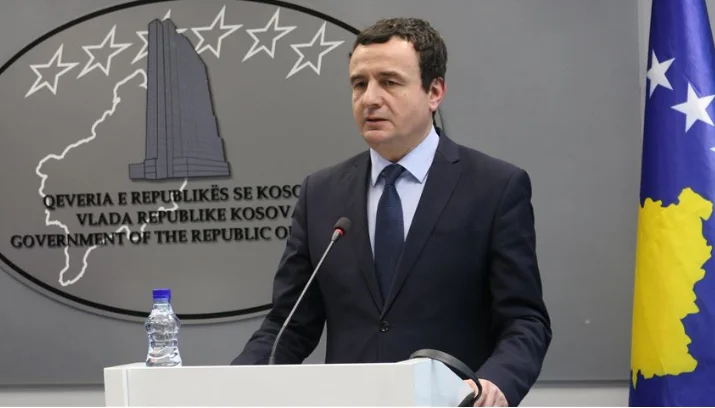
(4 years ago)Kosovo authorities will not accept the return of KS license plates to cars within Kosovo's territory, as well as implement reciprocal measures for citizens of Serbia regarding the entry/exit document. So stated Prime Minister Albin Kurti during the Kosovo Government meeting. In the statement concerning the August 18th meeting [...]
So stated Prime Minister Albin Kurti during the Kosovo Government meeting.
In its statement concerning the August 18th meeting with Serbian President Aleksandar Vuciq, in Brussels, Kurti voiced conviction that the Serb side, “unnecessary and completely artificially” is outlining both rhetoric and actions in the security field.
Serbia affects Kosovo national security
Kurti said that citizens, who back “the legitimate decisions of the Republic of Kosovo, are constantly being threatened”.
“As such, it represents direct violation, both of national security and of the region as a whole. I think these threats are intended to unjustly create supremacy in negotiations, threatening the European Union, but also the United States of America or the United Kingdom, with tensions in the future”, Kurti stressed.
Threats with the eventual removal of Serb minority citizens from Kosovo institutions, according to Kurti, constitute “domination of criminals' torture like Milan Radoiciqi, rather than those who see integration as the primary option”.
“I strongly believe that representatives of Serbian citizens would at least have to represent and push ahead the Narratia of individuals who have promoted and continue to promote organised crime, and have reached the US blacklist”, Kurti said.
He called the statements lies that the Serbian side has shown constructive at the meeting the leaders of the two countries had on August 18th in Brussels.
In the statement he issued at the beginning of the Kosovo Government meeting, Kurti said that at the last meeting under the Kosovo-Serbia dialogue, the crisis management in the country's north, implementation of decisions on entry and exit documents for Serbian citizens and re-registering temporary license plates issued by Serbia, respectively.
“in Brussels, we have had no constructive engagement or concrete proposals from the Serbian side”, Kurti said, adding that four concrete proposals related to the issue were provided by Miroslav Lajcak, the European Union's special representative in the Pristina dialogue, Belgrade.
“We were open for discussions in this direction, but the other side was out of the building”, Kurti said.
Kurti reiterated that for Kosovo the most accepted option would be the complete elimination of both countries' demand for additional entry/result documents for citizens of both states.
While there will be a side, there should be a further”, he said.
As far as car reregistering is concerned, Kurti said that KS plates can no longer return to circulation, as Serbia requires those cars that have Serbia's license plates with city acronyms in Kosovo.
Meanwhile, regarding the reason why it was not promoted after the meeting on August 18th, Kurti said it has been an internal agreement for “mosaarim” of the situation.
Not everyone has adhered to this” statement, Kurti said.
“Discut for general agreement, not crisis management with small steps”
According to Kurti, at the Brussels meeting, according to the agenda agreed earlier, it has been the first to discuss the framework of a final agreement with Serbia, as well as current issues.
For the first point, Kurti said they have submitted proposals with six chapters for the way the Kosovo side thinks the general agreement on normalisation of agreements should appear.
At these points, according to Kurti, mutual recognition agreement is required, confrontation with the past, further co-operation between the two states, dealing with relevant ethnic minorities in two countries, etc.
He has also cited the chapter where the reconsideration of the resulting agreements reached between Kosovo and Serbia is envisioned.
According to him, this does not mean renegotiation of them, but to see which of these agreements have already passed “and which should continue to be implemented”.
Kurti has said that there have been concrete topics on the table for discussion during August 18th concerning those who disappeared violently during the war in Kosovo, for which he said there was no readiness from the Serbian side.
Kurti has reaffirmed that he was interested in guiding the discussion to the general agreement because this “was the meeting between leaders”.
Miroslav Lajcak, as well as US special envoy for the Western Balkans Gabriel Escobar, have planned meetings with political leaders in Kosovo and Serbia on 23 August and 25 August.
The purpose of these meetings is to discuss reaching a possible agreement between Kosovo and Serbia before September 1st.
On this date, it is scheduled to begin implementing the Kosovo Government's decisions on reregistering Serbian vehicles with Serbian license plates at the RKS Republic of Kosovo ʹ and issuing the opening documents to Serbian citizens.
Kosovo authorities have called these legal decisions and reciprocal measures towards Serbia, as well as have made efforts to implement them as of August 1st.
As a sign of dissatisfaction with these decisions, some Serbs in the northern part have set up barricades on roads towards Kosovo-Serbia border points. As a result, the Kosovo government has decided to postpone implementing its decisions for 30 days.
On August 18th, Kosovo Prime Minister Albin Kurti, and Serbia's president, Aleksandar Vuciq, have met at the headquarters of the European Union, but have not reached agreement.
The Serbian side has insisted that citizens from the north of Kosovo be excluded from the decision on new documents and that their vehicles re-register in neutral letters to Kosovo's status, not the KKS.
Kosovo has rejected Belgrade's offer, saying it will continue to seek compromise solutions.
US Ambassador to Belgrade Christopher Hill, on 23 August, has called the Serbian side prepared for its presentation in the last round of Kosovo-Serbia dialogue. Meanwhile, the other parties, as he said, were not prepared to talk about specifics”.