20 minutes ago
Joseph: The “Open Balkan” initiative undermines the Berlin Process, will reinforce Serbian nationalism of Vuciqi
Periskopi(4 years ago)
(4 years ago)Serbia will always benefit more than others. This is another fundamental error of “Open Balkans”. Its supporters speak as if all the region's economies have the same size and features. They are not the same. For example, Serbia's economy is about 14 times larger than that of the mountain [...]
Serbia will always benefit more than others. This is another fundamental error of “Open Balkans”. Its supporters speak as if all the region's economies have the same size and features. They are not the same. For example, Serbia's economy is about 14 times larger than that of Montenegro”, Edward Joseph has indicated.
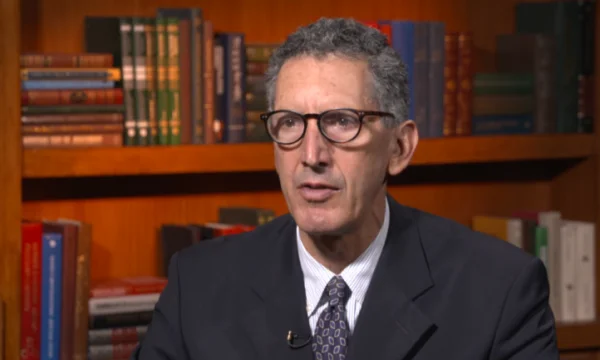
Experts Edward P. Joseph in an interview for Deutsch Welle has stated that the “Open Balkan” initiative undermines the Berlin Process. Joseph says that “Open Balkan” is not just a distraction from the fundamental problems of the region, but is a risk that, according to him, could lead to the worsening of these political problems.
Total interview:
Mr. Joseph, you have a long work experience in Western Balkan countries. How do you view the “Open Balkan” initiative?
Your question comes at the right time. Members of the US Senate have just introduced legislation for the Balkans, which includes the proposal for “assessment of regional co-operative initiatives such as “Open Balkan” and “The Joint Regional Trade of the Western Balkans”. The risks of “Open Balkan” are not well understood, even though they are clear to many people in the Balkans. Yes, I have served for about 12 years in the region, including years of war in all countries of conflict. Like many others in the region, I see dynamics and developments, especially in the disinclination of the nationalism of “Greater Serbia”, advanced by President Aleksandar Vucic and his envoys, under the Serbian flag “Bota”. The “Open Balkan” (or “Open Balkans”) initiative is not just a distraction from the fundamental problems of the region, which are political, but is in fact a risk that can lead to the deterioration of these political problems. The problems of “Open Balkans)” can be summed up in this form: “theor of doubt, naive structure and dangerous consequences”.
It's starting with the alleged theory of “Open Balkan”: “Tradia is equal to trust”. That's how I describe it. Unfortunately, this theory conflicts with reality. As long as you see intense Russian aggression against Ukraine. By February 24th, Russia and Ukraine had a huge trade co-operation, worth nearly $10 billion in exports and exports. As we speak, China is conducting aggressive military maneuvers against Taiwan, a country that exports goods worth about $273 billion to China, including half-witted electricity. China is Taiwan's No.1 trading partner, dominate 1/3 of the local economy.
According to “Open Balkanés)”, all these countries should be at peace. Rather, they are either at war or in steps toward war. Supporters of “Open Balkans” should be asked to provide an explanation about this logic.
Instead of the concept <x0gtia is equal to trust” I offer a completely different conclusion: the influence of trade depends on the characteristics of a regime, whether it is democratic or autocratic/authorial regime. If trade is done among Western-oriented democracies, then yes, there are political benefits.
But if autocracy, especially those like Russia, China and yes, like Serbia, under the leadership of Aleksandar Vucic, who have territorial and political ambitions and destabilise their neighbours leading trade, then there is growing distrust, and no trust. Serbia is Montenegro's No.1 partner, for imports and exports. You believe that? There is widespread distrust of “Open Balkans)”, especially among those endangered by Serbian aggression. I can tell you that after visiting five countries in the region, officials of a state that is part of the initiative clearly accept the fact that Vucic is building an aggressive and anti-democratic power.
Supporters of “Open Balkanés)” must face and consider the fact that everywhere there is opposition and distrust for this initiative. As far as “ionages” supposedly showing broad support for the initiative, it is sufficient to check the way questions are formulated under which “Open BalkanPros)” is just a positive initiative. There is no way to express discontent or any alternative.
In your view, is this initiative structured or a “ide in the air”?
I don't want to define this initiative in any form, because I don't want to suggest that the creators or supporters of the Balkans are themselves “in the air”. The point is that the initiative itself despite motives or goals is very problematic.
Part of this initiative, so far, is Albania, Serbia and Northern Macedonia. The states of Montenegro, Kosovo and Bosnia and Herzegovina have refused to be part of it. Do you consider this a non-involved project?
I have expressed it earlier why Northern Macedonia and Albania accept “Open Balkan”: because they are not threatened directly by Serbian nationalist ambitions, spread by Vucic. Serbian “Bota” has nothing to do with Albania or Northern Macedonia. In an extravagant way, Vucic tells Macedonians that he does not challenge their language (as Bulgarians do), but Vucic supports efforts that undermine Montenegro's identity. It is clear as crystal: Serbian nationalism is a threat to Montenegrins, not to Macedonians, even though the latter understand very well how “Open Balkanė S)” will reinforce Vuci's Serbian nationalism.
In an interview given a few days ago, Montenegro's President, Milo Djukanovic, said the “Open Balkan” initiative would end with the desolating of Montenegro, Kosovo, Northern Macedonia and Bosnia and Herzegovina. How did you comment on this statement?
I find it significant for a major reason: confirms the reality that backers of the “Open Balkan” ignore: strong controversy. It does not matter what you think about Djukanovic or Albin Kurti, or about Bosniak or Croat leaders sharing similar concerns.
More importantly, there is a strong commitment to a initiative its supporters say has to do with job creation and the strengthening of the economy”. Its supporters need to ask themselves a question: Why are so many objections to our kind, kind initiative? Why do they oppose him? The answer would be: If there is so much controversy, the initiative cannot be completely kind. These concerns must be legitimate. Supporters should listen to the controversy of skeptics in the region, rather than pushing them to accept this initiative.
The heads of state that are part of the initiative consider the Balkan Open as an initiative that will benefit their countries and citizens. If we talk in economic terms but in politics, which country benefits most?
Serbia will always benefit more than others. This is another basic error of “Open Balkans”. Its supporters speak as if all the region's economies have the same size and features. They are not the same. For example, Serbia's economy is about 14 times larger than Montenegro's. Serbia's economy is about twice as big as the economies of Albania and North Macedonia combined. Serbia will benefit more than its neighbours, and will be able to produce high-value export goods, thus becoming even more dominant. This economic power translates into political power. See Germany in the European Union and you'll understand. Recall that Germany's neighbors, such as France, were concerned about German economic power even after the end of World War II. France and other European states did not want Germany access to coal and other resources.
France rejected an initiative with Germany, until it was made sure that trade relations would be developed under an equal and inclusive umbrella. That structure was the basis of the European Union that we know today. Germany consolidated the democracy that we know and respect today. A war between France and Germany would be unthinkable in our day.
But violence, even war, is not unthinkable between Serbia or its supporters, and other Balkan countries. To give more power to an autocratic state like Serbia under Vucic's leadership is irresponsible. It would be different if Serbia were a committed democracy, embracing Western order. Which is logical, is following an economic co-operation model under a broader umbrella. In this case, an umbrella that insists on mutual respect, inclusion, EU values and a comprehensive monitoring state like Germany.
From your point of view, do you undermine “Open Balkan” Berlin Process initiative?
Of course you do! “Open Balkans” is a competitive initiative of several other initiatives in the region, including the Berlin Process “”, CEFTA, and the Regional Co-operation Council, which helps coordinate and promote concrete steps. There have been achievements, like the Rwaming deal.
The United States can offer their energy and enthusiasm for economic co-operation within the Berlin “Process”, for example. The U.S. could cattalyze progress within a structure that requires mutual respect and does not allow kindness and division. And this is in the same line as the successful concept that led to the creation of the EU.
Are the U.S. supporters of this initiative, and if so, in what form?
The US is strongly supporting “Open Balkans” in visible ways, including the event in Ohrid, and in various diplomatic efforts. I know that regional officials have shared their concerns with American officials, including serious concerns about threatened security, giving Serbia under Aleksandar Vucic more economic power, and viewing Vucic as a Vucic as a apartman, when he openly rejects sanctions imposed against Russia by the US and the EU.
True, there are major economic benefits to advance a Common Regional Trade, facilitating obstacles. But these benefits can be taken from other and more reasonable initiatives than “Open Balkans”. At the same time, where there are doubts about the purpose of the neighbors, there will be hesitations to embrace this initiative. A region official expressed concern about the weapons entering his country from Serbia, due to political tensions.
This is another detail that backers of “Open Balkans” forget: if there may be more conflicts as a result of the escalating tensions that this initiative fosters, then the region's economic perspective and citizens will continue to abandon their countries. Very few are spoken by “Open Balkans” about fighting corruption. One claimed foreign investors would seek rule of law and anti-corruption controls. Clearly, this is not true by seeing the amount of foreign investment in Serbia, and the lack of demand for rule of law.
I asked a region experience businessman about this subject and explained that most businesses insist on resolving disputes, for example, violating contracts outside the Serbian legal system, in international arbitration. So there seems to be foreign investment in a corrupt system.
Scepticism about this initiative also relates to claims that it “may have been inspired” by Russian influence. What is your opinion on the matter?
What's significant about the Russian positioning of Balkans is support. Lavrov openly expressed Russia's support for this initiative. “Sputnik Serbia” has published many articles with very supportive titles to Balkans Open. Russia well understands the effects of this scheme on Belgrade and Vucic outside the European Union's system of values.
How do you see the future of “Open Balkans”?
This depends on the wisdom of the leaders of the region, the US and the EU. If they realize that the region's challenges have a political nature, even economic problems they will not support a regime that burdens political problems. It is important to take the experts' opinion, such as the European Bank for Reconstruction and Development (BERZH). In analyzing Bosnia's political situation, B ERZH highlights political problems, the obstacle created by the Dayton Agreement.
In fact, Bosnia and Herzegovina enjoys “4 freedoms” promoted by the Open Balkans. For more than two decades, there has been freedom in the movement of people, goods, services and capital. A Bosniak in Sarajevo could open a business in Banja Luka and a Serb vice versa. The same with Croats.
The same “magic performances” around “Open Balkans” were raised also about trade with Bosnia and Herzegovina: “as soon as they do business, they will focus on gaining money and will forget every split”. On the contrary, as the EBRD notes, there is a serious economic obstacle as a consequence of the Dayton Agreement, which relies on the country's ethnic-territorial division and complicated political rights. This requires a serious political strategy, not only for Bosnia and Herzegovina, but for the entire region. We proposed this in January, in the SAIS-Yoodro Wilson report, called “From the crisis, to convergence: How to treat the source of Balkan instability”.
Is Russian influence in the Balkans a serious threat, in the context of the Russian occupation of Ukraine?
Russia's influence, China's influence but also Hungary's influence are serious threats. All the effects of anti-democratic regimes are negative factors in the Balkans. The problem is to recognise where this weakness stems: only one state of the region, Serbia, refuses the order of the West for the region. That is why the Vucic-led regime is linked to Hungary, China and Russia.
As we explained in our January SAIS-Wilson Center report, “vantage” Serbia's over Kosovo relates to the fact that Kosovo has not yet been recognised as a state by four NATO member states: Spain, Slovakia, Romania and Greece. We even explain the link between the problem of Serb advantage over Kosovo and the bitter dispute between Croats and Bosniaks. It is not a mystery: Croats and Bosniaks will always be at odds as long as Bosnian Serbs, empowered by Belgrade, reject Bosnia and Herzegovina.
We proposed a practical way to address the issue of Serbian nationalist ambitions, expressed under Vucic's leadership as Serbian “Bota”. This proposal offers preconditions for handling difficulties in Bosnia and Herzegovina, Montenegro and, of course, Kosovo. Unfortunately, “Open Balkans” takes things in the opposite direction, legitimising Aleksandar Vucic as a partner, even though he openly supports Russia and signs energy agreements with his friend Putin. There are two choices for the Balkans: Addressing the problem of Serbian “vantage” towards Kosovo and its neighbours, which is exploited by an autism such as Vucic or claiming that Aleksandar Vucic is a apartheer Vucic, who will suddenly behave as a democrat, if Serbia wins access to the same neighbours who are endangered by Belgrade. /DW/