36 minutes ago
Japan's food waste is successfully produced
Periskopi(4 years ago)
(4 years ago)Beton is a vital building material, but its production releases harmful greenhouse gases. Now, Japanese researchers say they have found an alternative way of producing it from food waste. Japan has a big problem with food waste, so “alternative selection” can be a useful solution. However, there are obstacles [...]
Beton is a vital building material, but its production releases harmful greenhouse gases.
Now, Japanese researchers say they have found an alternative way of producing it from food waste.
Japan has a big problem with food waste, so “alternative selection” can be a useful solution.
However, there are obstacles to overcome because the new substance is not waterproof and can be damaged by rodents and insects.
Researchers in Tokyo University's laboratory have an idea that can solve certain problems.
One is the production of concrete from materials that do not harm the environment through carbon liberation.
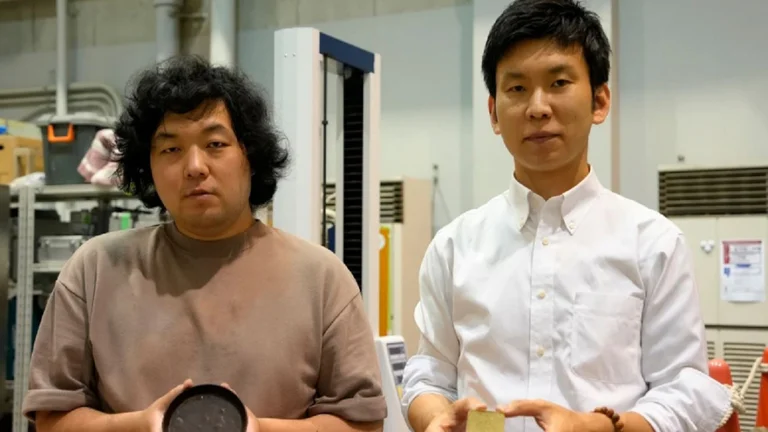
Researchers Kota Machida and Yuya Sakai are developing a technology to transform food waste into concrete that is friendly to the environment.
“Beton has a huge negative impact on the environment because its production releases carbon dioxide. Also, material for concrete, such as limestone, is being reduced worldwide. I wanted to create some material that could replace the concrete and started this study”, says Mr. Sakay.
According to the research organization Chatham House and a study published in the scientific magazine, “Nature”, cement production causes about eight percent of the world's total carbon dioxide liberation rate.
Researchers hope to help reduce global warming by facilitating problems related to food materials released when decays.
The three-step process of drying, crushing and compacting was carried out using simple compounds and compressors that can be bought online.
Then I started using other plant-based materials, such as tea leaves. This was a successful process, so we decided to extend our evidence of vegetable waste that also resulted in success”, says researcher Sakai.
Professor Sakai and his student Machida decided to concentrate their study on food waste.
This process was complicated. After months of failure, researchers learned that they could climb concrete by changing temperature and pressure levels.
Our ultimate goal is for this cement to replace traditional plastic and cement products, as it is more friendly to the environment. In the production process, plastic requires crude oil. The current process of concrete production releases large amounts of carbon dioxide in the atmosphere. A particularly appealing feature of this material is that it can be reused indefinitely. We aim to make the cement produced by food waste a recycling product”, says researcher Machida, wrote Top Albania Radio.
Researchers Sakai and Machida say that they have successfully produced cement by using tea leaves, orange bark, onions, coffee mud, cabbage, and even food packs.
Researchers say that concrete can be made waterproof and can be protected from rodents and insects by dyeing Japanese ill.
Food waste is a major problem in Japan and worldwide.
Japan produced about 5.7 million tons of food waste in 2019, the country's government aims to reduce it to about 2.7 million tons by 2030.
The oath produced with food waste can be reused and can be digested biologically, so it can be buried when no longer needed