3 minutes ago
The Guardian: Drug and Mafia money being laundered in Albania
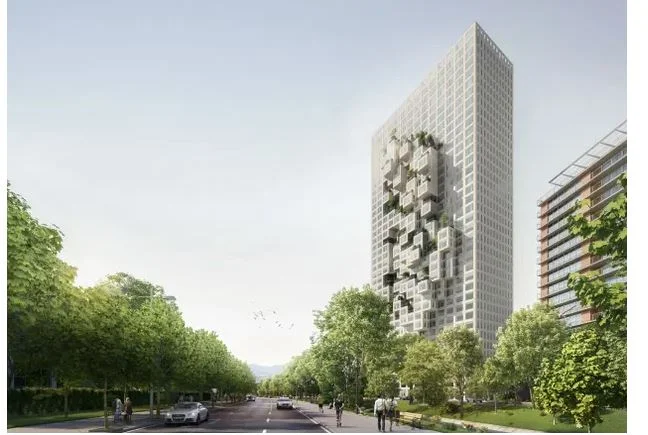
Periskopi(4 years ago)
(4 years ago)British media The Guardian has dedicated an article to building towers in Tirana and has particularly stopped at the project already launched, with Skenderbei portrait on the front of the building. A Mermer Arch Mound Dutch project is a continuation of other Dutch firm projects known for its buildings [...]
A project by Mermer Arch Mound Dutch, the tower is the continuation of other Dutch firm projects known for its unusual buildings.
The Guardian also stops at money laundering through construction in Tirana and resistance to preserve the city's heritage.
Full article:
The latest proposal by Mermer Arch Mound to transform Tirana, Albania's capital, is a building with the profile of a 15-century warrior.
But not all are satisfied with the Dutch firm's plans. With its distinct nose and magnificent beard, Albania's national hero, Skenderbeu, has long been present in the country's streets and squares. The 7m hero known as Albania's Dragoi, the killer of Ottoman Turks, is placed in numerous monuments and reliefs, with his imposing stature and fiery eyes guarding the territory he fought for in the 15th century.
His face will now appear greater than ever on the capital. Construction of an apartment block, offices and 85m-high shops in central Tirana, designed in the shape of Skenderbeu's head has already begun. The images of the project describe a white amorfe tower surrounded by balconies rolling in and out to form approximately the hero's features, placing his profile forever on the horizon on concrete and glass. The future affluent will be able to look from the eyes of the warrior, to sit in his ears, or to eat at the end of his nose, from which the green will depend on a wretched sorrow similar to his throat.
The surreal vision is the work of Dutch architects of this firm, who are not unknown to the buildings as new oversize objects, or “figurative sculpture projection”, as they prefer to call them. Their catastrophic London marble arch tour, which cost the conservative local municipal council only the last in a long range of cartoons that seem to have been uprooted from the bottom of a shopping basket.
The architects have designed a museum in the form of giant speech bubbles, an art storage depot in the form of a bowl of Ikea salads, and an apartment complex that expresses the word HOME in the form of its blocks. But their most banal metaphors seem to have preserved them for the Balkans, perhaps assuming fewer of their clients and critics will ever see the buildings personally.
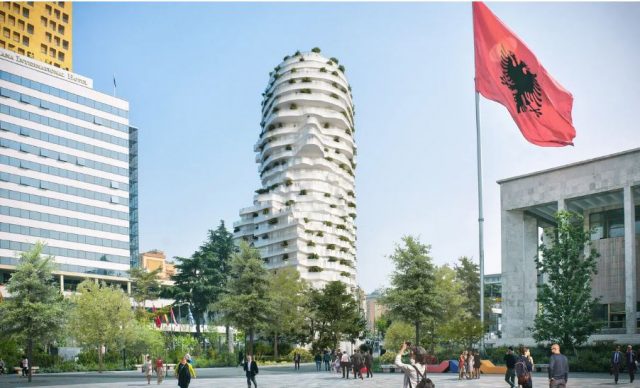
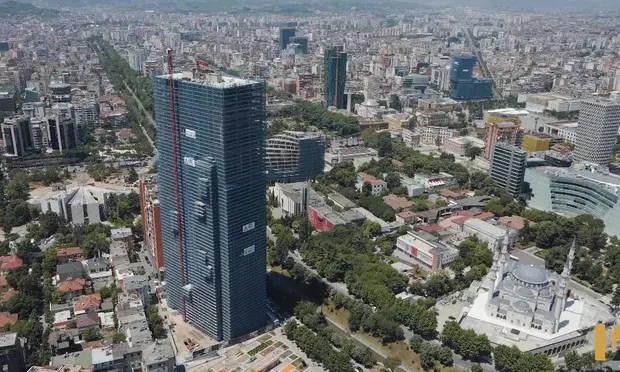
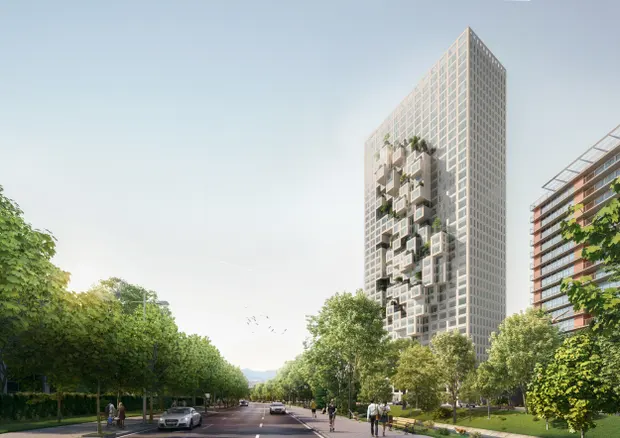
In a short distance from where the giant head of Skenderbeu is scheduled to rise, it now appears another tower designed by this company, called Downtown One. At the beginning of last year, its 140m concrete framework makes it the highest building in the city continuing on to the pop-nationalist theme trail. Instead of a face, this heavy apartment plate and luxury offices contain a map of Albania that comes out of its facade, although the shape is so unclear that it seems more like a concrete mold slipped from above, leaving a strange mess in it. The dramaticly carved volume imagined by this firm seems to have become shallower pits, giving the impression that the building is being eroded prematurely.
These days, cities around the world look more and more like each other”, says Winy Maas, founder of the Dutch architecture firm. “I always encourage them to resist this, find their individual character and stress it. Tirana has the possibility of an empty canvas for high density structures. It can be progressive in this sense and build up the character and sense of the country. ”
But many locals are not so sure of the sensations created by Maa's construction, and the list of other international architects who have approached to reform the city. A handful of towers are set up around Tirana's Central Square, with four already completed and at least six others under construction. There have been numerous protests against the destruction of Ottoman-era villas to pave the way for a build-up, with critics complaining about the loss of inheritance and rising property prices, without missing even accusations that projects are being used as money laundering schemes for organised crime.
Two historic villas were destroyed to pave the way for Skenderbe's Tower in May 2020, when the city was in pandemic isolation. At the same time, the city's beloved National Theatre, built since the 1930s, was also destroyed to pave the way for a project by Danish architect Bjarke Ingels, who was widely sentenced.
The future of Tirana will be full of ghost rock,” says Vincent WJ van Gerven Oei, a Dutch writer who has lived in Tirana for the past 12 years and has closely followed the development of the city. I love Maas, the things they build in Holland are among my favorite buildings, but then they come to Albania and become fools. They think they can escape with the filthy design, controlling all the nationalist lands you can think of. ”
In a lecture in 2018, when the two towers were developing, Maas discussed the open nationalistic symbol of design of a building in the shape of a map of the country. “I've had a discussion with some of the European politicians on this,” he said. Because, could we do that? Is nationalism good or bad? But Albania needs it, to show it is sexy and that it is actually very beautiful. ”
Moving forward and back to the stage, speaking like an hyperactive child who had consumed too many E-numbers, Maas rapped out his love bond with Albania. He described it as a “country without money, which only drinks coffee and where there is nothing to do” perfect white sheet for his strange ideas, “like a mini-Kin” with abundant potential for architects. “The developers are becoming richer”, he said excitedly, but did not mention where the money could come from to build such stunning visions, given the country's poor economy.
A 2020 report by the Global Initiative against Transnational Organised Crime noted that the Albanian construction industry had become a hot spot known to international criminal gangs to launder money, mainly from drug trafficking. The report estimated that 1.6 billion euros “dirty money” had been cleared through Albania's real estate sector in the past three years, with 60% of the funding of the project coming from illegal sources. The Albanian Office of the Directorate General for Money Laundering Prevention said it observed “significant investments in real estate with unknown funding sources”, which it classified as suspicious “”.
Last year, anti-mafia prosecutors in Italy found that the Ndangheta crime union had identified Tirana's new top developments as a key opportunity to launder their money. In a wiretap, two of the detainees were heard discussing a construction facility in Albania, which had three building permits worth 180m euros, but could offer only 10m euros.
The new “Rrocachies will be sold for 3,000-4000 euros per square metre”, one of the suspects says. “And do you know how much construction costs? $510.” M VRDV says that, in accordance with Dutch law, she conducts history checks for her clients using a third-party company that scans for criminal activity, among other things, and there is no doubt about illegal funds. A Tirana city spokesman said: the municipality's “task is to ensure that construction plans, aesthetics, architecture rules and mobility plans are respected. We understand that we live in a toxic political environment in the Balkans and have repeatedly asked opposition leaders to stress: which of these towers is suspected of such criminal activity? So far we have no answer and there has been no official claim at the Tirana prosecution”.
The Albanian capital's radical reformation over the past two decades could be attributed mainly to Edi Rama, who served as mayor from 2000-2011 and is the country's prime minister since 2013. Rama was a professional basketball player and artist in the 1990s, and Maas says in his lecture: “Edin I know from Paris, when he was a painter”. Rama returned to Albania to become culture minister in 1998 and launched a radical cleaning operation when he became mayor. He was led by his policies of painting Soviet grey buildings with bright colors to revive the city, plant trees, create bicycle lanes, and maintain international architectural contests ʹ reforms that gave him the inaugural World Hall award in 2004.
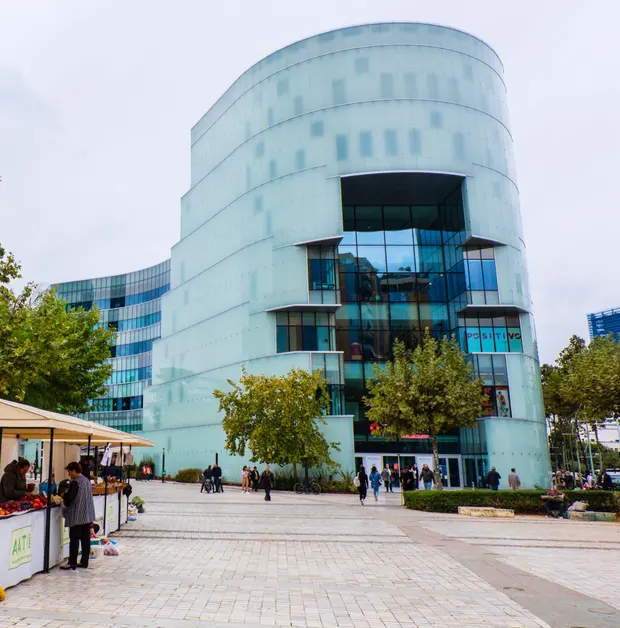
One of the first projects MVDV took under Rama's rule was the Toptan trade centre in 2005, which was conceived as an empty mass covered with giant LCD advertising screens. After winning the contest, Maas heard nothing until a few years later, when he realized that the building was actually built by other architects. The digital facade was exchanged with standard gray-clothing panels, while its vision of an open ark became a general closed centre.
“Projects here often come true in a completely different way from how architects originally targeted,” says Van Gerven Oei. “It's the reality of the digital change, always beautiful, brilliant and innovative, and then the reality of Albanian construction companies, which want to make the thing easier, faster and cheaper. ”
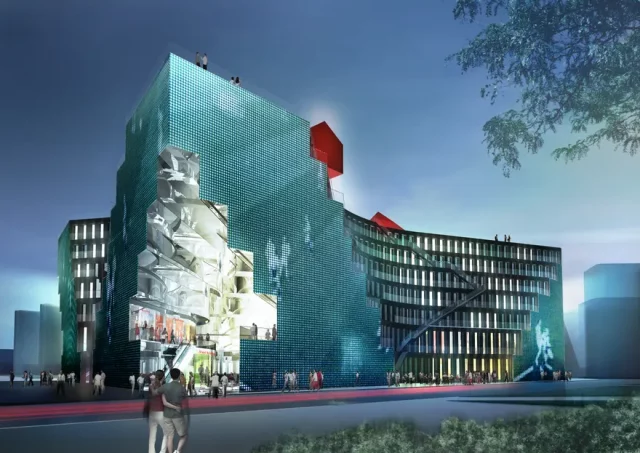
Not to be discouraged by the subx0> Frankenstein” shopping center, M VRDV continued to look for work in Albania. Several unfulfilled projects were followed by a huge pile of long-planned apartment blocks scheduled for a lake-side area in 2008, called Tirana Rocks, at a seaside resort for a Russian client, designed as an artificial hill that would shine frighteningly during the night ♫ “better than any James Bond” movie, Maas promised. He explains how Downtown One started as a three-dimensional building in Albania's form, but it resulted in very expensive, so they decided to put the shape of the map in a simple rectangular tower. A further commission was formed in 2018 to transform Tirana's impressive marble-covered Pyramid built in the 1980s as a museum to remind of the country's former communist dictator, who had become a popular place for young people in town to spend time. MVRDV was assigned, without public competition, to transform it into a technological centre by drowning steep sides with concrete steps in the process. Finally, when it comes to the Skenderbe Tower, the origin is as open as expected. So Eddie said: I want to do something with history.” And so came the giant head.
Local residents have joked that while Rama cultivates an elderly-visitor view of his 6 ft 6 inches and long-term beards give him an increasingly skenderbeu-style view of head-shaped buildings could be more completed as a stable monument to the artist-political, who reformed the capital, forever looking at his vision of empty towers. /abcnews. al