9 minutes ago
Why citizens in the Balkans have nine times as many weapons as the military and police
Periskopi(4 years ago)
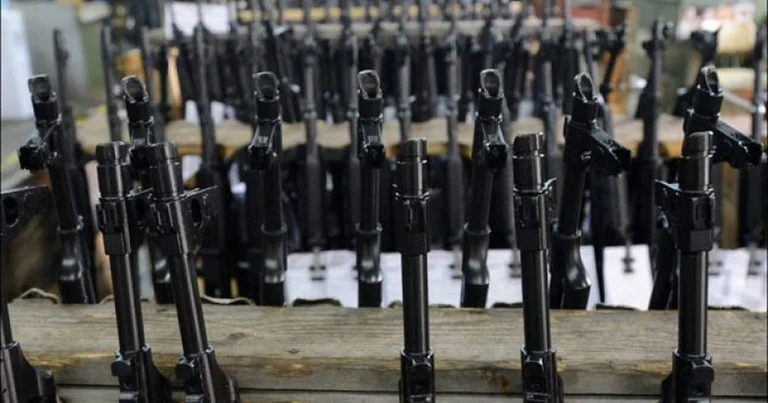
(4 years ago)Massive murder in Cetinje, with 11 casualties, once again raised the issue of the availability of firearms in the Balkans, where 90 percent of all weapons are in the hands of citizens. It is estimated that citizens in the region have nine times as many weapons as the army and police, and in terms of the amount of weapons [...]
It is estimated that citizens in the region have nine times as many weapons as the army and police, and in terms of the amount of weapons per capita, Serbia and Montenegro lead, according to the Global Small Arms Survey of 2018.
For 100 residents, 30 weapons are accounted for, while in Serbia and Montenegro 40 small arms per 100 residents.
“Political and socioeconomic instability in the Balkans in the last 30 years and frequent political threats for a new war have made many citizens unwilling to give up their weapons, but to keep them for critical situations of the type “God saved us” says Predrag Petrovic, director of research at the Belgrade Centre for Security Policy (BCBP).
Despite attempts to reduce the amount of weapons, there are still “too much” in Western Balkan countries, according to BCBP researchers.
It is estimated that between 500,000 and 1.6 million families possess firearms, more illegal than legal.
America is the first in the world for the amount of weapons per capita, 120 weapons per 100 people, according to the survey.
The amount of weapons in the region's countries, particularly illegal ones, poses a considerable “security risk”, Petkovic estimates.
The very fact that someone owns a weapon is a risk and that if he uses it depends on the” circumstances, he adds.
As he recalls, research shows that the <x0orms of illegal fire lead” into murder.
According to Montenegrin media, the attacker from Cetinje had permission for firearms.
However, it is currently unknown whether it was valid or expired.
Even the status of the weapon used against the attackers by a fellow citizen who tried to stop him is unknown, so some consider him a hero.
According to 2015 data, in Montenegro, more than 80,000 people have received permission to carry weapons, but in more than two-thirds of the cases it has expired.
Petkovic says there are only estimates of the amount of illegal weapons in Serbia, ranging from 200,000 to over a million pieces.
“These are the remaining weapons not only from the wars of the 1990s in the former Yugoslavia, but from the various armed conflicts that occurred in this region during the 20th century”, he explains.
Over the past few years, the Ministry of Internal Affairs in both Serbia and Montenegro have repeatedly initiated actions in which they have called on citizens to hand over unregistered weapons.
Petkovic recalls that citizens during the shares can do so “without any consequences”.
As he adds, the most successful campaign of this kind in Serbia was after police action in Saber in 2003, when citizens handed over “around 50,000 weapons”.
It was a police operation to locate and arrest suspects in the assassination of Prime Minister Zoran Djindjic, as well as others suspected of being members of criminal clans.
All the subsequent actions were of a much smaller range. Only a few thousand surrendered,” highlights Petkov.
It also stresses that research shows that a large number of citizens do not want to give up weapons”.
Besides political instability, this also contributes to the culture of macism because weapons are considered a kind of symbol of status”, he says.
How many weapons are averaged in the region
It is estimated that in Bosnia and Herzegovina, for every 100 residents, there are 31 illegal and legitimate weapons together.
In northern Macedonia, there are 30 pieces per 100 inhabitants, while in Kosovo that number is 24 per 100.
In Croatia and Albania it is much less.
In Croatia it is 2 per 100 inhabitants, and in Albania 1.5 per 100 inhabitants.
Sources: Small Arms Survey and Global Population Review
Who can get a gun license?
In 2015, new weapons laws were passed in Serbia and Montenegro, with the idea of establishing more efficient control of ownership and traffic.
“The legal framework is good because it is necessary to meet the really strict conditions for obtaining license”, Petkovic says.
In both countries, then a request was submitted that anyone wishing to own a weapon should prove that there is a valid reason for doing so, while previously a health assessment was sufficient.
One of the justified reasons could be personal security, with the fact that citizens should testify to the police that their security could be threatened”, he adds.
“Well, MPB practice is not uniform, we know that in some police stations citizens are rejected, while in others they have received permission without any problems”, he says.
Also, when applying, a medical report is necessary.
When authorities issue gun license, the Ministry of Internal Affairs reports the selected physician, who has the legal obligation to continue monitoring the gun holder, as well as to report any relevant changes to the state of health.
“Well, there is no universal information exchange system, and since a large number of citizens are treated privately, the doctor selected in the state institution usually has no knowledge whether there are changes”, Petrovic says.
In both Montenegro and Serbia, weapons and ammunition can be bought and held by anyone over the age of 18, if they receive approval from competent authorities for purchasing and possessing weapons.
With additional conditions met, obtaining gun maintenance permit is possible.
What is being done to reduce the amount of illegal weapons?
At the summit for the Western Balkans, which was held in London in 2018, a guide was approved to resolve possession, abuse, and illegal smuggling of light and light weapons.
The authors of this guide are institutions from the region under the auspices of the German Federal Office for Foreign Affairs and the Center for Light Weapons Control in Southeast Europe (SEESAC) with the co-ordination of Great Britain, France and the European Commission.
Its “aim is to improve the legal framework, harmonise it with the European legal framework and reduce the number of weapons, as well as limit the illegal flows”, Petkovic explains.
However, as he estimates, the results are modest.
The “Since it was adopted, there has not been a significant reduction in the amount of weapons, and in Serbia in recent years there have been no new calls for the surrender of unregistered weapons”, he recalls.
Pandemia increased the risk of citizens carrying weapons legally slipping into the illegal zone because it slowed administrative processes, Petkovic says.
Among other things, it slowed the process of providing biometric documents to those holding and carrying weapons, which was envisioned in the 2015 law.
Therefore, in February 2022, Serbia has once again changed the Law on Weapons, extending the deadline for replacing documents, arms certificates, gun - keeping permits for personal safety and weapons authorisations.
The deadline for replacing documents issued under previous valid law has been extended for another two years, so until March 5, 2024.