17 minutes ago
A Turkey saw Erdogan: New Turkish Voters Face Dilemma
Periskopi(4 years ago)
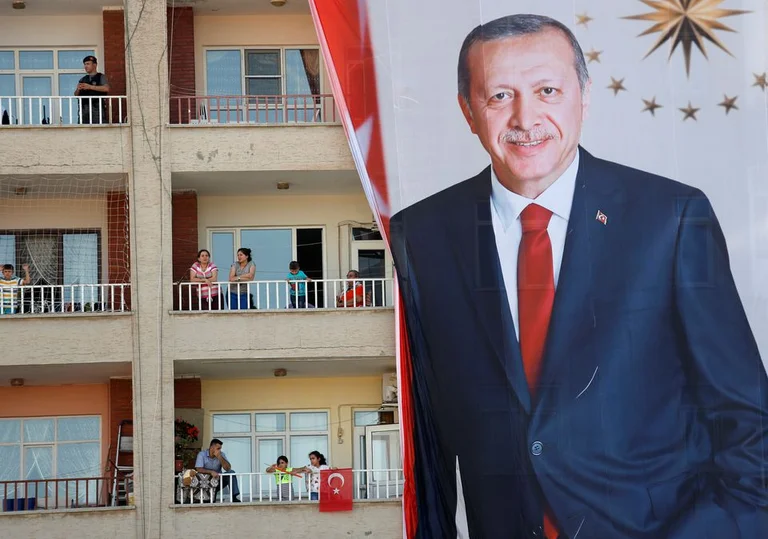
(4 years ago)Six million voters are expected to decide for the first time whether Turkish President Rexhep Tayyip Erdogan's power will be extended to enter the third decade or choose something they have never recognised Turkey led by another leader. Less than 12 months ago, perhaps, [...]
Less than 12 months ago, perhaps the biggest elections in the country's modern history -- a large majority of young Turks say they want change, but remain somewhat skeptical that the opposition can improve the situation with employment, schools and freedoms, such as freedom of expression.
With about 12% of all voters in the presidential and parliamentary elections set for June 2023, young people will be crucial to what is expected to be a tight race for Erdogan and his ruling party, polls say.
Interviews with some Turkish youths between the ages of 18 and 23 -- from Metropolitan Istanbul to central Anadol -- show that justice, immigration, credit-based employment and transparent economy policies are the most important concerns for them.
“I am not entirely relieved with my decision, but I think I will choose the best from the worst (and support the opposition)”, said 19-year-old Damla, a history student in Istanbul who refused to show her last name.
The economic crisis and rising inflation have raised its living costs, even though she lives with the family and doesn't get so much out of it with friends.
I feel like I'm not living, I'm just trying to survive”, Damla said. “If the AK party loses these elections, the new government must still feel people's pressure towards them”.
Poll results are changing, but they predict Erdogan would lose tight and his party, AK, would lose its majority in parliament.
However, an informal opposition coalition has not announced a candidate for president, leaving some disobedient young voters and authoritarian Erdogan has a long line of victories since he came to power in 2003.
The president sent a traditional secular society into an Islamic direction, transformed Turkey into a regional military power and used courts to suppress discontent.
He now faces a difficult election race, mainly because of his unusual economic policies, including lowering the interest rate that led to the lowest levels in history and inflation at the highest level in 24 years, 78.62% in June.
Pattern
The so-called “Generata Z” makes up about 13 million of the 62.4 million Turks expected to vote next year, according to data from the statistics office. Six million will be eligible for the first vote.
Murat Gezic, head of the company for surveys Gezic, said new voters are generally disappointed with the government, but not linked to a specific ideology and do not trust the opposition entirely.
His company's survey shows that Cemre Z voters aged 18 to 25 are strongly opposed to lifestyle printing, free speech and the media. “80% of this generation will not vote for the AK” party, he said.
Yusuf, 18, and a first-time voter, said most of the world's economies have been hit hard by the Corleone pandemic and the war in Ukraine.
I think the person who is leading our country now is the best and most appropriate leader... I will vote for the AK party because they make plans to make people more comfortable”, he said.
“Economia may not be in good condition, but this situation is in all places”.
Unemployment for Turkish youth stood at 20% in April, official data showed, compared to an average of 10.87% from the OECD.
“Young people want change”, said Behemet Ali Kulat, leader of the research company MAK, which shows that 70% of young people aged 18 to 29 support the opposition.
He said new voters are keen to compare their economic prospects with foreign peers, while older voters pay more attention to investments in infrastructure such as roads and hospitals.
Helin, 21, said living conditions have deteriorated due to government policies, so she will vote for the opposition. However, it worries that their proposals will not effectively address problems in current migration policy, nor minority rights.
“I believe that a change in power would solve at least urgent questions”, she said via phone from the Ankarja. /Reuters/Periscope/