33 minutes ago
Trump returns in 2024 would solve all of Russia's problems”
Periskopi(4 years ago)
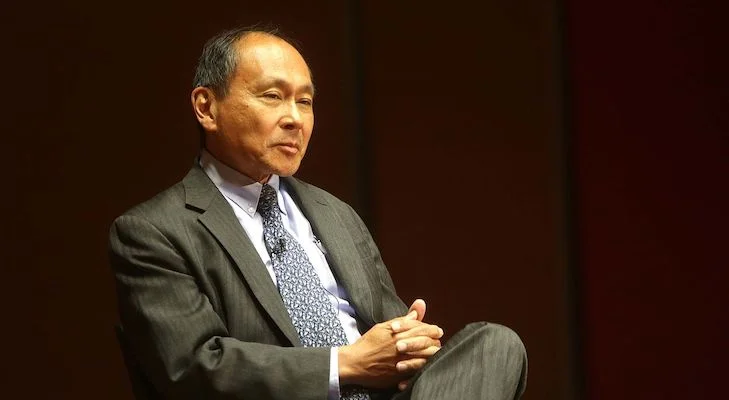
(4 years ago)Although Russia can bluff its new offensive, it is essential for the timing of the West that Ukraine regain its south, especially if Donald Trumpi returns, politicalologist Francis Fukuyama believes. Francis Fukuyama is best known for his book “The End of History and the last man”, where he claims [...]
Francis Fukuyama is best known for his book “The End of History and the last man”, where he claims liberal democracy and free market capitalism are the final points for society's evolution.
At the end of June, Russian authorities prevented this American politician and philosopher from entering Russia. The DW spoke with him several days after he joined the advisory board of the International Anti-Corruption Foundation, recently created by the imprisoned Russian dissident Alexei Navalny.
DW: You're now on the list of people forbidden to enter Russia, how do you feel about this list?
Francis Fukuyama: I consider it an honor to be on this list. All of Russia's leading foreign critics and the Russian invasion of Ukraine were put on the list, and I actually wondered why it took so long to get to me.
Why did you become part of the Anti-Corruption Foundation's Steering Board?
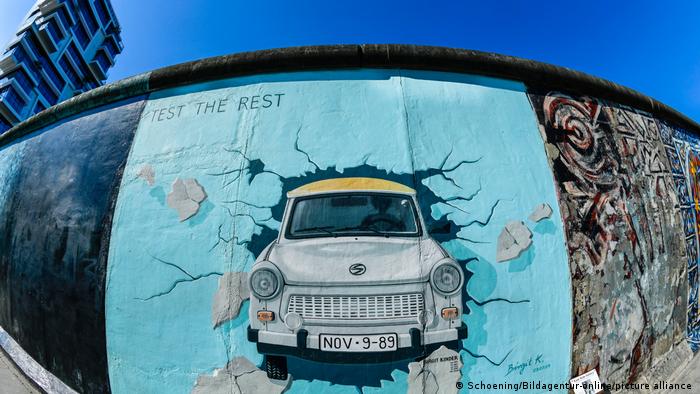
I'm a great fan of Alexei Navajo, met him in Warsaw in 2019. Corruption is a huge problem in Russia and the world, and I am very happy to support its foundation in every possible way.
Russian President Vladimir Putin said recently: “We have just started”, referring to the war in Ukraine. Is he bluffing?
I think he lies, like he does a lot of things. Western military analysts who have examined the Russian forces' stance have noted that Russia is currently experiencing a major lack of workforce. It has also lost perhaps a third of all the forces it originally accumulated to defeat Ukraine. The Russian victims' estimates are uncertain, but there may have been 20,000 killed and perhaps 60,000 injured. The prisoners on top of this. And for a country the size of Russia, this is really military disaster.
So I think in fact, given that the Russians have done only a lot of marginal benefits in the two months since they started focusing on Donbas, I don't think they have a lot of reservations and I think Putin is bluffing when he says they haven't even started.
In your opinion, what could be an effective strategy for Ukraine?
The most realistic strategy at this stage is the focus in the south, reopening Ukraine's entry into the Black Sea by regaining Kherson and other ports into the Azov Sea. This is more important than Donbas. I think Donbas' recovery will be difficult enough to achieve in the coming months. But by the end of the summer, you can see real progress in the south. It is very important that Ukraine regain this entry so that it can resume exports of all its agricultural basic products from its Black Sea ports and break the Russian blockade of Odessa.
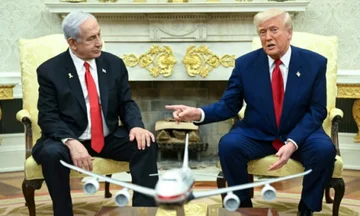
How can the situation change if Donald Trump is re-elected President of the United States?
If Donald Trump returns in 2024, that solves all of Russia's problems, because he has apparently vowed to withdraw the United States from NATO. Russia will have achieved its main goals simply with this change of American politics. And that's why I think it's really important that Ukraine make some progress and regain some military momentum over the summer, because unity of the West really depends on people who believe there is a military solution to the problem in the short term.
If they think we're just facing a protracted stalemate that will continue forever, then I think unity will begin to break down and there will be more calls for Ukraine to give up territories in order to stop the war.
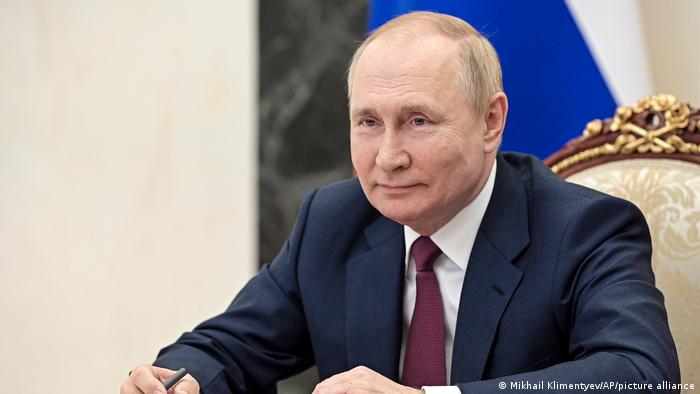 Vladimir Putin
How do you see Russia in a broader global perspective? What kind of political regime is that?
More than anything else, it actually looks like Nazi Germany at this point. Its only idealology is a kind of extreme nationalism, but even less developed than that of the Nazis. It's also a not too institutionalised regime. It really spins around a man, Vladimir Putin, who really controls all the major levers of power.
If you compare it to China, they're very, very different. China has a large communist party with 90 million members, there are many domestic disciplines. In Russia's case, you don't have that kind of institutionalization.
So I don't think it's a stable regime. I don't think he has a clear ideology that he can design from the outside. I think people who line up with him are just people who don't like the West for different reasons.
After 30 years, do you have an update on your concept of the end of history?
We are in a situation different from 30 years ago, when democracy has suffered setbacks in all areas, including the United States, India and other major democratic countries in recent years. But the progress of history has never been linear. We had major obstacles in the 1930 ' s, which we survived. We had another group of obstacles in the 1970s, with the oil crisis and inflation in many parts of the world. So the idea of historical progress is not dead.
There are sometimes setbacks, but institutions and ideas behind them are strong and have survived for a very long time, and I expect them to continue to survive.
Does war in Ukraine eclipse the global and more dangerous climate crisis and other intense political crises?
Clearly, short - term energy needs have led to a revival of fossil fuels and have slowed progress toward reducing carbon emissions. But this is a temporary obstacle. And I think both of these issues should be addressed, it's not the question of choosing one or the other. They should be taken seriously.
But the climate crisis is a slowly emerging crisis that will continue to accompany us for generations to come. So, I think the fact that we're now taking steps back is not necessarily the final position we'll be in.
Francis Fukuyama is a politician at Stanford University in California.
The interview was conducted by Mikhail Bushuev, and was collected and edited for clarity by Sonya Diehn.