22 minutes ago
Stuart Peach: Kosovo-Serbia agreement needed as soon as possible regional initiatives are comprehensive
Periskopi(4 years ago)
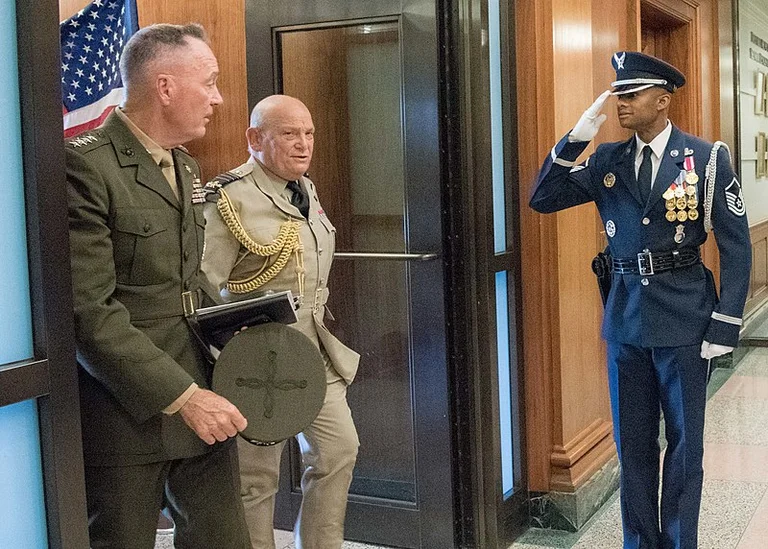
(4 years ago)The Special Envoy of Great Britain for the Western Balkans, Sir Stuart Peach, estimates that continuing the situation without a solution between Kosovo and Serbia goes to harm both countries and leads water to the mill of those who want stagnation. Peach in interview for Klan Kosovo. told you it makes you [...]
The Special Envoy of Great Britain for the Western Balkans, Sir Stuart Peach, estimates that continuing the situation without a solution between Kosovo and Serbia goes to harm both countries and leads water to the mill of those who want stagnation.
Peach interview for Clan Kosovo. tv has said it makes the agreement necessary between the two countries.
“After me a comprehensive, final and stable agreement between Kosovo and Serbia is necessary as soon as possible: exactly when it is reached, it is in the hands of the” parties, it is expressed.
He has also talked about regional initiatives, such as the “Open Balkans”, which he stressed all countries should be equal in them.
I welcome initiatives that are in support of regional co-operation, economic integration and the opening of markets, which offer real benefits to the region as a whole. It is imperative, however, that all these processes are comprehensive and open to all six Western Balkan countries under equal conditions. There is also a need for deconflict, and to provide new schemes that complement existing” initiatives, it is expressed.
Peach has said that Great Britain supports Kosovo for membership in the Council of Europe, until it has added that it encourages the five non-recognitional EU countries to recognise Kosovo's independence.
To understand British envoy's opinion about the impact of war on Ukraine in the Western Balkans, Serbia's reports with Russia and Serbia report - EU, read the entire interview
INT PLOSE ERVIS:
Over half a year ago you were appointed to the position of Great Britain's envoy for the Western Balkans. What is your appointment order, and why was it done at that time?
Stuart Peach: I was appointed in December last year, when it was increasingly clarified that the Western Balkans were facing the greatest threat to its stability and security in more than two decades. The situation had become practically disturbing in Bosnia and Herzegovina, with threats against the unity of the state which was a threat to the deterioration of peace which was won by effort. I was appointed as part of a strong response to these challenges to Great Britain and renewed British commitment to promoting freedom and democracy in the region.
Of course, since then we have seen Russia's illegal invasion of Ukraine. We must be careful not to spread this war in this region where memories of recent conflicts are fresh and deep. Current challenges to prosperity and security like energy security have deteriorated as a result of the war.
Two months ago I had Manuel Sarrazin, Germany's envoy for the Balkans, interviewed him. I feel like asking you one same question: Does the engagement of so many emissaries imply distrust in Miroslav Lajcak, who is the European Union's envoy?
Stuart Peach: Quite the opposite. Our roles are very complementary. Part of my role is support for the European Union-brokered dialogue process, for which Great Britain remains fully supportive. As an emissary, I work closely with EU Special Representative Miroslav Lajcak.
I have a regional summary and cover a wide range of issues where I work closely with other appointed envoys in areas where interest is shared. I think the appointment of these envoys really shows how important the Western Balkans are for both countries.
About 18 months have required work with the international community on Kosovo's status and its declaration of independence in 17.02.2008. But the Kosovo-Serbia dialogue process has lasted over ten years. When do you judge that it can happen, and what are you doing to reach the final agreement?
Stuart Peach: Since negotiations began in 2011, we have seen a number of agreements that had a direct positive impact on the lives of ordinary citizens in Kosovo and Serbia. However, lack of application, or broader progress, is disappointing. According to me, a comprehensive, final and stable agreement between Kosovo and Serbia is necessary as soon as possible: exactly when it is reached is in the hands of the parties. Continuing unresolved issues between Kosovo and Serbia is not useful to anyone except for those seeking to boost division between neighbours and prevent progress towards a more pro-operative and stable future.
Now there is a window of opportunity and the urgent need for something to change. There is a new reality in Europe, created by war in Ukraine. Solving long disputes in the Western Balkans is essential to Europe's security and welfare. Leaders in both countries know this and must now work to resolve unresolved issues to come to the final agreement. I know it won't be easy, but that Great Britain will continue to support Kosovo, Serbia and the EU in achieving this.
There is a regional initiative called the “Open Balkans”, part of which are Albania, Serbia and Northern Macedonia, but that Kosovo refuses to be part of. How do you see this approach of the Government of Kosovo on this issue?
Stuart Peach: I welcome initiatives that are in support of regional co-operation, economic integration and the opening of markets, which offer real benefits to the region as a whole. It is imperative, however, that all these processes are comprehensive and open to all six Western Balkan countries under equal conditions. There is also a need for deconflict, and to provide new schemes that complement existing initiatives.
Kosovo is the only state in the Balkans, which for its citizens still has no visa liberalisation. What is your opinion, why should this issue burden citizens of a developing state?
Stuart Peach: When the visa liberalisation decision will be issued to the Schengen Zone, it is in the hands of the EU. But from my visits to Kosovo, I am certainly aware of the deep disappointment caused by this situation. It encourages Kosovo to continue talking to the EU states that continue to be puzzled.
Kosovo has recently applied for membership in the Council of Europe. What will be Britain's support for achieving Pristina's goal, and how much do you estimate that this is likely to happen?
Stuart Peach: The United Kingdom supports Kosovo's aspirations to join the Council of Europe. Its application is an important part of Kosovo's international integration and is a welcome signal of its dedication to democracy, rule of law and protection of the rights of all its citizens. The Council is essentially a human rights body, and membership will enable Kosovo citizens to advance their constitutional rights.
It is an important opportunity for the people of Kosovo, and the United Kingdom is proud to support Kosovo's application. We have regularly talked with the Government of Kosovo about their preparations and plans for the process, and we will continue to do so at all levels in Pristina, London and Strazburg.
There are five EU states: Spain, Cyprus, Romania, Greece and Slovakia, which do not recognise Kosovo's independence. How much is Great Britain working to convince these countries to recognise Kosovo's independence?
Stuart Peach: As one of Kosovo's first connoisseur countries, we support and protect Kosovo on international troops and encourage countries that have not yet made it know Kosovo.
Regarding the war in Ukraine, Kosovo is listed side by side of the West by imposing sanctions on Russia, but this has not been done by Serbia, which has opened several chapters for EU membership. It has not yet been two months since Alexander Vuciq, the president of Serbia, has signed agreements on Russian gas supply. How do you see this move?
Stuart Peach: Kosovo's movement to impose quick sanctions on Russia and Belarus was important and welcome and also recognised by G7. Through this action, Kosovo has shown it is reliable partner of NATO and the Euro-Atlantic community.
The United Kingdom will continue to engage with the government of Serbia, and with the United States of America, the European Union and other partners for a unified stand. The Russian invasion of Ukraine has turned the war on our continent, and it is important that Serbia joins all of Europe. We are also working with governments throughout the region, including Serbia, to support the transition towards green energy and reduce dependence on Russia.
There is a judgment in Kosovo that Serbia is spoiled by the international community. Is it part of the strategy that Belgrade does not withdraw from Moscow?
Stuart Peach: I must say that this does not match my experience I have had and will continue to have open and frank conversations with governments, Kosovo and Serbia.
It is true that Serbia has ties to Russia, but it also has close ties with the rest of Europe and the West. The EU is its biggest trading partner. We support Serbia's path towards the EU and other countries in the region, because we think it offers people the best possible prospects for a prosperous and peaceful life. This is not at odds with having ties to Russia.
Great Britain, your country has been harsh at Russia's invasion of Ukraine. This movement there has also issued threats of Balkan destabilisation. Could that happen, and where could it be the starting point of some conflict outbreak in this region?
Stuart Peach: As I have said before, Russia's unprovocational attack in Ukraine restores painful memories of conflicts and suffering for many in Kosovo and the entire region. I appreciate the concern of many people here and throughout the region for the threat posed by Russia. The United Kingdom is alert to this threat, and we are increasing our support to combat malicious influence, whether through support and expertise in the fight against disinformation, strengthening protection against cyber attacks, or offering counsel and training to the armed forces.
If I have a final order, it is to encourage all elements of civil society throughout the region to seek ways, small steps and actions to encourage reconciliation, discourage autism, and defend the values we represent: Democracy, human rights and order and law; this is the way to a better life for all.