41 minutes ago
Where were the modern railways?
Periskopi(4 years ago)
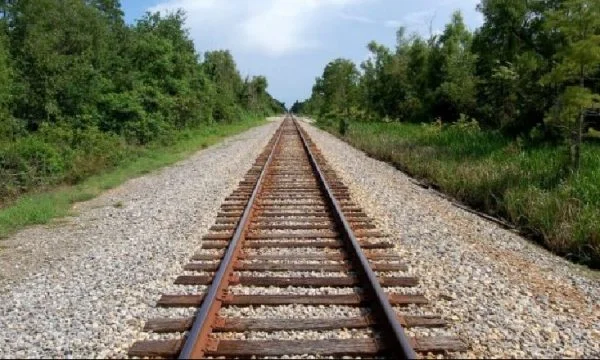
(4 years ago)Despite promises that Kosovo will have modern railways in 2022, its trains continue to circulate into only two reliefs: Pristina ï Hani i Elezi and Pristina Peja. From the Kosovo government, they say they are working on the network linking Kosovo with the countries of the region and beyond, but that [...]
From the Kosovo government, they say they are working on the network that connects Kosovo with the countries of the region and beyond, but when all the works are finished, it is unknown.
The important thing is that it is working to get all Kosovo railways inside Kosovo's territory and those related to international corridors to end up in as soon as possible, but it is also up to funds that can be provided”, Deputy Free Europe Minister of Space Planning and Infrastructure Hysen Durmishi tells Radio.
According to him, the railway network linking Kosovo with northern Macedonia is expected to be completed by the end of the year, works on the railway network connecting with Serbia are close to departure, while the network connecting with Albania is in the feasibility phase, or the assessment of the plan.
Durmish says that the rehabilitation of Kosovo's Fushe rail network é Hani of Elez, in the direction of northern Macedonia, and Fushe Kosova Mitrovica, to continue as far as Leshak, on the border with Serbia, amounts to nearly 100m euros.
The cost for other railways, which are in the phase of feasibility research, is unknown.
Durmish says the tools are intended to secure through loans from international financial mechanisms.
He does not give any timetable for when these railway lines could end.
The “is not in this year”, he points out.
In 2018, when Kosovo Prime Minister Ramush Haradinaj was Kosovo's prime minister, the government has pledged that by 2022, Kosovo will have Kosovo's Fushe Kosova train network completed, the Hani of Elez and Fushe Kosovo Leshak.
Government officials have said the world that financial means are provided by the European Bank for Reconstruction and Development (BERZH), while a lot will share the Government of Kosovo.
“Infracos”: Job volume not satisfactory
Despite efforts, Radio Free Europe has failed to get in touch with Infrakos company, which operates with Kosovo's railway network, to learn the reasons for delays in implementing the works.
But, in a report published by “Infracos”, regarding the work of this institution during January, March 2022, it is said that the work has continued, but not with expected intensity.
“Over this quarter, work has continued on realising the project for the rehabilitation of the 10th Kosovo Railway Line Fush Khan of Elez, but the volume of the jobs committed has not been satisfactory”, says the “report. Infracos”.
The reasons for the delays are not given. The report points out that “a relatively good work” has been done in the drafting of “technical design” for the third phase of the rehabilitation of the Mitrovica railway Lishak and that the project is expected to be completed by June 2023.
Avd: The rehabilitation of railways cheaper than the construction of highways
Sadullah Avdiu, professor of rail design at the Faculty of Construction and Architecture in Pristina, tells Radio Free Europe that railways should be the priority of governments.
“Investing on railway infrastructure is not expensive because of the flat terrain Kosovo has. Meanwhile, cars, locomotives... depending on how modern they are, can cost more. But with these existing locomotives we cannot lock on the international network”, Avdiu says.
According to him, rehabilitation of railways would cost Kosovo several times less than building highways.
Kosovo has spent 1.4 billion euros from its budget for highways linking it to Albania and North Macedonia.
The railway infrastructure, meanwhile, remains track, locomotive and outdated cars. Many train stations are also in serious condition.
In many lands, there are no washing points where railways are cross - countryed roads.
Because of technical conditions on current railway lines, trains can move at speeds of up to 30 miles [50 km] an hour. With railway renovations up to 150 miles per hour per hour.
Kosovo's railways have not been properly maintained since the early 1990s, when wars have even begun on the territory of the former Yugoslavia, and their degradation has continued year after year.
Albania's Railway Line Focused
Deputy Minister of Space Planning and Infrastructure Hysen Durmishi says the focus has now turned to a new railway project, Pristina, Durres, for which Kosovo and Albania have signed agreements.
Through this line, a dry port in Pristina and a new port in Durres, for which the project also exists.
Deputy Prime Minister Durmish says the working groups have been put into effect and that the feasibility study for both projects is expected to be completed by the end of this year.
According to him, the means for both projects are meant to be provided by European Union funds, but also by the budgets of two states.
Kosovo Railway History
Construction of the Kosovo railway began in 1874.
The first railway line has been at Elez' Hani Ése Fushë Kosovo Mitrovica's residence, to follow in other ways.
Kosovo's railway has a length of about 333km.
Kosovo trains, once circulated on international lines, are now exploited by a relatively small number of people.
According to data from the Kosovo Statistics Agency for the first quarter of 2022, the number of passengers who took the train as a travel tool has been around 13,000. Compared to the first quarter of 2021, the number of passengers has dropped by 25 percent.