8 hours ago
Illegal goods on Balkan sea routes: Durres, key gate for traffickers from Kosovo, Albania
Periskopi(4 years ago)
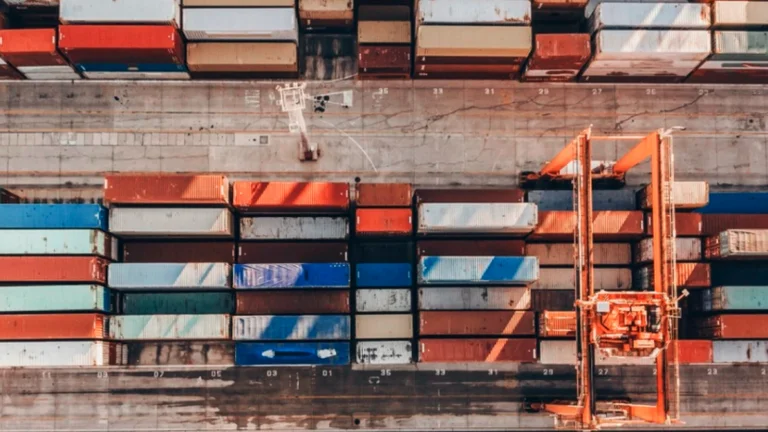
(4 years ago)container ports in Southeast Europe are increasingly vulnerable to smuggling illegal goods from criminal organisations. So says the report, entitled “Exploring illegal economies' sea routes in the Balkans” from the “Global Anti-organised International Crime Initiative”. This report, published on July 26, describes [...]
This report, published on July 26th, describes ways in which criminal organisations operate that control smuggling of illegal goods to Western Balkan countries.
The focus of this report is limited to container ports. This, since these ports appear to be the main access points for major drug shipments, such as cocaine from Latin America (mainly Colombia and Ecuador) or heroin from western Asia (Afganistan, Iran and Turkey).
During research into criminal activity in the Western Balkan countries and the activities of Balkan criminal groups abroad, it became clear that in the last decade, there were an increasing number of cocaine and heroin seizures at ports in Albania, Bulgaria, Croatia, Greece, Montenegro, Romania and Slovenia.
Recent research shows that the tentacles of criminal groups from the Western Balkans are now extending worldwide.
According to EU police authority, EUROOPOL, about 30 percent of Latin America's narcotics traffic, is currently controlled by criminal groups in the Western Balkans. Illegal money in Western Balkan countries accounts for about 6 percent of Bruto's local production (BPV).
Even taking into account the statistics on cocaine consumption in the region, we believe that everything that passes through this region has a final destination for Western Europe. This [Western Balkans] is simply a transit point”, said chief author of this study Ruggero Scaturro.
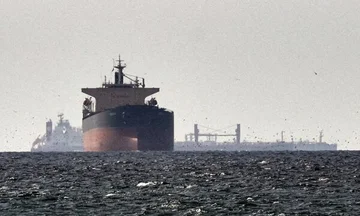
According to the report, between 2018 and 2018, about eight tonnes of cocaine were seized at the ports of Southeast Europe, with Piraeus (Greece), Durres (Albania) and Constanta (Romania) making up half the total of that amount.
The report stresses that seizures are numerous, but institutions' reactions to improving security standards in regional ports remain slim, despite numerous police operations.
The report tracks major trafficking routes and explains techniques used by traffickers.
Also highlighted is the ecosystem of their ports and weaknesses, and it describes criminal structures operating inside and around the ports.
On several ports, it seems there are cells of criminal groups operating as part of broader international networks. Some ports are crime magnets, not only because they attract local criminal groups, but also those from countries that do not have direct access to the sea”, says the report's author, Ruggero Skaturro.
Durres, key gate for traffickers from Albania, Kosovo
According to the report, the port of Durres, which is Albania's largest port, is the main artery for legal and illegal trade, not only for Albania, but also for its neighbours who do not have access to the sea, such as Kosovo and Northern Macedonia. Port is connected to west end of Durres Highway -Kukes-Pristina connecting Albania and Kosovo, with further ties to Skopje, Northern Macedonia.
It is stressed that this port handles approximately 90% of Albania's international maritime trade and 85% of the country's import-export trade. It is mentioned that in 2018, 26 percent of all Albanian exports were destined for Kosovo, most of which moved to Durres.
Cocaine in Albania through exotic fruit
Of the official data cited in the report, in the last three years at the port of Durres, about 1.5 tonnes of cocaine has been trafficked. The report estimates that if it could reach the market, it would reach the value of more than 400m euros. Large quantities of cocaine come to Albania, mainly hidden in containers, which mostly carry exotic fruit.
On May 17, 2021, another 400kg of cocaine, introduced by the port of Durres, was seized in Kosovo. The largest seized to date is the February 27, 2018, where 613 kilograms of cocaine were found in banana containers.
The use of fruit, such as bananas, is especially appropriate for drug traffickers because they offer a reliable and stable logistical chain from source to majority market, the report notes. It adds that their degrading nature, along with low taxation and high transportation frequency, makes banana boxes ideal for cocaine shipping containers, as loads are generally quickly distributed through controls and at a rate greater than perishable goods.
Tivar port in Montenegro, targeted by criminal groups
The port of Tivar in Montenegro has been a notorious cigarette smuggling centre since the 1990s and, over the past decade, a key entry point for cocaine trafficking. The port of Tivar is the only commercial shipping port on Montenegro's Adriatic coast.
Cocaine has regularly arrived at the port of Tivar in relatively large quantities since 2010. The shipments usually originate with Ecuador. From Tivar, drugs are transported in trucks to markets in Central and Western Europe, mainly through Kosovo and Serbia.
According to the report, in April 2019, police seized 60kg of cocaine aboard a Montenegrin Navy training ship supposed to be exchanged for heroin in Turkey. Several large cocaine shipments were seized at the port of Tivar in 2021.
In August 2021, a suspicious container from Ecuador carrying bananas arrived at Tivar aboard A.C. MSC Charlotte, via Cooper, Slovenia.
Law enforcement authorities traced the container to Mojanovic, northwest of Podgorica. It found that it was packed with about 1.4 tons of cocaine.
In January 2022, Dogan and Montenegrin police seized about 500kg of cocaine through another controlled shipment. The shipment arrived hidden in banana boxes in 70 containers from Ecuador. The surrender was organised by a criminal group with members in Montenegro, Slovenia and Ecuador.
Despite these seizures, prosecution remains the weakest link in the fight against illegal narcotics trafficking in Montenegro, the report stresses. No heads of criminal groups or their associates have yet to be arrested or prosecuted. Since 2015, the leading cocaine trafficking players in Montenegro have been rival Cavac and Shharari clans, who were once united as Kotor clan, whose boss, Darko Swell, was known as the cocaine queen.
The Techniques of Hideing Illegal goods
The Global Anti-Organized International Crime Initiative “network says traffickers have developed new and more sophisticated methods of hiding drugs.
Evidence from Balkan sea routes shows that drugs are being trafficked with techniques that do not require the use of containers, making the work of law enforcement more dangerous and difficult.
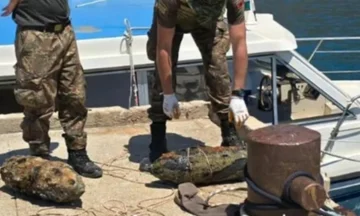
In May 2021, the Greek Coast Guard released a video showing a practice that is quite common in Latin America, but not much used along Balkan naval routes: divers discovered more than 46kg of cocaine hidden behind a reef in the chaff of a part of the ship at the port of Corinth in Greece.
During an operation aboard a container ship at the port of Ploces in November 2021, Croatian police divers found about 61kg of cocaine in a metal box tied to magnets at the end of a ship from Ecuador or Peru.
Despite being a highly known technique for law enforcement agencies in Latin America, the discovery of magnet use is the first of its kind along the Balkan naval route.
container controllers, port weakness
For security experts the key to all traffic developing through this port lies in the container control unit. With an average of 6,800 containers, which enter the port of Durres every month, the County Control Unit, in which there are representatives of Customs and Border Police, seems to still remain a delicate facility.
The network report says all those containers arriving from Latin America are subject to scan and control. In this situation experts suggest following the practice of other countries, such as the Netherlands or Belgium, where changing port officials is constantly done in order not to be corrupted by criminal groups.
The United Nations Office on Drugs and Crime since 2013 has launched the implementation of the Contact Control Programme, which applies to 21 different ports of the world. The report says that in one year around the world, some 850 million containers circulate for commercial purposes, and only 2 to 4 percent manage to control them. Those who are controlled are selected based on countries of origin, but if they come from Latin America, they're in <x0-alarm red” and they're subject to control.
Major drug seizures, but no prosecution of leaders of criminal organisations
Major drug seizures are often followed by the arrests of “smallweights”, however, there is little prosecution of leaders or attempting to track the shipment routes aimed at apprehending “largeweights”.
This report applies the approach of hot-hot epics used by the Illegal Economics Observatory Global Initiative against Organised International Crime in Southeast Europe to analyse organised crime in the Western Balkans, as well as criminal groups' activities from Western Balkan countries in other parts of the world.
According to the authors of this report, Balkan criminal groups have been strengthened for many years. They have expanded their activity across Europe, moving to Latin American countries, which are the main suppliers of the white powder market.
The report's authors recommend more co-operation between port managers, police officers, shipping companies and customs agencies along known traffic routes, such as the one between Latin America, Western Europe and the Western Balkans.
“We should switch from simply looking at the security of the ports to the pursuit and disruption of international flows”, Scaturro added. /rel/