13 minutes ago
Euro is “krin” these days, how does this translate into economy
Periskopi(4 years ago)
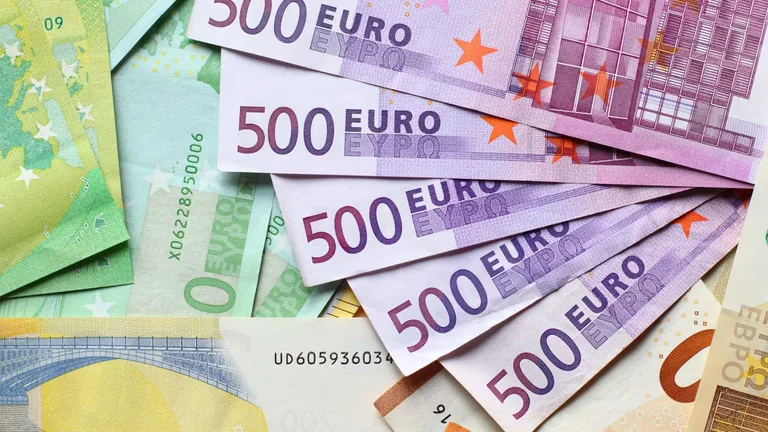
(4 years ago)If the euro had been a plane, the alarm would have sounded. At this low level that the euro has never been in the last 20 years. The value of the euro is now equivalent to the dollar. The euro common European currency has for the last time had the value of one dollar in [...]
The euro common European currency has for the last time had a dollar value in December 2002.
And Tuesday (12.07) a.m. arrived, after a few weeks' decline: A year ago, the European coin was $1.18. Experts did not rule out the possibility that the euro could once again attain equality, parity with the dollar.
The lowest value of euros was on July 5, 2001, when it marked $8,880.
It is concerns about recession that brought down the common European currency. Especially has the risk of stopping gas caused fear of financial markets, and since Monday (11.07) gas failure has become a reality. This ban would catch a grip on the conuncture in Germany and Europe. “The situation is still good, but it is delicate”, said Ulrich Leuchtmann, currency expert on German radio, Deutschlandfunk.
Does equality bring benefits?
A weak currency can also bring benefits, it helps export companies. Because after all, domestic goods would be cheaper for other countries, so sales would increase. Also exported abroad is purchasing power, which can buy German and European goods cheaper.
But such a benefit for domestic exporter companies exists as long as German companies produce goods entirely in Germany or in the euro area and then export them to other countries, says Sonja Marten, the currency expert at the DZ Bank: “when half ready products are taken from other non-EU countries, or when they are produced with a lot of energy, then this account is no longer profitable,” she thinks and remembers that the energy products are especially accounted for by dollars.
Inflation Pressures the euro
Increased energy prices have been one of the main reasons for the negative balance of German foreign trade in June, which causes more to be imported than to be exported - gas and oil.
High import prices particularly fuel inflation. And that doesn't like the European Central Bank. Because it wants to make the planned increase in interest rates in counter-prongedness.
But at the same time, she won't do it to you as soon as possible because there's a risk of suppressing the cone. So Marten speculates, that “it may first try to intervene literally”. But it is known from experience that this attracts speculants, who in a few days could bring back the course of the euro. But the decline in recent days is unusual: “This is about the nervousness of markets,” says Martin. Therefore, it does not rule out the possibility of comparing the euro with the dollar or short-term growth of euro value even under this limit.
Transatlantic Crisis Fear
That the euro is so weak against the dollar it always has to do with the US currency rating. “The National Fed Bank is again setting pace,” explains former Allianz's chief economy, Michael Hayse. It thus fights inflation and has begun to raise interest rates.
This frightened the stock exchanges, which are afraid of the US recession, Marten says.
But now the eyes are on Europe: Because if the economy falls in the United States, then the recession will affect Europe.
Euro is estimated under its value
Meanwhile, financial markets make calculations by the cautious way of Fed, notes Michael Hayse, who is now chief economist of HQ Trust. If the European Central Bank is going to take the first step now on interest rates and then take other steps increasing the interest rate perhaps more than it has been thought so far, then this could help the course of the euro again, he thinks.
Then the euro can quickly reach $1.10 or perhaps even more. He thinks the purchasing power of the dollar is currently overrated. Markets are also very nervous because of uncertainty. If gas continues to flow from Russia, then this would also come to the aid of the euro, he hopes Ulrich Leuchtmann from the Commerzbank bank. “A course so low of the euro is not justified.” DW