11 minutes ago
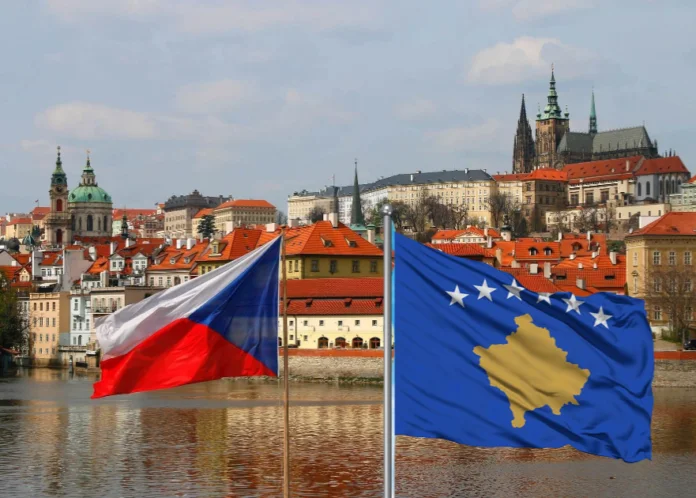
Cekia takes over EU Council chairmanship, priority even visa liberalisation for Kosovo
Periskopi(4 years ago)
(4 years ago)Chechia, on July 1st, took over the rotating chairmanship of the European Union Council, which lasts until the end of this year. In the first six months, France was in that position. According to diplomats in Brussels, Chekhia will hold as a priority a series of issues that have also reached the French chairmanship, dealing with [...]
In the first six months, France was in that position.
According to diplomats in Brussels, Chekhia will hold as a priority a series of issues that have also reached the French chairmanship, dealing with war in Ukraine and security of energy supply.
A senior European diplomat said Chekhia will have an important priority in the Western Balkans as well.
This source said that at the time of Russia's aggression in Ukraine, the European Union's enlargement process is more important than ever, and that this is also true of EU reports with Western Balkan countries.
According to him, Cekya hopes that during her presidency there will be concrete progress about the Western Balkans ʹ to start EU membership negotiations with Albania and Northern Macedonia, as well as complete the visa liberalisation process for Kosovo.
According to diplomatic sources, the highest levels are working so that the first intergovernmental conference, with which membership negotiations for Skopje and Tirana would symbolically be opened before summer holidays thus, in the first month of the Czech chairmanship.
As for visa liberalisation with Kosovo, Cekia, according to diplomatic sources, is willing to put this decision in order of the day, as soon as it proves there is readiness from member states for visa removal.
The European Commission has confirmed that it remains in the position that Kosovo has fulfilled all criteria and that the long-standing visa liberalisation process must be completed as soon as possible. But some member states, such as France, continue to express reservations about the free movement of Kosovars.
Diplomats in Brussels say that Cekia, in the quality of the EU leader, will consult with member states and that it has expressed readiness to advance the process.
During the Czech chairmanship, Croatia's entry into the free movement zone, Schengen, is also expected to be completed.
This state, which has become an EU member exactly nine years ago, is expected to enter the Schengen area on January 1st 2023, since there will be no more border crossings from Croatia to other EU countries.
France has submitted the formal proposal for Croatia's entry into the Schengen area just one day before its chairmanship ends, and now Czechia only remains to close the formal part, since the European Commission has confirmed that Croatia has met all conditions.
Usually, the countries that take the lead in the EU prepare their priorities a few years ago, but changing circumstances also make priorities change.
Thus, Czechia is imposed as a priority management of the refugee crisis from Ukraine; continuing aid to Ukraine, confronting Russia's aggression in each respect; security of energy supply, which means reducing dependence on Russia; strengthening economy stability in the EU and strengthening democratic institutions.
This is the second time Cekya has taken over the EU chairmanship since becoming a member of the bloc in 2004.
The first time this country led in 2009. During the then chairmanship, the Czech government has collapsed, but the country's chairmanship with the EU has been praised as successful.
Diplomats in Brussels say they are not sure that Chechia will organise any meeting of EU leaders with colleagues from the Western Balkans.
A senior diplomat said that the EU's last summit in Brussels with the leaders of the region, which was held last week, has been a <x0 failure so big that there will now be reluctance to organise such a meeting, if there are no clear signals that there will be concrete progress” for countries that aspire to EU integration.
Cekya, however, will organise a meeting of leaders in Prague on 6 October, when it will be discussed for the broader <x0); Europe” -- that is, the reports between the EU and other European countries that are not in the EU. But, for the format of this meeting, it will be decided later. / REL