37 minutes ago
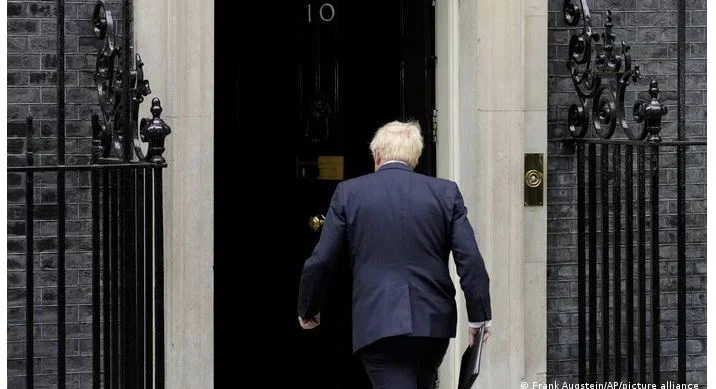
Who calls Downing Street after Boris Johnson's departure?
Periskopi(4 years ago)
(4 years ago)The conservative British party is in the race for Boris Johnson's successor, former Finance Minister Richie Sunak, after the first round of voting leads. The race closes on September 5th. British conservatives have started the race for Boris Johnson's successor. After the first round of voting, six candidates remain in the race. Most votes in [...] round
British conservatives have started the race for Boris Johnson's successor. After the first round of voting, six candidates remain in the race. The majority of votes in the first round received former Finance Minister Richi Sunak, by 88 votes. In second place, the secretary for foreign affairs, Penny Mor Ashdown, was ranked 67 votes in the third place as Foreign Minister Liz Truss by 50 votes. Candidates for Johnson's successor come out in several rounds, until after the end two candidates remain. After that, the election remains to party officials.
The prime minister himself still in office, who gave the first interview after the announcement of the resignation, Monday (11.07) spoke about his successor. Because he doesn't want to ruin anyone's voting prospects.
Candidate goals are similar
Tori turned his back on developments at the time when Boris Johnson was at the helm and now again appeared as a party of radical tax cuts. Almost all candidates for the prime minister post want citizens to have a bigger share in their income, while in Johnson's time, taxes reached the highest level of recent years.
Returning is also part of the return to social spending increases. Even tax hikes on companies, planned by the last Finance Minister Richi Sunak, have been removed from the agenda: The minister wanted this tax to increase to 21 per cent, many of the other competitors now demand lower taxes, to be at the 15 per cent level, thus giving up international plans to impose a minimum tax at a global level.
If this is the case with continued weakening of foreign investment, it is expected to be seen. Because all candidates are declared simultaneously in favour of a severe Brexit, which, according to estimates, has cost the country more than two per cent of economic growth.
The fear of even the most moderate wing candidate of hard Brex support in the group, dubbed incorrectly “European Research Group”, is so great that even the opposition leader dares not to touch the solid secession of the EU.
The biggest problem for these tax plans is that nobody can finance them. In addition to vague signals for cuts in public service and for possible <x0) fiscal spaces, the main issues remain unanswered. Due to Corona's crisis and poor economic growth in British state debts have increased by 95 per cent of the country's gross domestic output, and the future government of conservatives, regardless of who will take the lead, will continue to increase.
Good, Bad, and Unknown
And more: Of course, all promise without exception a new beginning. The list of candidates and candidates before the first rank had diversity as never before, many of the candidates were of Asian or African origin. However, they create a strange mix made up of former ministers of Johnson's government, highly controversial figures and total strangers sitting on the reserve bench.
The biggest chances appear to be to be to Finance Minister Richi Sunak, who took the lead in the first round. However, intrigues against him are being diligently cooked: New evidence of the country he has chosen to pay taxes to his wealthy wife and the fact that Sunak himself has long had an American residence permit, Green Card, seek to discredit her in the eyes of party members.
There are rumors that the campaigns against him come from Boris Johnson's councillors circle. Johnson himself is still indignant about Sunaku's resignation last week, which made the decisive contribution to the prime minister's political departure.
A lot of money, a lot of questions
With the back of the wall, Sunak's successor was also placed in the position of treasury director, Nadhim Zahawi, on charges that no tax payment will be investigated against him. He is accused of creating his multimillion - dollar fortune twice with firms that later went bankrupt.
Former Health Minister Sayid Javid, who brings with him the longest government experience and also contributed to Boris Johnson's departure, is being trained and twisted to provide accurate information on the tax issue.
It seems that many wealthy candidates have tax problems. This includes Foreign Minister Liz Trus, whose opponents continue to accuse him of having no idea. Or Attorney General Suella Braverman, who is supported by the right and fights against prejudice and racial discrimination and identity policy.
How does the process work?
The choice resembles a kind of election campaign: Two candidates are introduced to regional party organisations and ask them for a vote. Then at summer parties that are organised by the Toor in the cities where they have a majority south of England, a decision is made on what the party's favorite will be to go to Downing Street. To qualify to participate in the elections, each candidate must bring to the lower House of Parliament the vote of at least 20 colleagues. The deadline was Tuesday (13.07) evening. Following that are selection meetings in the Lower Room. The whole process lasts until 5 September, when the new prime minister is presented before the British.
Candidates were selected in two election rounds, the first took place on Wednesday since six candidates remained in the race next Thursday, where those who get the least votes will leave the race. Those who remain in the race are reduced to other rounds by removing those who remain at the bottom of the list.
Graham Brady, chairman of the so-called “1922 The Komites” of the Co-operative deputies, the committee that plays a crucial role in the process, will reduce it before the start of summer holidays on July 21st, the number of candidates dropping to two. This pair goes to final choice.
The next two weeks Parliament will be transformed into a large depot of intrigues, domestic wars are contaminated by the climate in the party. The decision for the new prime minister is then taken by 100,000 members of the Conservative Party. Last time most of them gave Boris Johnson their vote. Now they have to wonder what qualities besides the humor and talent of populism his successor should be. / DW