13 minutes ago
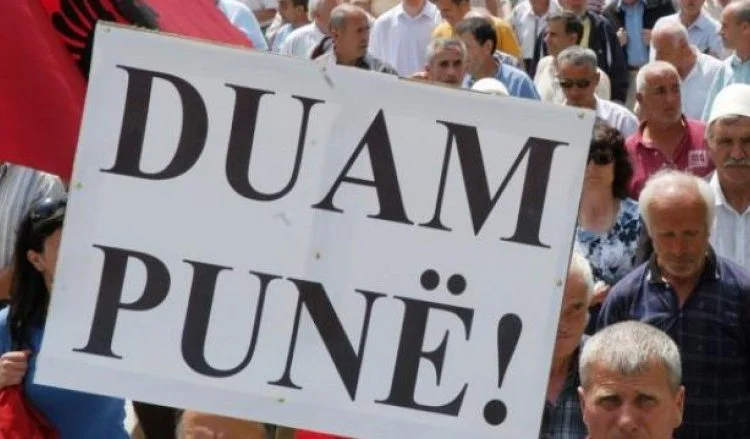
Lack of workers drags Kosovo into crisis
Periskopi(4 years ago)
(4 years ago)Long-term work hours, annual holiday denial, contract-free jobs, low wages and delays are complaints that over the years have expressed private sector workers in Kosovo. Many of them have often been reported to the Labour Inspectorate, but by the private sector employees' union say they have [...]
Long-term work hours, annual holiday denial, contract-free jobs, low wages and delays are complaints that over the years have expressed private sector workers in Kosovo.
Many of them have often been reported to the Labour Inspectorate, but by the private sector employees' union say they have gone unnoticed.
Mayor Jusuf Azemi says that, as a result, Kosovo has reached a difficult economic situation -- with businesses complaining that they find no workers and unemployed people who refuse to work.
Various young people in Kosovo are leaving abroad... They no longer want to live with the hope of getting well. They do not want to work in poor working conditions with low wages”, Azemi says.
During 2021, the Labour Inspectorate has accepted over 5,000 complaints from the party, considered to have been violated in the workplace.
His records for last year also show that nine citizens have lost their lives at work, 40 have suffered serious injuries and 139 minor injuries.
Officials of this institution have said that working conditions should be improved on the contrary, workers will be evacuated.
On June 12th, Radio Free Europe has brought the confession of Imer Durak, a farmer from the village of Krusha the Great, who cultivates different agricultural cultures but has problems with finding seasonal workers.
The payment it offers is 20 euros a day, or up to 420 euros a month.
Many social media users, who have commented on his confession, say they would not work for that kind of money.
Radio Free Europe has contacted several and one of them, who has sought to remain anonymous, says that, until 4-5 years ago, he worked as an electrician at a private company in Kosovo, with a monthly salary of 500 euros.
But, as he shows, his employer has not paid him well, has asked him to work beyond schedule, and often without days of rest what has forced him to quit.
By 2018, he says that he has emigrated to Germany with a work visa, and a year later he has also taken his wife and three children.
It's safe for you to get your salary in time, your health insurance... Life isn't easy here, but there are rules that are respected. Here again, you have to work hard to live and have a good standard”, says 47-year-old.
Had workers' rights and salaries been respected, he says he would return to Kosovo.
The German Embassy in Pristina has announced to Radio Free Europe that, within the year, it issues about 5,500 working visas for applications made by Kosovo citizens.
Private sector vs. Public sector
Kosovo's Labour Law envisions 40 hours of work a week, labour contracts, annual pay break and so forth.
The biggest employer in Kosovo is the private sector, with more than 220 thousand employed. The average gross salary in this sector is around 380 euros.
Over 800,000 people are employed in the public sector, while the average gross salary there is about 620 euros.
The public sector does not report problems with disrespecting the Labour Law, nor with lack of workers.
Agriculture, gastronomia, construction and trade report most of the difficulties in finding workers.
Over 750 thousand citizens economically inactive
According to the Statistics Agency (ASK), unemployment in Kosovo is above 25 percent.
KSF's latest data on the labour market show that out of over one million working-age citizens in Kosovo, over 350,000 are employed, while over 120 thousand are unemployed.
According to the AKS, about 750 thousand citizens are economically inactive, which means they are not employed, nor registered as unemployed, nor are they looking for jobs.
How does the lack of workers affect the economy?
Lack of workers will become one of the main obstacles to economic growth in Kosovo, says American Economic Ode Executive Director in Pristina Arian Zeka.
The positive growth trend that we have seen over several years ʹ ruled out in 2020 [COVID-19] will not be achieved, and because of the lack of labor force”, Zeka says.
To ease the problem, he says efforts must be made by all ʹ from institutions to employers who have to consider, above all, the level of salaries.
Zeka says failing to address this problem by the Kosovo government is disturbing.
Radio Free Europe has several times contacted the cabinet of Kosovo's prime minister on this issue, but, until the publication of this text, there has been no response.
Kalludra: There are workers, there are no conditions
Rescue Kaluldra, head of the Division for the development of active labour market measures and analysis, near the Employment Agency, says workers have over 600,000 job seekers are registered, he says.
When the number of job seekers at the Employment Agency falls to 10 grand, then we can say that employers are right”, Kaluldra says.
According to him, low wages and poor working conditions have caused employers to face job shortages.
A 180-euro salary
Free Europe Radio has spoken with an employee in Kosovo, host of a six-member family who says it pays 180 euros a month.
J.D. A full name known for editing says he works at a private cleaning company.
This is where I work, work schedule respected, and vacation days, and we have contracts, but pay is low. I've been working in this company for 10 years. At first, my salary was 130 euros, now I have 180 euros”, he says.
With many similar ones in Kosovo, according to a study conducted by the Institute for Advanced GAP Research, about 105 thousand employees are paid.
They mainly work in the retail and trade sector, in the processing industry, in gastronomial, in financial and security activities, in construction, etc.
The Kosovo Assembly, on 14 June, has in principle voted a bill that paves the way for the minimum wage increase -- from 130-170 euros as it currently is, to 264 euros gross, or 250 euros net.
Workers' unions have also complained about this expected increase, saying it does not respond to the needs of citizens.
Kosovo, like many countries of the world, is facing growth in inflation, which has started with the COVID-19 pandemic and has taken off after the outbreak of war in Ukraine.
According to the Kosovo Statistics Agency, the inflation rate in May has increased by 12.5 per cent compared to the same period last year. /rel