7 minutes ago
An event beyond imagination: How the Ukrainian family was saved from facing Russian forces
Periskopi(4 years ago)
(4 years ago)At the time of a brutal Russian occupation of their village, Alla Voloshynovys and her husband, Vadym Smirnov, believe that a incorrectly established telephone pole saved their family's lives, writes Al Jazeera. In mid - 2021, a telephone pole was placed in the suburbs of Hostomel, a village [...]
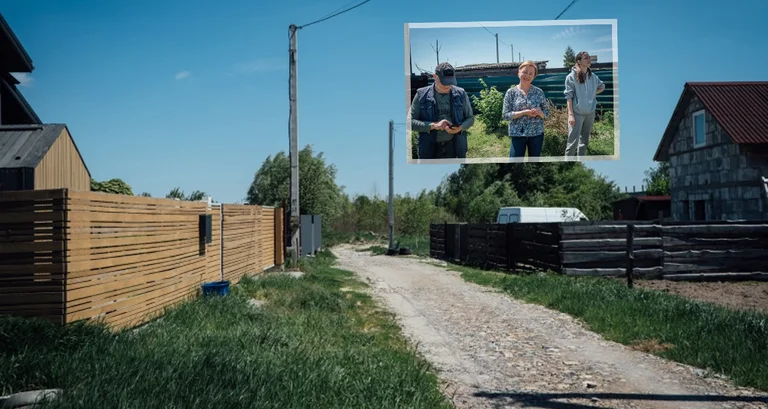
In mid-2021, a telephone pole was placed carelessly on the outskirts of Hostomel, a village about 20km northwest of Kiev, partially blocking a turn to the right of a narrow road.
Alla and Vadym, both doctors, had repeatedly sought out of the local council to change the position of the pillar that prevented the road to their own house that forced the driver off the road. But their neighbors, who enjoyed reducing traffic, constantly blocked their demand.
The inter-urban dispute resulted in several months of contention among residents of a middle-class province.
Then on the morning of February 24th, Russian paratroopers landed at Antonov Airport, located near their home, as Russia began its full invasion of Ukraine. Alla, a 55-year-old hair-haired physicist with a social approach, was up early morning from a phone call from her daughter in the nearby town of Buka. Mother, the war has begun”, the girl told her. Alla woke her husband from sleep and told him that it is time for the family to leave.
Arine Convoy
The couple is from the Luhansk region and had been forced to abandon their home eight years ago with their two children, Ilia and Anastasia Smirnov, then aged 6 and 18, as Russian-backed separatists occupied the area.
Wandym, 56-year-old, had insisted that he not leave his house again and had begged his wife to wait for the end of this fight”. He assumed a modern - day war on this scale would be decided in less than a week. Alla began marking each day with a margin on the wall of their living room.
Three days later, a 64km-long Russian military convoy arrived in the village as part of a planned attack on Kiev.
Alla recalls the scenes when tanks flooded the area filled with the Russian war symbol ÉZ. Russian troops quickly removed checkpoints around Hostomel, shooting people and robbing their homes. They also started to make bases in the area's number-number villas, painting with spray the symbol "V" -- another Russian symbol -- in the external entrances so Russian tanks would know not to attack those sites.
On the same day, using a wax pal, Alla looked out of the living room windows a row of Russian tanks approaching the road to their home before suddenly stopping in front of a telephone pole placed in a wrong place. The tank cluster seemed to claim that the road was clear and thus returned.
The couple had escaped a fatal confrontation with Russian troops who said that “watched everything they saw”, including, later discovered, even a number of their neighbors who had tried to flee through a forest in the vicinity. At least one they knew was killed. But they now found themselves isolated from any supply and after no exit route.
They continued to monitor the arrival and return of vehicles through dyobis during the early stage of the occupation. On one occasion, they had called a local Ukrainian Territorial Forces Unit to announce their views, but after hearing some unusual voices in the background, they were afraid that the occupational forces were spying on their conversations.
Fleeing
As the bombing shook the walls of the house, Elijah, their 14-year-old son, would climb under the table into his computer bedroom and listeners. He would be isolated from the real war around him and play online with his friends, some of whom had fled to Poland, Call of Duty, a video game of the first self. “War is much more frightening in reality than in a” game, he said, adding that he was constantly afraid during the first few days, “but that later, I was taught”.
The family was able to communicate with their daughter, a computer programmer, who lives in Butka, a few miles south of Hostomel, who would become the center of some of the worst atrocities in the war so far. She had managed to leave on February 24th to the relatively safe Ivano-Frankivsk region located in the southeastern country.
Then, on the seventh day of occupation, the Russians destroyed the local communications tower, and the family lost all contact with the outside world.
Wade, a creative man, had installed some solar panels at the height of their house. Despite the pale sun, the panel would produce enough heat during the cold nights, but the family soon began to face a lack of water and food. Eventually, on the morning of March 11, they decided to evacuate and head west.
They quickly put all the money in a bag and packed two cherry cans of gasoline on the car before they left it behind and wrongly placed the pillar, fearing what they would find at the first point of their stop.
Vadym, who was driving, was forced to maneuver near a few burnt cars that showed people who had tried to escape. Some families had scratched the word "children " in Russian in their destroyed vehicles, hoping that soldiers would have mercy. They drove near abandoned homes, some of them occupied by Russian troops.
A Russian Control Point
A few minutes later, they encountered a Russian checkpoint. A 20-year-old Russian soldier approached the car and looked with his eyes closed because of the sun. Alla recalls that he was countering the smell of alcohol and had a slight scratch down one eye, but “showed no signs of aggression”. He asked them where they were going before he could halfheartedly search his vehicle before allowing them to leave.
As Vadym continued to drive, Alla became anxious. The conduct of soldiers who had occupied the area was terribly disorderly, and Alla did not believe that they were allowed to leave. She knew that if the soldier hit the car, he'd probably hit the can of gasoline. Despite being filled with fear, the couple had done their best to look calm in front of their son. In the inner mirror, they looked as the soldier's silhouette finally disappeared in a distance.
During the following week of the invasion, rumors circulated among residents about the message services the Russians were using Soviet-era maps of the area around Kiev, making it difficult for them to migrate new roads.
So Vadym decided to avoid highly fortified roads, using several bike and forest routes. Eventually, they were forced to enter a regular street stretched out in the middle of a piece filled with Russian troops and the Ukrainian defensive line that was constantly taking place in Russian positions. They drove with a terrible calm along a hole-ridden street, risking firing bullets at any moment. But the shortcut turned out to be unusual, and eventually after they crossed the village of Worzel, they faced a row of vehicles with white flags shaped like white towels, part of a so-called green cohort for people leaving for the western part of the country.
Vadym recalls the images of cars that were shot or destroyed partially in line, but he and his family were lucky and allowed to pass without injuries outside the occupied territory.
Alla describes the moment he burst into tears when he saw the Ukrainian checkpoint. I was very happy to see our people, but I also felt grief for our soldiers. We were able to leave, but they were forced to stay and fight”, he said.
Early the next day, the family arrived in the Ivano-Frankivsk region, where their daughter and boyfriend had left.
Restitution of the Family
After more than two weeks west of the country, the family was able to return home after Russian troops began withdrawing from the area on March 28th. They have now repaired most of the lights destroyed by the bombings in the vicinity, but thin lines of sunlight still deport through bullet holes along the walls.
Anastasia came from her apartment in Butcha, where she has since returned to help her mother prepare coffee and fresh cake for the afternoon.
In a calm voice, she began to describe what it was like to see her family because you haven't heard from them for a week, but she soon turned her head as her tears streamed with tears. She took the little family cat and kissed her gently.
Alla went on to confess that it was very difficult for the family to adapt to life while in the west. I still had anxiety; it was very strange for us not to hear an explosion. I cried for three straight days after being placed there”, she said.
Vadym pulled out his phone selling it through his thin glasses. He kept what looked like a video of two heavily armed Russian soldiers standing on their balcony. We left on the 11th and the Russian soldiers came to our house on the 12th, but I've been watching the cameras all the time!”, he explained.
He had connected the surveillance system of cameras positioned around the house with a page of live on his phone before he left. Thus, from the Ivano-Frankivsk region, the couple watched as Russian soldiers empty their homes, draining family supplies with alcoholic beverages, and stealing electronic devices, including a threat.
Looking at strangers shooting at personal property made Alla feel sad “”. However, Vadym made a smile as he recalled a ridiculous moment when a soldier had lost his balance and fell down trying to make their own Segway.
Before the invasion, Alla would rarely consume alcohol. During her time in the West, she says that she is addicted to acooli to be numb by the trauma she has experienced. I started with wine, but soon I went to vodka because it was stronger, but now, even it doesn't have any effect”, she agrees.
Life Regains
When the family returned home, although it was destroyed, their electric car was left intact, so as the lack of fuel hit the country, the family was able to rebuild their home and buy materials for renovations.
The area was still full of homes destroyed and abandoned, but life was soon becoming a new form of reality. Bike riders whistled along bicycle paths, and some merchants have begun reopening their businesses, including a frequent cafe.
The family is trying to resume their lives. Alla is still filled with anxiety. Every time she sees a military vehicle or hears an alarm siren, she is reminded that the country is still at war. Every time I turn on TV, I see only war and I start crying”, she said.
The village has been destroyed in the long weeks of occupation, and many buildings are far from being repaired.
It is still unclear how many of Hostomel's 17 thousand inhabitants have died during the 35-day invasion. Initial reports by the Ombudsperson for Human Rights in Ukraine claim 400 people have disappeared. On March 7th, Russian troops shot the village chief to death as he was delivering medical aid and food to the city.
Alla's experience has left it with a “deep hatred for Russians”. She acknowledges that even though she was forced to leave their preliminary home in LuhansK after pro-Russian separatists occupied their land, she never thought Russian troops would commit the atrocities they have been investigating since February 24th.
“First, I thought this war should be some kind of misunderstanding”, she said. However, more than 10 mass graves have been found in the Kiev region, with Ukrainian authorities claiming that Russian troops have kidnapped and tortured defenseless civilians. Her voice was filled with grief as she added “Now, I feel I could kill Russians if I had a” gun.
Alla and Vadym have taken the whole mess home and repaired most of their damaged furniture. They have removed almost all the remains from their garden. Vadym even found some mines in the surrounding land and expresses some kind of frustration that they have not yet been cleared. He is punctual, but willing to forgive a part of the weak skill-the phone bar bent incorrectly. “She saved our lives”, he finished.
♪ Sokol Berisha, Periscopi