15 minutes ago
Biden announces establishing a global partnership to challenge China's impact
Periskopi(4 years ago)
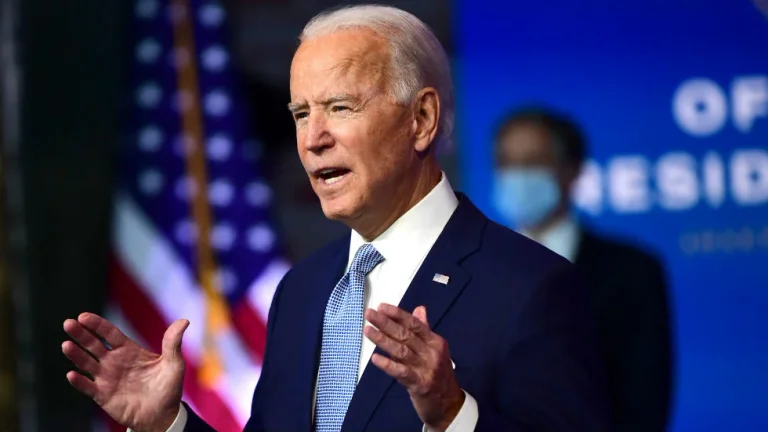
(4 years ago)US President Joe Biden announced on Sunday in Germany the start of a global partnership on infrastructure aimed at opposing China's influence in developing countries. The United States aims to mobilise some $200 billion in private and public funds over the next five years to finance the necessary infrastructure [...]
The United States aims to mobilise around $200 billion, in private and public funds, over the next five years to finance the necessary infrastructure in developing countries, under an initiative by the Seven Group (G7) aiming to challenge China's trillion dollar project “A generation, a” road.
All G7 countries will bring together $600 billion, under what President Biden called the Global Infrastructure and Investment Partnership, a set of values-oriented partnerships with high and transparent standards, with the aim of meeting the large needs of low- and medium-income countries without blocking them in debt cycles. A White House announcement said that this is only the beginning of Western engagement in this direction.
Earlier President Joe Biden praised the global alliance facing Russia over its war in Ukraine.
Mr. Biden called for the coalition “to stand united”. He said Russian President Vladimir Putin thought “could get us into conflict with each other, damaging our” resolve. The American president said the coalition has not split and will not do so.
Comments Mr. Biden made during a meeting with German Chancellor Olaf Scholz before the leaders of the Seven Group (G7), the world's top economies, began their annual meeting in Germany today.
President Biden and counterparts are meeting to discuss energy issues, confronting inflation, aiming to prevent the aftermath of the war from damaging the global coalition working to punish Moscow.
President Beden also announced that G-7 countries will ban Russian gold imports. Gold is one of Moscow's main exports. With this move Western leaders hope to further isolate Russia economically because of its aggression in Ukraine. / VOA