 an hour ago
That is agreement expected to be signed next week between Kosovo and Serbia
Periskopi(4 years ago)
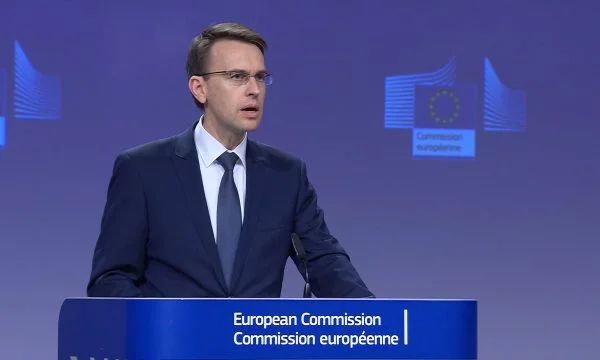
(4 years ago)The European Union expects Kosovo and Serbia delegations to finalise the energy topic next week. So EU Foreign Affairs and Security Policy spokesman Peter Stano told Radio Free Europe. “The EU expects the sides to close the energy issue over next week in Brussels at the level [...]
So EU Foreign Affairs and Security Policy spokesman Peter Stano told Radio Free Europe.
“The EU expects the sides to close the energy issue over the next week in Brussels at the level of top negotiators”, he said through a written statement.
The EU has been present at the meeting held last week between the Serbian side and the Electricity Distribution Company (KEDS) in Istanbul, Turkey.
KEDS from 2013 is under the management of the Turkish consortium “Calic-Limac”. This company has the exclusive power distribution in Kosovo's entire territory, manages and maintains assets on the ground.
At the beginning of the week, Kosovo's chief commissioner, Besnik Bislimi, warned that the energy issue is close to finalising an agreement with the Serbian side.
He said this issue would be adjusted “by respecting the agreement reached in April 2013”.
2013 agreement reached within Kosovo-Serbia dialogue mediated by the European Union, envisions that except KEDS, in Kosovo, is to be licensed another company for electricity distribution.
The agreement was confirmed in August 2015 by the then prime ministers of Kosovo and Serbia, but has never been implemented.
Currently, Serbian citizens living in northern Kosovo do not pay for the spent energy. According to System Operator, Transmission and Electricity Market in Kosovo (KOSTT) losses from energy bills in the north only for 2021 have reached 40m euros.
From 1999 to 2017, the debt for Kosovo's north has paid Kosovo citizens from municipalities in the south of Ibri. In 2017, however, such a practice was suspended by the Court of Appeals, for it was estimated to be illegal. Later, this decision was confirmed by the Constitutional Court of Kosovo.
The bills for energy spent in northern Kosovo are paid to COSTT, the Government of Kosovo, in fact.











