26 minutes ago
23 years from Kosovo liberation
Periskopi(4 years ago)
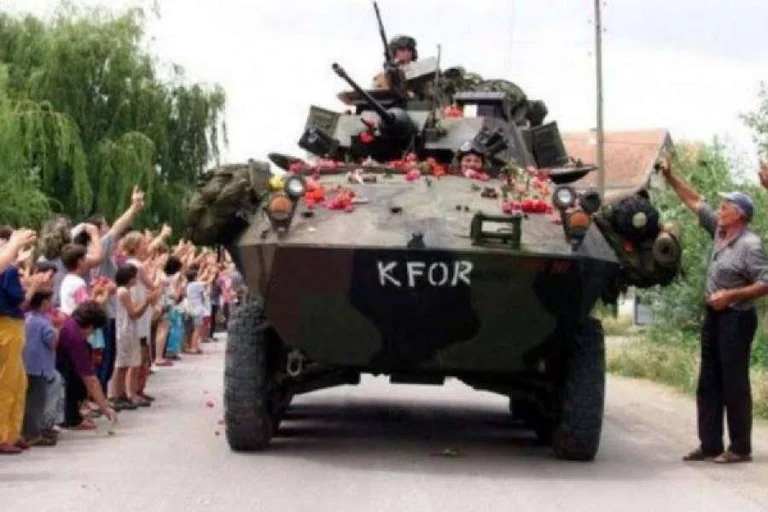
(4 years ago)23 years ago, 50,000 NATO soldiers were deployed in Kosovo, and with them the UN provisional administration. This event today will be marked with numerous activities in the capital and in other municipalities, such as homazhes from state leaders to the tomb of former President Ibrahim Rugova, the Ademi [...] activities.
This event today will be marked with numerous activities in the capital and other municipalities, such as the homazhes of state heads to the tomb of former President Ibrahim Rugova, the Ademi Demacci, Legendary Commander Adem Jashar and the Jashar family, honouring the Memorial Plaka of NATO's fallen soldiers during the service at KFOR's Kosovo operation.
Also held will be a performance of the KSF and KSF Ceremonial Orchestra and Togu Ceremonial Festival from Square “Skenderbeau” to Square “Zahir Pajaziti”, as well as central manifesto “From Exodus to Freedom” on the Muze train in Blace of Elez Khan, under the auspices of the presidency of the Republic of Kosovo.
On June 12th 1999, after 78 days of bombing of the US-led Western Military Alliance against Serb-Montenegrin military targets in Kosovo in Serbia and Montenegro, NATO troops entered Kosovo on the KFOR peacekeeping mission, ending the nearly two-year war between the Albanian rebel population organised in the ranks of the Kosovo Liberation Army and the Serbian-Montenegrin military and police occupational forces. Appreciated by those who experienced it as a day of liberation and as one of the biggest days of Kosovo's history, June 12th -- not known as an official holiday -- is a day when by international military and diplomats will be remembered as a day of ready-to-face confrontation between the West and Russia -- a day reportedly that could begin World War III. )
The first NATO soldiers to enter Kosovo on 12 June were Norway's special forces and those of the British Special Air Service, finding face-to-face with Russia's troops who the previous day had allegedly taken over Pristina Airport for the purpose of partitioning Kosovo.
Russia was aimed at bringing thousands of air reinforcements, but after the intervention from Washington, Bulgaria, Hungary and Romania rejected Moscow's demand for the exploitation of their airspace.
Following the American-British blockade of the airport runway, the Russian Foreign Ministry called the intervention of its soldiers a mistake. ) And everything else is history. NATO's entry returned to Kosovo more than one million Albanians.
The entry of NATO soldiers opened the way back to homes, land and their country to over one million dedisposed Kosovo Albanians in dozens of countries and three to four continents of the world.
So far, nearly 500,000 members of the peacekeeping forces of many countries, mainly Western ones, have served in Kosovo, being away from families and their most loved ones and sacrificing part of their lives for freedom, security and peace in Kosovo. / KP