4 minutes ago
Vuciq: Putin's Kosovo statements increase pressure on Serbia
Periskopi(4 years ago)
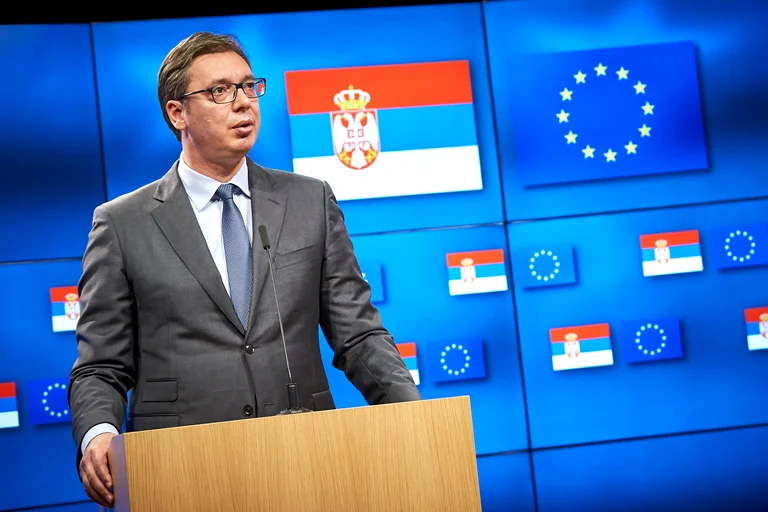
(4 years ago)Serbia's president, Aleksandar Vuciq, said his country “is under increasingly pressure” to recognise Kosovo's independence. He said the situation in Serbia “has changed for bad”, following claims by Russia's President Vladimir Putin. He, April 26, has compared Kosovo to two [...]
He said the situation in Serbia “has changed for bad”, following claims by Russia's President Vladimir Putin.
He, on April 26th, has compared Kosovo to the two separatist regions in Ukraine, Donjeckun and Luhanskun, jointly known as Donbas.
Russia, like Serbia, does not recognise Kosovo's independence.
Addressing the nation Friday afternoon, Vuciq said that “across the West would urge Serbia to move quickly towards recognising Kosovo's independence, so Putin says Kosovo cannot be compared to what is happening on Ukraine's territory”.
According to him, a small number of countries say they favour normalising relations between Belgrade and Pristina” and that a growing “requires mutual recognition”.
Vuciq said Serbia “is paying high price” even for the fact that it has not imposed sanctions on Russia due to the invasion of Ukraine.
Serbia remains the only country in the Western Balkans that has not sanctioned the Russian state, despite calls from the European Union and the United States.
Vuciqi's speech follows his stay in Berlin on 4 May.
Vuciq and Kosovo Prime Minister Albin Kurti have been hosted at meetings shared by German Chancellor Olaf Scholz.
The latter has ordered that recognising Kosovo from Serbia should be part of the agreement on normalising relations between the two countries.
Kurti, after the meeting, has said that the mutual recognition should be at the centre rather than at the end of the negotiations process with Serbia”.
Vuciq, on the other hand, has said Serbia “will do its best to reach a compromise solution”.
The dialogue on normalising relations between Kosovo and Serbia, with the European Union mediating, started in 2011.
The sides have reached dozens of agreements, but most of them have not found application on the ground.