a minute ago
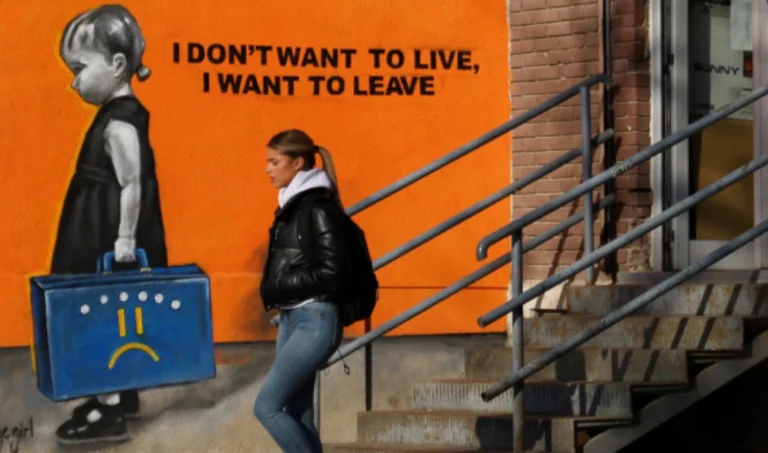
Paradox in Kosovo: Festival for Europe in front of embassy doors
Periskopi(4 years ago)
(4 years ago)Far from membership in the European Union and with citizens who have no right to move visa-free to EU states, Kosovo celebrates Europe Day 9th this year as well. As an official holiday, this day is conveyed to Kosovo on vacation, unlike nearly all EU countries, where 9 [...]
Far from membership in the European Union and with citizens who have no right to move visa-free to EU states, Kosovo celebrates Europe Day 9th this year as well.
As an official holiday, this day is forwarded to Kosovo on vacation, unlike nearly all EU countries, where 9 May is a normal day of work.
Artan Muhhaxhiri, connoisseur of political processes in Kosovo, describes the paradoxically the way Kosovo institutions celebrate Europe Day.
This decision [the official May 9th holiday] has been taken at a time when institutions and citizens have been hopeful of Kosovo's EU integration. But actually, reality is completely different. Institutions celebrate a day of an institution that does not treat Kosovo institutions with dignity, nor citizens”, Muhaxhiri says of Radio Free Europe.
According to him, the EU has neglected Kosovo in both the integration process and the visa liberalisation process for which all conditions have been met.
Muhramir says this <x0-negotiary” gives the impression that Kosovo “is required only to give and take nothing in exchange for”.
Government: This year we have big plans on the European agenda
The Kosovo government, on the other hand, vows it will take several steps this year towards concreteising EU integration processes.
In a statement to Radio Free Europe, the Government says they are working closely with states that are sceptical of visa liberalisation for Kosovars.
For this process, the Government says it has managed to persuade some of them, but does not specify which ones.
“is becoming four years that the [visa] issue is stuck in the EU Council, namely member states. Thanks to the work in rule of law, the fight against corruption and organised crime and positive developments in economic performance, we have managed to turn some reluctant and neutral states into support for liberalisation”, the government says.
According to them, any criteria of the total 95 that the European Union has placed Kosovo on the road map for liberalisation have been met.
Kosovo is the only country in the Western Balkans region that has no visa liberalisation with the EU.
Former European Integration Minister Vlora Citaku has said in an interview for Radio Free Europe on May 7th that it is the unfair “” and “Behomie” the way the European Union treats Kosovo citizens.
According to her, with the non-liberalisation of visas for Kosovo, the EU is losing its credibility.
There's no logic, no explanation. True, it was a moment ago, but we lost it due to the procrastination process of demarcation with Montenegro. In the end, however, obligations, we have fulfilled our commitments to”, Citaku said of the REL.
Although all criteria have been fulfilled since 2016, the decision on liberalisation is unknown when. It has repeatedly been hampered by several EU member states, such as France and the Netherlands, which have expressed reservations about the free movement of Kosovars.
In Europe, the only countries that do not seek visas for staying up to 90 days a year for Kosovars are: Albania, Northern Macedonia, Montenegro, Serbia and Turkey.
Kosovo is, too, the only one in the region that has not applied for EU membership. But, by the Government, they say the application in this bloc is expected to take place in the second half of 2022.
Our “ion is that in the second half of the year, based on assessments of our work and reforms, we have a positive moment and reach consensus among the 27 [EU] member states, that after the presentation of our application, the Council of the EU will invite the European Commission to prepare the questionnaire for the assessment of candidate state”, the Kosovo Government's statement granted Radio Free Europe.
In addition to these preparations, the Government says that, in a short time, it will apply for membership in the Council of Europe to the international human rights organisation, democracy and rule of law in Europe, as well as to NATO's Partnership for Peace.
For the latter, a working group has already been established by the Government.
Partnership for Peace is a programme of NATO, aimed at building confidence between NATO member states and other states in Europe.
Mazrek: Security of recognitions by EU states, key to integration
But, in spite of government pledges, European Law Professor Avni Mazrek says any integration process will depend on securing recognitions from the five EU states, which do not recognise Kosovo.
Without preliminary recognition from Spain, Greece, Slovakia, Romania and Cyprus, Mazrek says Kosovo can hardly make any progress in integration processes.
While there are five non-states that recognise Kosovo, then Kosovo's desire for EU membership remains only imaginary ambitions, with the fact that this is how the EU works, because decision-making for state accession must be consensual”, Mazrek says of Radio Free Europe.
Unrecognizing states still have no signal of change of attitude.
Mazreku predicts that Kosovo will have a long way ahead of itself in this process, but encourages the surrender of EU membership application.
According to him, the Russian invasion of Ukraine has provided a moment that may be favourable for states intended to become part of the European Union, though, he adds, this is a complex process requiring the “great willpower within member states”.
Where do other Balkan countries stand?
At a summit held in Thessaloniki, Greece, EU member states have adopted a joint declaration expressing their support for the European perspective of Western Balkan countries. “The future of the Balkans is within the EU”, they have said.
Since then, only Croatia, from the countries of the region, has joined the EU in 2013.
Membership negotiations have started Montenegro and Serbia. Northern Macedonia and Albania remain pending the launch of these negotiations, while Kosovo and Bosnia and Herzegovina have only Stabilisation and Association Agreements with the EU, which is the first step towards membership in the bloc.
May Nine or Day of Europe marks the anniversary of what is known as Schuman's Declaration.
Signed on May 9th, 1950, this statement has proposed the creation of the European Coal and Steel Community first by a series of European institutions that have formed today's European Union.
Because there is only ceremonial character, Europe's day is not a holiday in the EU states, except in Luxembourg, and this in only the last four years. In other Balkan countries, it is also a working day.