6 minutes ago
China echoes Russia's propaganda of war in Ukraine
Periskopi(4 years ago)
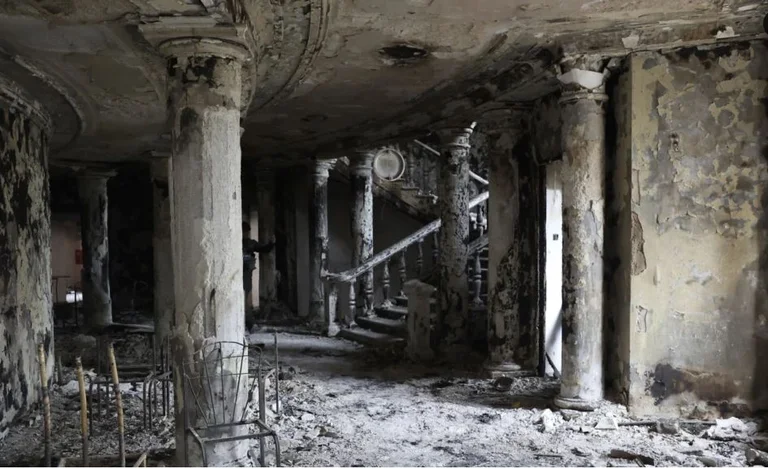
(4 years ago)On May 5th, media linked to the Chinese state, “T-House” restored a cartoon published by the Chinese Communist Party newspaper “Global Times” to Twitter. The caricature shows “Uncle Sam”, a figure used to symbolize the United States, stabging the back edge “Europe”, with the “dictatorship The U.S. is always with its allies”. [...]
The caricature shows “Uncle Sam”, a figure used to symbolize the United States, beating knives behind the back “Europe”, with the script “The U.S. is always with its allies”.
Each of the four knives attached to the back of “Europe” is written respectively: “capital removal”, “Energy loss”, “Refierate” and “Food Crisis”. On a sign on the right, it says “Crisis in Ukraine. ”
“T-House” adds its ironic footnote: “A good friend will always protect you”
In short, the message being conveyed is: the United States is guilty of catastrophic events in Europe stemming from Russia's war against Ukraine”.
It's a false message, but it's also an indication of the way Chinese disinformation has tried to use this war by spreading ongoing false reporting, which demonizes the United States and their Western allies.
China has repeatedly refused to criticise Russia for its actions in Ukraine. Prior to the start of Russian aggression in Ukraine in February, China accused the United States of citing the threat of war” as the Kremlin continued to lie about its plans.
Even when Russia undertook the attack, China continued to call it war. Chinese state media continue to call it a “itive”, “crisis” or “conflict”, following Moscow's example, which made it a criminal offense to name it war.
Chinese officials continue to repeat the lie that the United States had promised Russia that it would never be expanded NATO eastward, to former Soviet states, or neighbouring countries.
A spokesman for China's Foreign Ministry said recently that the United States holds the inevitable “responsibility for the outbreak of the crisis in Ukraine”.
In other words, China has not considered Russia responsible for the irrefutable fact, that it undertook a large-scale attack on Ukraine, extending a conflict that the Kremlin began in 2014 by annexing the Crime and promoting a separatist conflict.
In terms of consequences such as capital evasion, energy shortages, refugees and the food crisis, Chinese state media reports rarely present these problems within the context of Russia's illegal occupation.
For example, an article by China's Xinhua news agency argued that “across the European continent is bearing the main burden of the “conflicted”, not war.
The article noted rising global energy prices, threats to energy security and “a decline in the standard of living in many parts of Europe”, which has been dependent on Russian oil and gas supplies.
Xinhua wrote that the economic sanctions of the United States and the West “had made the situation in Europe” even more chaotic. The article used the expression “Russian-Ukrainian”, not distinguishing between Ukraine as an attack party and Russia as a aggressor.
The systematic lack of context makes surreal the coverage of war on the part of China, which often describes the consequences of attacks never to mention which party does it, or who is fighting.
In a report on Russia's air strike on a theatre in Mariulpol, which the Associated Press said may have caused the deaths of 600 people -- a Russian-speaking correspondent on China's CGTN television -- posed the question of whether the attack had been “a malicious provocation”.
The English translation letters did not include the phrase “malevolent approval”.
Reporting the crisis of refugees expelled from Ukraine has been similar. The United Nations said aggression has caused a serious humanitarian subx0 crisis”, with about 5.6 million refugees and 7.7 million internally displaced people.
A CGTN television chronice posted on YouTube on February 25th included interviews with refugees expressing the happy “they were in Russia” but did not mention why they had left Ukraine.
Another CGTN report noted that tens of thousands of people fled Ukraine every day, not to mention why.
Another video, accompanied by music, noted that people were leaving because of the “conflict in Ukraine”, but did not mention the fact that Russia had attacked.
A video of CGTN using the word <x0-war” in the video description meant that Ukraine is responsible: “With the Ukrainian government's decision to extend the state of war) by the end of April, displaced people have to enjoy less. ”
Chinese media address the so-called “power shortages” one in a similar way.
In March, the White House signed an executive order banning imports of oil, liquid natural gas and coal from Russia to the United States.
The European Union said on May 4th it could also stop Russian oil, which American National Public Radio called “an especially difficult problem for Europe”.
Russia is the main supplier for EU energy needs. The ABC reports that European Union countries import 40 percent of their gas and 25 percent of their oil from Russia and are not expected to achieve energy independence for years.
Meanwhile, about 40 percent of Russia's budget is provided by the sale of oil and gas. With these revenues it finances the war by easing the crackdown on Western sanctions.
Chinese state media reports focus on sanctions, or quote experts, who say the European Union is facing “the consequences of sanctions against Russia”, bypassing the fact that Russia is being punished for its illegal fight.
Chinese state media interviewed a Russian official who said that “illegal sanctions against Russian energy would only make Europe increasingly dependent on [the United States]. ”
The official presented the situation in such a way as foreign forces were creating an anti-Russian situation in Ukraine” rather than created by Russia's brutal actions in Ukraine. And in fact, sanctions are not <x2-> illegal”.
Ukraine is one of the world's largest grain exporters. Fighting, along with Russian blockades, is increasing world prices and worsening global food shortages, causing millions to face hunger.
But starting from reports in Chinese media is not Russia's responsibility. A CGTN journalist asked a senior agriculture official how to influence Russia's sanctions on food safety. An Xinhua report said: the global food prices rise at high levels amid the Russia-Ukraine conflict. ”
But it is Russia that has been charged with stealing wheat from Ukraine, while millions of tons of grain have remained blocked in Ukraine and cannot be sent abroad.