a minute ago
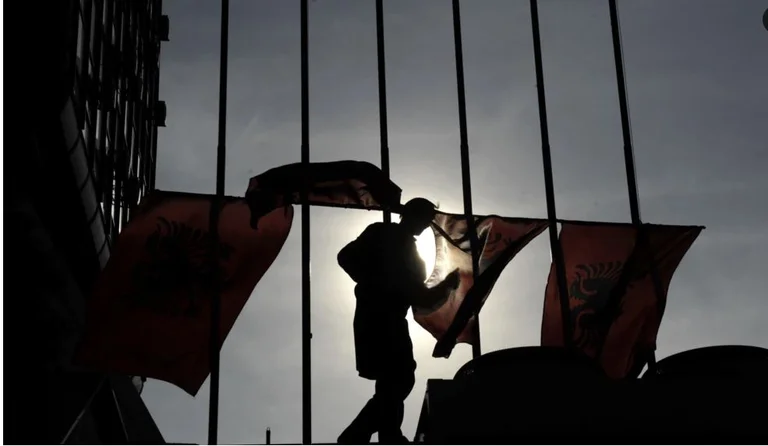
Albanian division deepens problems in Valley
Periskopi(4 years ago)
(4 years ago)The lack of unity among Albanians in the Presevo Valley is deepening the problems facing this community in the southern part of Serbia. Of the three deputies, as many as they had in the past Serbian legislature, Albanians have ended up with none at least for now, unless addressing some complaints indicates [...]
Of the three deputies, as many as they had in the past Serbian legislature, Albanians have concluded with none at least for now, unless addressing some complaints indicates otherwise.
This situation will turn us long after and bring us negative energy into our environment. There will be no economic development, there will be no prosperity”, Free Europe Radio Almin Shaqiri, deputy chairman of the Presevo municipality, says.
Presevo, along with Medvedja and Bujanoc, makes up what is known as the Presevo Valley of Albanian-run majority.
In Serbia's parliamentary elections, which were held on April 3rd, representatives of this community have competed with two electoral lists, but because of the low voter turnout, none of them have passed the threshold needed to enter the Serbian Assembly.
There were two lists in the race: The coalition of the United Albanians and the Albanian Democratic Alternative with a total of 20 candidates.
Their representatives have said they could not join because of <x0 political differences”.
In the 2020 elections, when they joined a list, the Valley Albanians have secured three seats in Serbia's Parliament.
The agreement on joint participation in the elections has been reached with the mediation of Albania's then foreign affairs minister, Gent Cakaj.
Today, Albanian parties in the Valley blame each other for breaking this agreement.
The “those who betrayed the Tirana Agreement are no longer at the stage they were in. And, now, exactly those who have betrayed the Tirana Agreement, come out and accuse the Alternative for Change, as if we were the ones who committed a violation of”, says Shaqiri, who is also deputy chairman of this party.
The alternative for change has been part of the Albanian Democratic Alternative election list, which in the April 3rd elections in Serbia has won 3,250 votes, or 0.09 per cent.
According to Republika Election Commission data in Serbia, the other list -- the Coalition of United Albanians -- has won 9,630 votes, or 0.26 per cent of them.
The carrier of this coalition, Shaip Kamberi, says the fact that his list has received the most votes shows that “who has broken the Tirana Agreement”.
The “legal options, or the facilities that are being made for the creation of political parties, are going towards fragmentation of the political scene, especially in municipalities where minorities live. This, then, is directly affecting people assigned to political aspirations, who have less support, 1,000 votes, to party”, Kamberi says of Radio Free Europe.
He adds that unity among Albanian parties has marred Serbian politics, but does not specify more.
Kamberi, who has been deputy in the past Serbian legislature, has often prompted reactions with his speeches in Serbia's Parliament.
During a speech in October 2020, he has said that parliamentary elections in Serbia, held that year, “have produced a totalitarian power”, which was not seen either by former Serbian leader Slobodan Milosevic, charged with war crimes.
The then chairman of Serbia's Parliament, Ivica Dacic, has said this presentation of Camber has been “provocational”.
Knowing the political developments in the Valley, Belgzim Kamberi, who is also chairman of the Council for Human Rights in Presevo, says relations between Albanians in the Valley “have degraded”.
Earlier, “has had domestic rivalries for local politics, but, in principle, there has been some kind of unity against official Belgrade. Today, this is nebulous”, he says.
According to him, political parties in the Valley must draft plans for changing the situation of Albanians in the area.
Kamberi says that to bring the positions between them maybe the Government of Kosovo and Albania will have to intervene.
Of these two governments there have been no public statements in this direction, but Kosovo Prime Minister Albin Kurti has allocated twom euros to the Presevo Valley from the 2022 budget.
There is no accurate number of Albanian residents in Serbia, as Albanians have boycotted the population census, which was done in 2011.
Based on an assessment by the Organisation for Security and Co-operation in Europe (OSBE), made in 2015, an estimated 70 thousand Albanian residents are registered in the Valley.
Of them, according to nongovernmental organisations and local political subjects, about 20,000 have migrated to Kosovo for various reasons.
Valley Albanians, now and so long, have complained of having their addresses checked and disrespected rights by Serbia's officials.
Postiting “addresses is changing the ethnic structure in the Presevo Valley”, Shaip Kamberi said in an interview for Radio Free Europe in 2020.
Kosovo President Vjosa Osmani has said that Serbia, through equipment, has denied “to Albanians in Serbia the fundamental right to vote” in the April 3rd elections.
Official Belgrade, in general, has not commented on the question of passive display of addresses.
The complaint by Albanians in the Valley has also been about the lack of English-language textbooks, even though an agreement on them between the Ministry of Education in Serbia and the Albanian National Council was reported in November last year.
The complaint, too, has been for lack of investment in the Valley, for stalling on economic development and for rejecting university diplomas from Kosovo.
Ragmi Mustafa, chairman of the Albanian National Council in the Presevo Valley, says that in this “collective security”, political parties should exceed divisions.
“Going to Serbia's Parliament does not mean that the problems of Albanians would be solved, but that means that a strong voice there, as resounding as it may be, would require more solutions and would alarm the international factor to be more interested in the Albanian situation in the Presevo Valley”, Mustafa says.
For some, the lack of representation of Albanians in Serbia's Parliament would make no difference.
Even these deutants have done nothing” to resolve the underlying problems in Valley”, the director of the Centre for Monitoring and Exploration in Presevo, Mestim Sadriu, has told Radio Free Europe.