a few seconds ago
Official KASI relates why Rakip and Ndoqi were sanctioned
Periskopi(4 years ago)
(4 years ago)The United States announced imposing sanctions on some in the Western Balkans, including former Northern Macedonia Republic Prime Minister Nikola Gruevski, and former senior officials and public figures in other Balkan countries for corruption. “We have taken these actions in response to the involvement of these former officials in considerable corruption. [...]
“We have taken these actions in response to the involvement of these former officials in considerable corruption. Their actions undermined rule of law, democratic institutions and public processes in both countries and eroded public confidence in their governments”, State Department spokesman Ned Price said in a press release.
A senior State Department official said at a virtual audio press conference, that the United States is committed to helping Western Balkan countries realise their full economic and democratic potential, fighting political corruption.
The United States is committed to holding responsible those involved in corruption and will continue to use all means available to fight corruption and promote regional stability in the Western Balkans”, he said.
The sanctions are from the State Department and Treasury.
“The people appointed today pose a serious threat to regional stability, institutional trust and aspirations of those seeking democratic and fair governance in the Western Balkans,” said in a statement, Treasury Undersecretary for Terrorism and Financial Intelligence Brian E. Nelson.
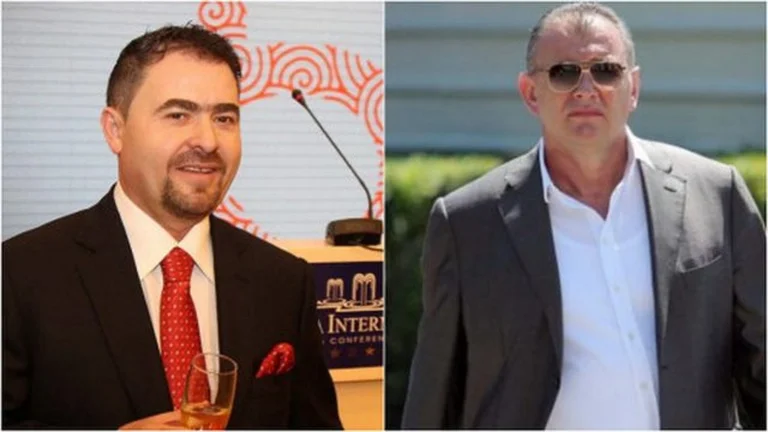
Treasury Department sanctions also target former President Saif Rakipi and businessman Ylli Shkluqi from Albania.
The Treasury Department said organised crime remains an important threat in Albania.
“Criminal actors remain influential in Albanian politics, using money and violence to channel support for preferred candidates”, the Treasury Department's announcement said.
“Aqif Rakipi is a notorious former deputate by Elbasan, who has a damaging and destabilizing effect on political processes in Albania”, says the Treasury Department.
The statement says numerous organised crime groups in Albania have offered money, gifts or promises of jobs or favors in exchange for votes for their favourite political party.
“Rakipi has long been involved in organised crime and is closely linked to an Organised Crime Group, within which he has exercised political influence, including corruption. For example, Rakipi has used his political influence to appoint his friends to the main public posts in Elbasan and Tirana”, says the Treasury Department.
While former deputet Rakipi was expelled from parliament because of the deriminal law, his son Ornaldo Rakipi was included in the list of Socialist candidates for Tirana, where a surprise, MP could be elected thanks to a high number of personal votes he managed to collect.
Regarding businessman Ylli Ndoqi, the Treasury Department said he is a media owner whose assets have been seized by the Albanian government in 2020 and 2021 for previous criminal activities.
“Ndroqi has used the media that he once had under control to blackmail Albanian citizens through demand for money and advertising purchases in exchange for preventing negative media reports”, says the Treasury Department's announcement.
The light is determined for responsibility or cooperation, or direct or indirect involvement in corruption.
While these individuals may have managed to evade justice in their countries, they will no longer be free to do business with the United States or with the international financial system. As a result of today's actions, all designated individuals will be blocked by relations with US individuals and businesses”, a senior Treasury Department official said at the press conference.
In the State Department's announcement reportedly that in its official quality as prime minister, Gruevski was involved in corruption acts involving the use of his political influence and official power for personal gain.
“specifically, there is reliable information that Gruevski abused the task by demanding and accepting bribes in exchange for government contracts, abused public funds and intervened in election processes to benefit politically himself and his party”, said the State Department's announcement”.
The State Department senior official said the United States' actions are not intended to convey a political message or “support any political alternative.
The “has only to do with corruption and it has to do with corruption and when we prove and identify it. And secondly, we will continue to work with governments in the region to ensure that they too fight corruption within the country”, he said.
In response to a question by the Voice of America about the fact that often the highly sanctioned figures are former officials, the senior official said this might be about the process of determining.
“We target anyone who is crediblely proven to be involved in corruption, so there is a process for this. And that's why some people ask why we do this because people are no longer in power, because sometimes that much time takes away (for setting)”, he said.
We are not only targeting people who are currently not active or in power. It is our commitment, of this administration to fight corruption wherever we find”, the official said.
He added that almost all the destabilizing political actions we see in the region are somewhat linked to corruption.
“What means that when political leaders use public resources and make decisions in public office to advance their corrupt goals, this is essentially destabilising”, he said.
Determining corruption from the United States included former Director of the Department for Security and Counter-Invention in Northern Macedonia Sasho Mijalkov, as well as former prosecutor Gordana Tadic from the chief prosecutor's office in Bosnia and Herzegovina.
According to the State Department, Mr Mijalkov was involved in corrupt acts involving the use of his political influence and official power for personal gain.
In its official quality as Bosnia and Herzegovina's chief prosecutor, Gordana Tadic used its influence to intervene in judicial processes, the State Department says.
Also included in Monday's sanctions were Svetozar Marovic, former president of Serbia and Montenegro before Montenegro seceded from the Democratic Party of Socialists, for co-operation or direct involvement in corruption, such as abuse of public property, expropriation of private property for personal gain, political purposes, or bribery.