15 minutes ago
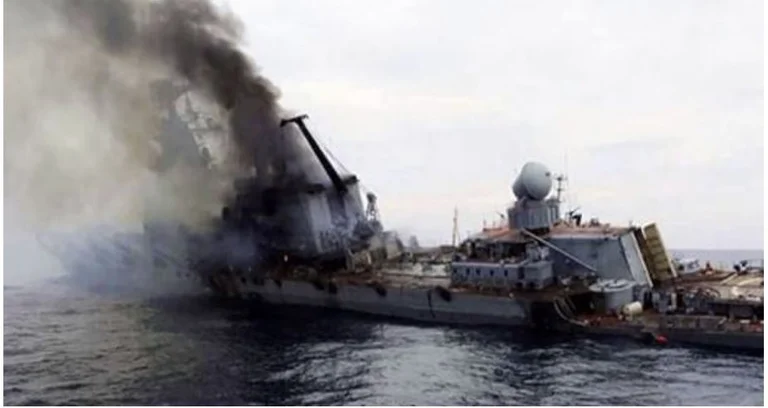
We don't know where to cry”, crew members “Moskva” reveal Russia's fraud
Periskopi(4 years ago)
(4 years ago)Relatives of the ship's crew “Speaking to the media, they ask that at least the Russian state tell them the truth and tell you where their bodies are, at least have a place to [...]
Speaking to the media, they ask that at least the Russian state tell them the truth and tell you where their bodies are, at least have a place to cry.
Despite Russian side claims, it turns out the ship “Moskva” sank after an attack by Ukrainian forces, and several crew members have lost their lives.
“He was only 19 years old, he was a recruit,” said Tsivova, who was crying while he was speaking over the phone.
She told the media that government officials had told her nothing else, not even when the burial would take place, while added that her son is not the only one who may have died on the sinking ship.
Members of sailors' families who served aboard “Moskva” are seeking answers after the ministry has sought to wipe out information about what happened to the ship or its crew of 510 people.
The total number of dead, wounded and missing remains state secret. The death of Tsiv, which has not been reported before, is only the second confirmed by the warship. Three other families have gone public saying they can't find their sons on board.
But media reports suggest the number of victims from the attack will be much higher, and efforts to suppress information about deaths have increased comparisons with the incident of the Kursk submarine, which left 118 sailors dead and dealt a prestigious blow to new President Vladimir Putin in 2000.
“This regime has never been too transparent in connection with the victims,” said Alexander Gabuev, a senior associate at the Carnegie Moscow Centre, noting Russia's military operations in Ukraine and Syria or investigations into the Beslan attacks and the Dubroka Theatre. Most of this is a priority and is not something very new or very surprising. ”
New information on young sailors who died would also renew control over the use of recruits from the Russian government in battle, something Putin had explicitly denied was the case at the beginning of the war.
The defence ministry was forced to admit it had established the recruits after some were captured in Ukraine in the first weeks of the war. She claimed she would stop using them.
But some parents of Moscow crew members have told Guardian and others that their boys aboard the ship were indeed recruits, not professional soldiers with contracts.