13 minutes ago
Will new arms shipments of hundreds of millions of dollars to Ukraine change “game”
Periskopi(4 years ago)
(4 years ago)The US recently pledged 800m more weapons for Ukraine, as Russian aggression enters the third month and Russian forces threaten to take over the southern town of Marioupolis and strike the capital Kiev with missile attacks. The Ukrainian Army has been using impressively the weapons NATO members offered before the start of [...]
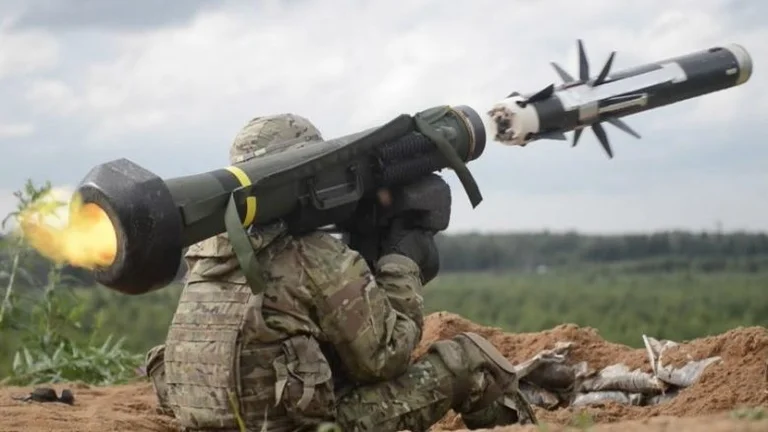
The Ukrainian Army has been using impressively the weapons NATO members offered before the start of aggression and over the past few weeks, including portable rockets and artillery.
In spite of Russia's superior weapons, Ukraine's forces have even been able to take advantage of the poor planning and tactical errors of Russian forces in many cases to retain control of most major areas of the population.
However, the Ukrainian government has called for additional weapons, especially fighter planes, to continue keeping Russian forces away, which weapons, NATO as a whole so far has refused to deliver, foreign media have written.
Poland had offered Ukrainian government fighter planes last month, but the plan was cancelled after the US intervened to stop it.
However, the new US promise will include several planes, although not the fighter planes Ukraine has sought to confront Russian air force; instead, 11 Mi-17 helicopters produced by Russia, launched for Afghanistan before last summer's chaotic departure, have been sent to Ukraine.
While they are not as efficient as fighter planes, such as MiG-29 or F-16, some Mi-17 variants can be equipped with antitank missiles and other weapons to attack Russian land and air forces.
The United States already gave Ukraine five Mi-17 helicopters earlier this year.
Powerful weapons systems that can launch long-term rockets, including ammunition directed with precision, are also heading to Ukraine, along with armoured personnel carriers and other vehicles, hundreds of ammunition, Switchblade fears, millions of bullets, as well as a host of other defense systems and defence equipment are also assigned to Ukraine.
The Pentagon confirmed Sunday for Vox that the shipments were currently “preparing”, though a spokesman failed to provide details and did not answer questions about helicopters in particular, including the specific model the US would send to Ukraine.
New weapons offer new advantages and challenges
“They are taking a large amount of what they need”, has praised Rita Konaev, associate director of analysis at the Georgetown University's Centre for Development for Vox on Sunday, despite Ukraine's continued prayers for fighter aircraft to try “against the Russian Air Force”.
It's unprecedented. We haven't seen so many [arms] of this calibre, so quickly”.
In particular, some types of weapons have been on the list of gun wishes the Ukrainian armed forces desperately need to avoid Russian forces as they focus on fighting in the southeast in the Donbas area.
Those devices represent a significant increase in capacity as Ukraine tries to remove Russian forces, John Spencer, an urban war expert at the Madison Policy Forum, thinks.
“You need these biggest, most powerful weapons... to match what Russia is bringing in an effort to get eastern Ukraine”, he said.
As it has been said, Russia is expected to increase fighting in Donbas in the east in the coming days and weeks, making the rapid distribution of weapons and new crucial equipment.
A Russian victory seems inevitable in Marioupol, which Russian forces have bombed and cut off access to basic needs and humanitarian aid for weeks, and they can use the same brutal tactics to claim other cities in Ukraine.
With this change in mind, spokesman John Kirby told reporters Wednesday that the Pentagon was sending the new weapons package as soon as possible.
And because some of the weapons systems are new to Ukrainian troops, there's going to be a <x0 teaching session” in the middle of a very active conflict.
However, Kirby told reporters Thursday that he does not think training Ukrainian troops on new weapons will be very easy; in fact, some Ukrainian troops have already been trained to use Switchblades, according to the New York Times.
But the new commitment of the Joe Biden administration, both in weapons and in timely delivery and training, has triggered a “qortim” from Russia, as Washington Post's Karen Deyung reported on Thursday.
“We call on the United States and its allies to stop the irresponsible militarism of Ukraine, which implies unpredictable consequences for regional and international security”, warned an official diplomatic note sent by the Russian embassy to the US State Department.
Can new weapons make a difference?
A more positive turn in the note comes from a senior American official who told the Washington Post that Russia's warning is an indication that US and NATO arms shipments to Ukraine are functioning as intended.
What the Russians are telling us privately is exactly what we've told the world publicly that the massive amount of aid we've offered to our Ukrainian partners is coming off extremely effective”, the official was quoted as saying, follows Telegrafi.
While US and NATO weapons have certainly played an important role in protecting Ukraine, and these new weapons are likely to result effectively in this new phase of conflict, there are complex factors to consider.
Despite major losses, Russia could theoretically continue to replenish its troops in Ukraine if it decides to do so.
“We don't know what Ukraine's reserve ébank looks like; they don't have the ability to refill forces”, Konaev told Vox.
Keeping Ukrainian troops alive and able to fight will be a critical part of continued assistance.
But the biggest questions about what the desired and real results of this conflict are and how it should seem a long-term strategic partnership to support Ukraine in this war are still unanswered.
In addition to a triumph of democracy over authoritarianism, specific and measurable strategic goals of US support have not been clearly unearthed.
In other words, Konaev said, do we not know if the goal is that Ukraine, “, wins? When? How? And at what cost?
However, sending weapons is essential for Ukraine to defend against an unjust and destructive Russian invasion; that is unequivocal.
But it serves only an immediate need and is narrow in scope; Defence support does not address the great humanitarian destruction Russia is causing at population centres as part of its military strategy.
So in the immediate and long term, weapons are not the only critical need; food, shelter, medicine and medical care are perhaps as important to the Ukrainian population and will continue to be long after the fighting is stopped.