22 minutes ago
23 Years From Mass Massacre
Periskopi(4 years ago)
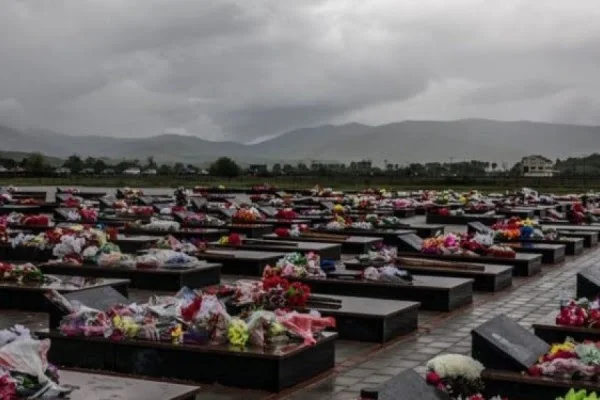
(4 years ago)Today it is marked the 23rd anniversary of the Meje massacre in Gjakova, where 376 people were killed on April 27, 1999. In memory of this tragic event, today the Government Commission for Missing Persons puts flower wreaths before the memorial of the undiscovered persons “square Skenderbe” in Pristina at 09:00. Kosovo Assembly Speaker [...]
In memory of this tragic event, today the Government Commission for Missing Persons puts flower wreaths before the memorial of the undiscovered persons “square Skenderbe” in Pristina at 09:00.
Kosovo Parliament Speaker Glauk Konjufca pays tribute to the Obelisk of the undiscovered people of the Parliament at 9:00 and Meja of Gjakova at 11:00. LDK Chairman Lumir Abdixhiku pays tribute to the memorial complex “The mourning line” at 10:30.
The Government Commission for Missing Persons in co-operation with the Co-ordination Council of the Family Associations of the Exiles of Kosovo, pays tribute to the Memorial Complex in Mea, at 11:00. While the Vetevendosje Movement will sow seedlings in memory and honour of 1617 missing persons from the recent war at the National Library in Pristina, 2: 00 p.m.
23 years ago, Serbian forces surrounded the Wicked Reca and the Carragoja Lugun in the Gjakova district. Within hours was the most macabre execution and the largest massacre in Kosovo's 1998-1999 war.
In a planned operation, all roads were cut off, leaving only two roads open to Meja.
Gathering of boys and men in groups aged 15-60 began in the early hours of the morning.
In a terrible balance, 15 villages of the Gjakova district were hit, executing all boys and men from house to house.
The Serbian Army units, police, red Berettas, paramilitaries, masked neighbours created the cordon with images of Srebrenica, executing 376 Albanian males in what is known as the day of last Yugoslavia's holiday, which was created under the blood dance of Slobodan Milosevic's lawyers on April 27th 1992.
That day none of the detainees managed to get out of Meya alive, and after the war their massacred troops, some were found in mass cemeteryes across Kosovo, while others have information that they are still somewhere around Serbia.
Despite the demands of various family members and organisations in Kosovo for their troops to return from Serbia, this has stalled by the Serbian state and has not yet been done.