31 minutes ago
15 years from review of Ahtisaari's UN plan
Periskopi(4 years ago)
(4 years ago)Fifteen years ago, the review of Ahtisaari's plan to the UN Security Council began. Following closed doors on April 3rd 2007, the special envoy for Kosovo, Martti Ahtisaari, was hearing the plan that is expected to grant Kosovo an supervised independence. Fatmir Sejdiu was scheduled to take his word, but after [...]
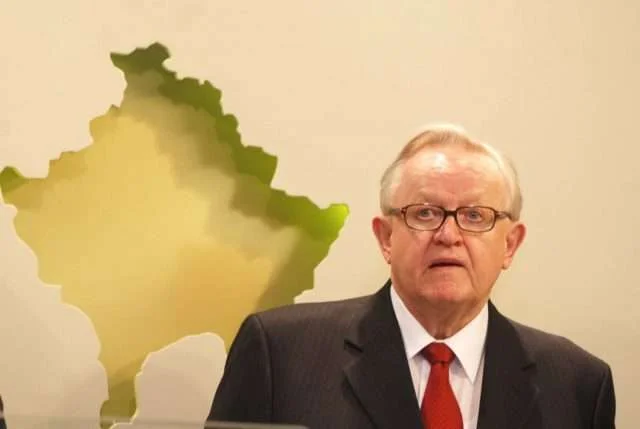
Fifteen years ago, the review of Ahtisaari's plan to the UN Security Council began. Following closed doors on April 3rd 2007, the special envoy for Kosovo, Martti Ahtisaari, was hearing the plan that is expected to grant Kosovo an supervised independence.
It was planned for Fatmir Sejdiu to take his word, but after the protests of Serbia and Russia, he decided not to speak and read his speech P. SSP, Joachim Ruecker.
Serbia's nationalist Prime Minister, Vosjlav Kostunica, rejected the plan and urged new negotiations and chief negotiators. Western states like the US, Great Britain, France is supporting Ahtisaari's plan. According to Ahtisaari and his team, the goal of a comprehensive proposal for the Kosovo status agreement is to determine the requirements needed for a future Kosovo that is possible, supported and stabilised. It includes detailed measures to ensure the encouragement and protection of communities' rights and their members, effective decentralisation of government, and preservation and protection of cultural and religious heritage. Furthermore, the agreement outlines constitutional, economic and security measures, which together aim to contribute to the development of a multiethnic, democratic and prosperous Kosovo. An important element of the Agreement is the management given to an international civilian and military presence in Kosovo to monitor the implementation of the Agreement and assist competent Kosovo authorities in ensuring peace and stability throughout Kosovo. Deposits of the Agreement will take priority over all other legal provisions in Kosovo.
Main parts of the deal:
Kosovo will be a multiethnic society, governing itself democraticly and with full respect for legal order, the highest level of human rights and fundamental freedoms accepted by the international world, and promoting the peaceful and prosperous existence of all its inhabitants.
Kosovo will have the right to discuss and approve international agreements, including the right to seek membership in international organisations.
Protection and support of community members' rights is a central element of the agreement. The agreement stipulates key aspects that will be protected, including culture, language, education and symbols. It also outlines specific mechanisms of representation of members of Kosovo's non-Albanian communities in key public institutions to preserve and support their effective and active participation in public life. To protect the rights of the Kosovo-Albanian communities in the legislative process, the agreement also allows certain laws to come into force only if a majority of the non-Albanian Kosovo Assembly members agree with their approval.
Elements of the Agreement for Protection and Promoting Religious and Cultural Heritage will ensure the unhindered and untempted existence of the Serbian Orthodox Church (KOS) in Kosovo. More than forty key religious and cultural sites will be surrounded by the Protection Zone to prevent harmful commercial and industrial development or construction, and to preserve the cultural dignity of these countries. The agreement also guarantees physical security strengthened for selected and endangered countries by any incident/attack on KOS property in Kosovo. The KOS and its internal organisation will be openly recognised by Kosovo authorities and will be recognised as the right to an invisibility of property, freedom from taxation and customs privileges, as in any religious organisation in the world.
All refugees and displaced persons within Kosovo will have the right to return and regain their personal assets and properties. The agreement also calls on Kosovo and Serbia to co-operate fully with the International Red Cross Commission to resolve the fate of missing persons.
A Kosovo Security Force <x0, and multiethnic, to be established within a year. There will be a maximum of 2,500 active members and 800 reserve. The agreement requires that the Kosovo Protection Corps (KMK) that exists today will be distributed within a year.
Acknowledging the fact that meeting Kosovo's responsibilities under the Agreement requires a broad range of complex and difficult activities, the agreement stipulates an international presence in the future to monitor and support the needed efforts of Kosovo authorities. This presence includes three key components:
An International Civilian Representative (PNC), also known as the EU Special Representative, will be appointed by an International Steering Group (GDN), which includes the leading international actors. The PCN will have the highest monitoring authority on implementation of the Agreement. In contrast to the SPSP, this representative will have the authority to replace all those institutional representatives, whom, according to the international community, acts against the Ahtisaari package and implementation of legislation that emerges from it.
Once the deal goes into effect, there will be a 120-day transition period, during which the existing mandate of UNMIK will remain unchanged. However, to ensure immediate supervision of the implementation of the Kosovo Agreement, The PNC will have authority to monitor this implementation and make recommendations on U n NICH for actions to take to ensure compliance with the agreement.
During the transition period, the Kosovar Assembly, in consultation with the PNC, will have the responsibility to approve a constitution and legislation needed for implementing the Agreement. The new constitution and legislation will enter into force shortly after the transition period is completed.
Within nine months of entry into force of the Agreement, general and local elections must be held.