11 minutes ago
Russia ʹa opponent who increased the sensitivity of refugees
Periskopi(4 years ago)
(4 years ago)Countries that have rejected asylum seekers in the past have opened the doors to Ukrainian refugees for two reasons: first, cultural and social proximity, and second, Russia itself. So says in an interview for Radio Free Europe Jacob Kurtzer, director of the Humanitarian Agency near the Centre for Strategic and International Studies. According to him, [...]
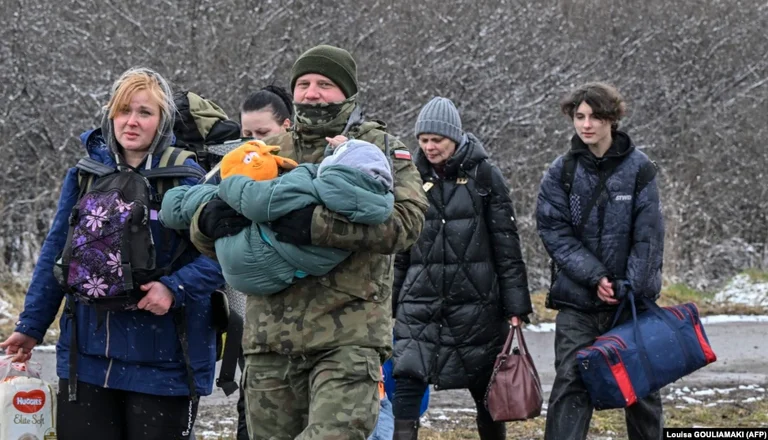
Countries that have rejected asylum seekers in the past have opened the doors to Ukrainian refugees for two reasons: first, cultural and social proximity, and second, Russia itself. So says in an interview for Radio Free Europe Jacob Kurtzer, director of the Humanitarian Agency near the Centre for Strategic and International Studies.
According to him, the countries welcoming Ukrainian refugees today have the experience of coping Russian aggression.
At a time when the number of displaced people from Ukraine has exceeded 2.5 million in less than three weeks of war, Kurtzer says he is concerned that the humanitarian situation could get worse.
Radio Free Europe: War in Ukraine has created the fastest mass migration in Europe since World War II. Was the continent prepared for this?
Jacob Kurtzer: I'm not sure. Much has been said about waiting for a refugee crisis. Some individual countries, humanitarian agencies, and the Ukrainian Government have mentioned it, but they have not made any planning, or great preparations, as if not to create panic or create the feeling that it is certain to happen.
However, we have also seen these countries sent Military Relief or other economic packages in Ukraine, which means they predicted the conflict. So it is a little disturbing that no more steps have been taken in advance to prepare the foundations for a better humanitarian response.
Radio Free Europe: What resources are needed, and what are states obligated to do?
Jacob Kurtzer: First, there are basic human needs, such as housing, food, and water. With housing, we understand where people will stay, possibly not in refugee camps or in centers to move, but in apartments or hotel rooms. Fortunately, we're getting out of winter and weather conditions are improving. But if we anticipate that this crisis will continue for some time, then long-term and sustainable housing solutions are needed.
Countries that have signed the Refugees Convention are obliged to offer people a minimum service base and also legal status. I think at this point, the European Union and neighbouring countries have done good work, giving Ukrainians fleeing the conflict, feeling that they will be able to stay in those countries for a longer period of time.
But permission to work is a necessary step to ensure that people are able to live and provide themselves.
Radio Free Europe: European Union officials have warned that the war in Ukraine could produce up to 5 million refugees. Will Europe be able to cope?
Jacob Kurtzer: Europe can afford it and Europe will have to deal with it because the vast majority of people leaving Ukraine will stay in neighbouring countries and deeper in Europe. Financial resources are available. What we've seen from refugee crises in the past is that the more open and hospitable the host country is, the better it is for displaced civilians, but also for the citizens of that country.
Germany is an example. It has accepted a million Syrian refugees and made them live, work and contribute to Germany's growth. So we know that the European community can afford this.
Radio Free Europe: You mentioned Germany, but there have been countries like Poland or Hungary, which in the past have refused to accept asylum seekers. Why is the situation different now?
Jacob Kurtzer: I think the situation is different for two reasons. First, there is certainly an element of cultural or social equity with neighbor. There have been other refugee crises in the world. Neighboring countries that share language or some element of common history tend to be more open and more hospitable to refugee populations. This, in part, is true of the fact that when the violence is over, it is relatively easy for people to return to their homes.
The second reason, in concrete case, I think is about the opponent. Poland and Hungary have the experience of coping with Russian aggression. And so there may be a greater degree of sympathy for Ukrainians, who are now experiencing what those countries have experienced in the past.
Radio Free Europe: Do you think this crisis will change the way the EU handles migration?
Jacob Kurtzer: It's hard to predict. But, I think we've already seen massive changes in the way governments in Europe are thinking about their future, both in defence and in politics. So, I think it's fair to assume that this [crisis] will also affect how they think about migration and refugees.
Radio Free Europe: Do you think the United States will help Europe deal with the current refugee crisis?
Jacob Kurtzer: I am confident that the United States government will take many steps to support European countries that are expecting Ukrainian refugees. [President Joe's] administration Biden has already delivered a package to Congress, with billions of dollars allocated for humanitarian response.
I think the United States is working on overhauling the visa process so that Ukrainians can go to the United States for short or long term stays, while the situation within Ukraine remains unstable.
Radio Free Europe: Do you worry that humanitarian situation in Ukraine can it get even heavier in the next few days?
Jacob Kurtzer: I'm deeply concerned. Russia attacks Civil infrastructureCivil people trying to escape, railroads, transports, hospitals, shelters. We're looking at the worst scenario, while the conflict is in the early stages. The idea that conflict will be passed to urban centers, I think it's very disturbing.
Urban War It has very negative effects on the population. When water, electricity, and sewage systems are interrupted, then it is not just violence but also the possible spread of disease or possible food insecurity.
Radio Free Europe: And what's the humanitarian aid rate in Ukraine now?
Jacob Kurtzer: There is much effort to increase commitment. But, of course, humanitarian organizations should also be concerned about their own safety. We have seen both in this conflict and in the conflicts of Russia in the past how humanitarian acts are attacked. At present, there are Ukrainian organizations that are leading the humanitarian response, but it will certainly have to be done more, even though it is very difficult to offer humanitarian aid when bullets and bombs continue to fly.
Efforts are being made, good work is being done, but it will take longer. The first thing that has to happen is cease-fire and Russia stops attacks on civilian infrastructure. / REL