5 minutes ago
Putin's war in Ukraine plunges Russian economy into crisis
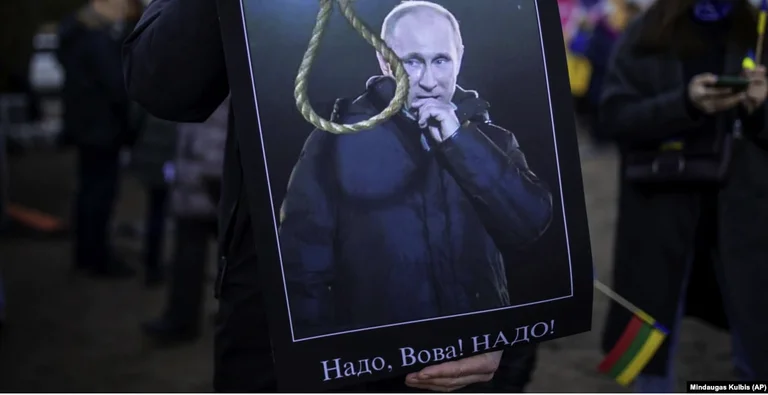
Periskopi(4 years ago)
(4 years ago)The Russians are preparing for an economic recession that could be the largest since 1990, after the United States and its allies imposed <x0->draft sanctions on Moscow, in an effort to punish Russian President Vladimir Putin for Ukraine's unprotested invasion. Citizens are facing a future involving growth [...]
Citizens are facing a future involving rising inflation, increasing unemployment, expensive loans, lack of goods and limited travel, analysts said.
The Russians had faced these problems even after the fall of the Soviet Union in 1991 until the Russian state waged war in an apparent effort to bring Ukraine under control.
The dark prospect, which may continue for years if Putin moves ahead with his military intentions ʹ stands in stark contrast with the optimistic economic forecasts made just three months ago by the International Monetary Fund, which predicted growth of 2.8 and 2.1 percent respectively in 2022 and 2023.
Instead, the invasion Putin begins in Ukraine on February 24th, It caused a host of unprecedented sanctions that are quickly isolating Russia from the West and damaging its economy.
Rubla has a major decline, interest rates have increased by 20 per cent, and foreign firms are leaving the country since the West as a bad state.
Russia's economy could shrink by up to 10 percent this year, according to one analyst, which would be its worst performance since 1994.
The riots have forced the Russians across the country to wait in line to withdraw money from ATMs, buy imported goods like computers and phones, and convert their faucets amid fears of banking cuts, rising prices and further depreciation.
Vladimir Putin became acting president on the last day of 1999, and a prominent Kremlin narrator has named him something close to a savior a leader who saved Russia from the privatities of the first post-Soviet decade and brought economic stability where there was unrest.
This image risks weakening as Russians, already hit by the decline of income in recent years, face a new uncertain future.
“Yes, we have returned to the 1990s, probably in an even worse period”, Elvira said, mother of two children from the wealthy Siberian city of Surgu oil producer, in a post in her account on social networks.
The G7 and other European countries, including Switzerland, have imposed severe financial sanctions on Russia since the invasion of Ukraine, including measures affecting the Russian central bank.
ruble devaluation
Sanctions froze a significant portion of the Russian central bank's currency reserves, unable to protect the rubla, which suffered a record drop.
Rubla has lost a third of its value since Russia began gathering thousands of troops close to its borders with Ukraine in October, increasing prices for imported goods.
Natalia Orlova, from Alpha Bank in Moscow, said he expects inflation in the coming months to reach up to 30 percent.
Speaking to Radio Free Europe, Russians have voiced concerns about inflation and other potential problems for their wallets, saying they will cut spending and reduce the budget for food and other basic things.
“Roblasts that I have will lose their value”, said a man in Kaliningrad, for Time, a Russian-language network led by Radio Free Europe in collaboration with the Voice of America
“Prices will increase, but salaries may not be”, he added.
Some citizens faced problems after American Google and Apple technology firms deactivated their payment applications in Russia as part of sanctions.
I couldn't pay at the store today, so I came here to get money at the ATM”, said a man at a bank in the Siberian town of Tomsk, who only made his name known.
In Ulan-Ude, east of Siberia, Oleg Mokhoseyev, went out to pull money over the weekend and had to try some ATMs until he found one who had something to pull.
I heard the debit cards might not work, and so I thought it would be better to pull and feel safer”, he said.
Deformation
OlegAyelyev, professor of economics in Moscow, told Radio Free Europe service Siberia that high interest rates will harm the mortgage market in the country.
There are few Russians who can afford tariffs above 20 percent”, he said.
This presents trouble for home builders as well as for the construction and real estate sector.
My agreements are breaking down because of the political situation”, a real estate agent in Kaliningrad told Cohort, referring to the situation that has been created since the Russian invasion of Ukraine.
Construction is just one of the sectors likely to experience an increase in unemployment.
Banks, production, travel, retail sales will also experience massive cuts as a result of Russia's sanctions and unfavourable deternation, analysts estimate.
US-set sanctions and its allies also affect its military-industrial base, and can also affect automotive production.
Economist Vladislav Inzemtsev told Radio Free Europe that a <x0val” of Western companies will cancel their contracts with Russian firms.
Major foreign investors, including BP and Shell energy giants, have already announced their withdrawal from Russia.
Likewise, Apple and Dell companies have said they will ban sales in Russia.
Elina Ribakova, an economist at the International Finance Institute, said at a virtual conference on March 1st that Russia's economy could shrink this year.
“Companies will not co-operate with Russia because it is politically toxic”, Ribakova said.
The country is moving from an economic structure to a completely different, completely closed structure, and I think that's what causes large contraction”, she added.
Even if foreign companies are still willing to work with Russian clients, inflation will still be a huge headache, Siberian Alexandrin, a major food producer in the Siberian town of Tomsk, told Radio Free Europe.
“I'm shocked”, he said.
“If retail stores are afraid of further inflation, collect (gather) articles before price hikes go into effect. They will simply destroy producers”, Alexandr said.
“I am against the war in Ukraine”, he said.
Why was this drastic action necessary to bring about this crazy economic downturn? They're supposed to reach deal”, he's done. / REL