13 minutes ago
Why does the use of chemical weapons always remain a good option in Vladimir Putin's mind
Periskopi(4 years ago)
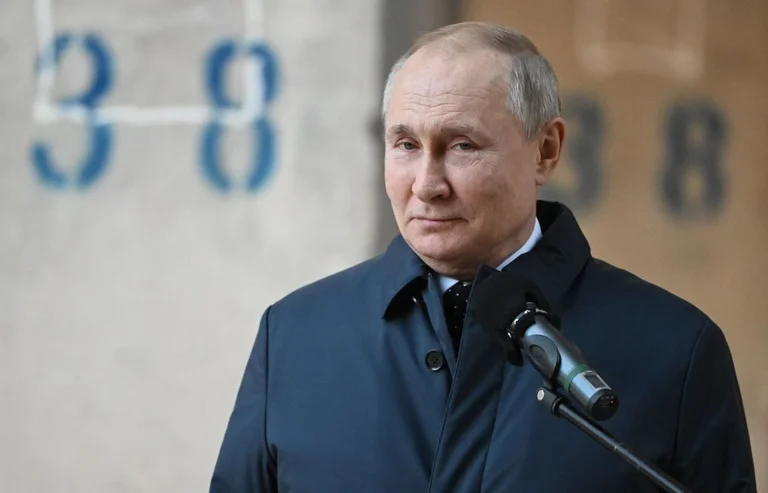
(4 years ago)Knowing that Vladimir Putin can not agree with failure, there is always the worst possible option in his mind: the use of chemical weapons to break Ukrainian resistance. It says Paul Rogers, The Guardian, renders: The Kremlin's Periscope to discuss chemical weapons at the UN Security Council, [...]
It says Paul Rogers, The Guardian, renders: Periscope
The Kremlin's tender to discuss chemical weapons at the UN Security Council, under the argument that the US and Ukraine are developing them, should be seen as an advantage of their use by Russian forces in Ukraine. The Pentagon so far spoke a lot about concern over possible use of chemical weapons by Vladimir Putin in the near future. But behind the intelligence of the case from mass media, there is a basic question: Why would the Kremlin think of the use of chemical weapons?
The problem for Western leaders is that even their advisers are constantly telling them that from Putin's perspective, there are many reasons why you believe he can do this exactly.
When Putin left for war, he had a specific goal to achieve: to take Kiev, remove current governance in Ukraine and replace it with a regime that he owns. By doing so, this could extend and confirm the aim of the Kremlin by placing about 1,000 miles [1 thousand km] near the consolidation regime in Minsk. Belarus and Ukraine would thus have permanent Russian bases - no doubt even for the development of nuclear weapons production capacities. Thus, the entire architecture of European security would change in favor of Vladimir Putin.
He could make Russia big again.
Putin's vision included the idea that NATO would be kept out militarily, but also the submission of Ukraine's people as well as the limit of military capacities.
But the plan was destroyed within 48 hours. The military resistance was powerful, there was no welcome for invaders, and Russian forces were becoming uncompetent throughout (in Ukraine). Two days later, Vladimir Putin came out with a speech threatening to use nuclear weapons as a direct response in the event of NATO's intervention, until his invading forces began regrouping for military battles.
16 days after the war (it was written when the war in Ukraine was on the 16th day as it is in the 19th), and this too is being problematic. No large city in Ukraine has yet to be conquered, not even Harkiwi, despite the city's great destruction. Not even Marioupolis is under full Russian control.
As the war is under way, Russian forces are facing major moral problems as the Ukrainian Army accepts thousands of weapons of defence, weapons that have flooded from NATO member states and bordering Ukraine.
Putin may continue to account for the destruction of cities, but he may think of other military options. And here comes the risk of using chemical weapons because there are specific elements in their use and that are important to Vladimir Putin's attack plan.
The first is that they can also be used for underground targets, including bunkers and subway stations, and the second reason they can be used to spread more fear (to break Ukrainian morality v.j.).
The use of chemical weapons can be done in five ways through agents such as gas, agents such as chlorine, blood agents such as cynogen chlorides, those known as chlorocolateofenone, and the worst: chemical weapons / nerve agents like sarin, Tabun, or V agents. The latter were used by Russian agents in their murders and attempted murders, including the Salisbury attack.
On March 16, 1998, Iraq's planes and artillery burned the Kurdish city of Halabaya, north of the country. Bombs and weapons fired with sarin killed more than 5,000 people, mostly degrees and children. The motive was to create fear among Kurds in Iraq, as well as a warning that anyone who opposed Saddam Hussein's regime would not be tolerated.
This may be the most terrible chemical attack ever since World War I.
Such a massive attack may not take place in Ukraine, but some individual attacks could occur against specific buildings in Ukraine or in a specific city that is of particular importance (for Russia). In addition to air, chemical weapons can descend to bunkers, basements, and train stations some of the countries where Ukrainian citizens are seeing as possible shelters and are continuing to use them for shelter.
It would be an incisive form of psychological thinking for Putin. His preliminary plan has failed, and now the whole vision remains in the conquest of cities one by one until the leadership in Ukraine agrees with its demands. And until that happens, the resistance of the Ukrainian people remains strong.
Putin can't agree to failure.
His future and all around him depends on his success and has so far used extreme violence to this point. The use of chemical weapons from Putin remains as an option still small, but remains there (as an option).
If Putin accounts for the use of chemical weapons, the only person who can stop him is Chinese President Xi Jinping. He's the only person Putin can hear. / Paul Rogers, The Guardian/Periscope/