6 hours ago
Transliterated: Dukagjia Gorani's dying wish to deal with Yugo-nostalgics in six minutes

Periskopi(4 years ago)
(4 years ago)That's Dukagjin Gorani's statement on last night's Pressing debate show in T7. Periscop brings it even transliterated: Have you ever lived in a society where no free word is allowed? As a person, have you lived in a society environment where there are no independent newspapers, no independent journalist, where there is no [...]
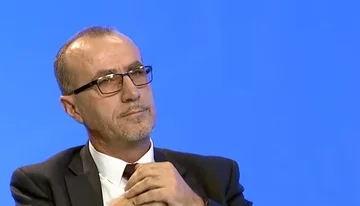
That's Dukagjin Gorani's statement on last night's Pressing debate show in T7.
Periscop brings it even transliterated:
Have you ever lived in a society where no free word is allowed?
As a person, have you lived in a society environment where there are no independent newspapers, no independent journalist, even where there is no question where you can criticize the government.
Have you lived at least one day, as people as conscious human beings, lived one day in a regime where you simply dare not dare to criticize power, since criticism of power is sentenced to prison, and if power likes it, it's punishable by murder?
And this trial has lived, and that a number of years I've lived in a social environment where it's understandable and natural not to have the free expression, that environment was Yugoslavia.
Yugoslavia has been offended.
Cultural, ideological, political, historical, side-side nationalism, along the sides of the national affiliations, Yugoslavia has been a primitive country -- Josip Broz's Yugoslavia has been a primitive community of primitive structures of Balkan peoples, which, above all, have hated change, development and progress.
Whoever mentions Yugoslavia and says that Yugoslavia has had culture, literature, cinematography, music, tonight I'm telling you, all that was worth in Yugoslavia has been products of cultural instability, even those people are locked up or killed.
There's no good film, bearing the seal of Yugoslavia, no good literature that's not published with 100 sodas, and the author is not sentenced to prison.
As long as Yugoslavia was a primitive country, so there were people who wanted to throw that primitive.
I think people like me have been part of that kind of breath. The desire to throw away a primitive, idealological, historical policy... but the shit we've learned in elementary school, in high school, they're incredible for you today as new generations.
They're incredible.
Those who praise Yugoslavia today can surely be good people at the time.
Just to live well in a country where you can't express yourself freely, where there's some idea that if you're a free medium and free expression, they're people and social groups that someone else should be taken away. They need professional help.
If you're an official of such a regime and you're trying to remember it as a man who was modest, who hasn't been usurped, extortion and privatisation, it's not a weekend and there's been yachts, that today we're alive, and I see the way they're trying to u amnitators, and that's how they're doing it.
If they say so by chance, but I leave it tonight, you know what you say to them: they had power over people's lives.
Maybe Fadil Hoxha, Xhavit Nimani and Josip Broz didn't have a lot of yachts, they had the chance to kill you, they could have imprisoned him for 30 years, they had the chance to have fun with him in jail, and they took the family away.
And that's greater power than all yachts, all villas. It's power over people's lives.
Dyspotic, ditcacacular regimes, I think, the world has condemned them, even when I saw that we're not able to punish them, it's not a problem to regime, but it's a problem.
Since the lustration has failed in Kosovo, I've seen here we have a business with a form of social thought, which is capable of getting worse to that extent, that with the amnist, I'd thank him, support him, and write books about a regime where you're a non-chalant, I'm thinking freely, where the whole world's watching you, that you don't dare stare at people who are political officials, people who are said to be employees of the regime.
Thank you.