 3 hours ago
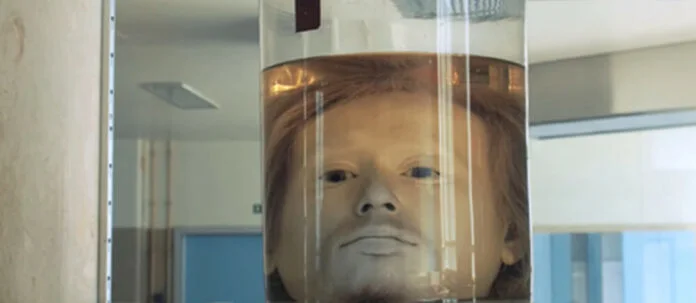
Why does the serial killer's head guard in jar 177 years after the horrible murders he committed?
Periskopi(4 years ago)
(4 years ago)Serial slayer Diogo Alves still scares passersby who face his cold eyesight, even though more than 177 years have passed since his execution. His perfectly preserved head is in a glass jar at Portugal's Medical Faculty, writes Reporter.net. Born 1810 in Galatia, [...]
His perfectly preserved head is in a glass jar at Portugal's Medical Faculty, writes Reporter.net.
Born in 1810 in Gallicia, a Spanish autonomous province bordering Portugal, Alves worked as a servant in the homes of wealthy citizens in Lisbon at an early age. When he was 26 years old, he began working in his homes along the Agvas Livres, a 60 - mile [18 km] - long channel that not only supplied the city with water but also was a bridge and a route for merchants. It was at this point that Diogo Alves started a series of his murders.
Alves was waiting for his victims on the bridge as they returned from the city with the money they had won. After he robbed them, he threw them into the ditch. The police initially thought it was a series of suicides, but soon the local population began to suspect that the killer was among them. In the next three years, Alves killed 70 people and police eventually closed the bridge. However, this did not prevent Diogon from continuing his cruel works. He created a gang that robbed and killed the owners of the wealthy residences where he worked, and after entering a doctor's home and killing the entire family, the police seized him.
The killer was executed by hanging, but his story was not over. In particular, Alves was executed at the time when science was still at its beginning. Such discipline, now considered psenosciency, was developed by German physician Franz Josef Gal. Franology claimed that the shape of the skull reveals character and even human tendencies. Not surprisingly, then, Portuguese prologues took an interest in the head of a criminal like Alves. Diogo became famous after death and his head, along with the rest of his body, inspired a comic book, a fictional biography, a novel, as well as a silent 1911 film “Os Creimes de Dio Alves”.











