42 minutes ago
Who and how much more will pay for the electricity?
Periskopi(4 years ago)
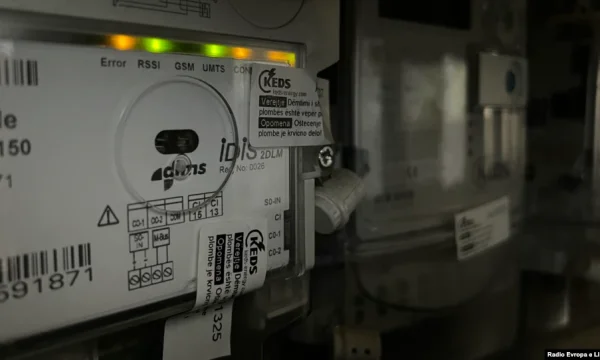
(4 years ago)Over 5 euros and above will be the difference in the current bill that will pay those Kosovo citizens, who spend over 800 kilowatts per month. Kosovo Energy Regulatory Office (ZRRE) approved on February 8th new growth bills for only one category of consumers [...]
The Kosovo Energy Regulatory Office (ZRRE) approved on February 8th new growing bills for only one category of consumers which entered into force the following day.
The change came after the rise of global gas prices. Given the fact that Kosovo does not produce enough electricity, it was forced to import electricity at more expensive prices. As a result, authorities also said they are forced to intervene at price hikes.
By Z's decision The HR for growth is affected only by those family consumers who spend over 800 kilowattts per month; those who spend under that amount will not notice changes in the bill.
According to ZERE clarifications, consumers who spend 900 kilowatts a month will pay 57.9 euros with new tariffs. The up to date tariffs have paid 52.9 euros. This means that the gap in the bill will be 5.1 euros.
For consumers who spend 1,000 kilowatts, the gap in the bill will be 10.1 euros; for 1100 kilowatt 15.2 euros; for 1,200 kilowatt 20.3 euros.
So, after passing the 800 kilowatt threshold, the consumption gap will be fatened by 5.9 cents per kilowatt during low rates and 12.5 cents per kilowatt during high rates.
Or, said otherwise, for any 100 kilowatts spent beyond the 800 kilowatt threshold, consumers will pay about 5 euros more.
In Kosovo, from October 1st to March 31st, the low electricity fee -- from 10: 00 p.m. to 7:00 -- applies.
From April 1 to September 30, the low rate is between 11:00 and 0800.
According to the Kosovo Power Supply Company (KESCO), new tariffs will affect only 22 per cent of households.
K E SCO said that for 78 percent of consumers there will be no electricity price increase.
The unchanged price for family consumers who spend up to 800 kilowatt has resulted following subsidies shared by the Kosovo Government.
The government has earmarked a total of 90m euros in subsidies, in order that, as it has been said, the increase in bills is not so high and does not become affordable to a category of citizens.
These subsidies also apply to businesses, which will have no increase in electricity tariffs.
Kosovo's government has said that raising bills for businesses would have a negative impact on the economy and increase prices of products and services.
The increased bills will apply until March 31st, 2023, when even regular consideration will be made.
The bill for the first few days of February until 9th will be done with old tariffs.
Differences between consumers, <x0 human rights breach”
The Council for Protection of Human Rights and Freedoms in Kosovo (KMDLNJ) said that “numbering for subsidies and reliefs for different categories of consumers is simply a fraud, just to calm the situation”.
“Then, division and differences among consumers are a flagrant discrimination and serious human rights violation”, KMDLNJ said in a communiqué issued to the media.
According to the Institute for Development Policy (INDEP), “selective and non-linear activity will increase energy consumption in the country”.
That, according to INDEP, “is the open distribution of the government's political influence in the ZERE decision”.
In Kosovo, days ago, it was protested against rising electricity prices.
Opposition parties, the Democratic Party of Kosovo, the Democratic League of Kosovo and the Alliance for the Future of Kosovo, have also opposed./ REL/