a minute ago
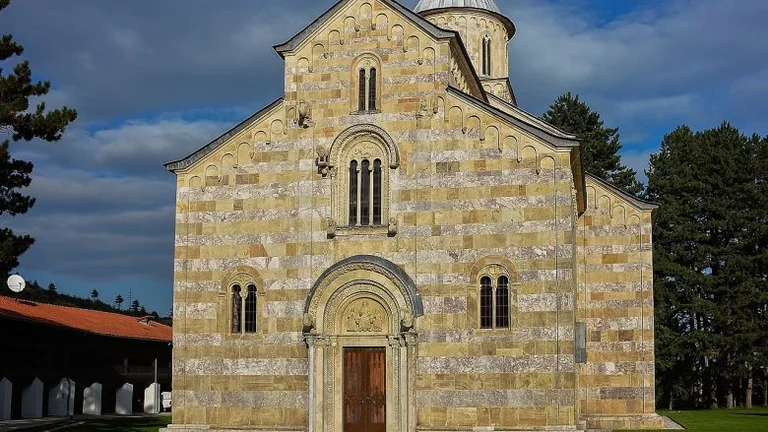
Nearly six years since “has been legally resolved”, the problem remains unfinished with the Decani Monastery
Periskopi(4 years ago)
(4 years ago)Even though the property issue of the Decani Monastery, located about 100 kilometers west of Pristina, has been legally resolved “ ”, the problem remains unfinished. For years, it has roamed between the judicial and executive powers of Kosovo. On February 4th, current Kosovo Prime Minister Albin Kurti reiterated [...]
For years, it has roamed between the judicial and executive powers of Kosovo.
On February 4th, Kosovo's current prime minister, Albin Kurti, reiterated his position that the Constitutional Court of Kosovo's decision to force local Decani authorities to return the Decani Monastery 24 hectares of land and forests is based on the 1997 “discriminatory policy of Serbia's Government”.
Then Serbian leader Slobodan Milosevic decided to donate that property to the monastery.
Kurti said his government would try to preserve the legitimate rights of the Decani Monastery, but added that religious leaders should also do their part, or seek solutions through dialogue and agreement with the local population in Decani.
Local authorities in Decan believe that the 24 hectares of land and forests are of social companies “Apico” and “Illaria” and insistently reject the implementation of the Constitutional Court's decision, which was taken in May 2016 and is final and binding on all sides.
These authorities consider that the Constitutional Court legalised Milosevic's decision.
Diocese's Response
Raska's and Prizren diocese reacted sharply to the recent Kosovo prime minister's statement, praising that Kosovo authorities are making <x0 systematic acts of discrimination and open hostility towards the Serbian Orthodox Church”.
Dioceza said implementing the Decani Monastery property decision is the “condition to show that dialogue is not only a show for cameras and foreign officials”.
According to this diocese, the Serbian Orthodox Church in Kosovo is treated as a political institution or something through which political influence is exercised, which, reportedly, has no basis.
“We believe that there is no procedure, since 2000, that has been followed so much and is so politicised, not by our Church, but by local institutions”, Raska and Prizren Diocesa said.
Constitutional Court Decision
The court process on the issue of which 24 hectares of land and forests belong to social companies “Apico” and “Illaria” or the medieval Decani Monastery lasted from 2000 to 2016, when the Constitutional Court ruled in favour of the monastery.
The Constitutional Court, at the time, rejected the decision of the 2012 Supreme Court's Appeal College of the Supreme Court of Kosovo, 2015, to return the course to the Constitutional Court in Decan and found that the previous ruling of the Supreme Court, which confirmed ownership of the Monastery on disputed land, is <x0)res Judica”, or the judgment of the cut form.
In late September last year, Kosovo's Constitutional Court declared that its decision had not been implemented and called on the Kosovo State Prosecutor to take further action, in line with its legal competencies.
In the decision on failing to comply with the indictment, the Constitutional Court stressed that it has no jurisdiction to assess the responsibility for failing to implement a verdict by the responsible bodies, but was said such an assessment belongs to the state prosecutor, in line with the Criminal Code and the Republic of Kosovo Criminal Procedure Code.
For the past few years, the international community calls on the Government of Kosovo to implement the Constitutional Court's decision and allow the Decani Monastery to register 24 hectares of land and forests in the cadastre.
What did international representatives ask for?
US Secretary of State Antony Blinken, in a letter to Kosovo Prime Minister Albin Kurti, in mid-January, said authorities in Kosovo should respect the rights of minority communities and demanded that the Kosovo Constitutional Court decision be implemented.