 an hour ago
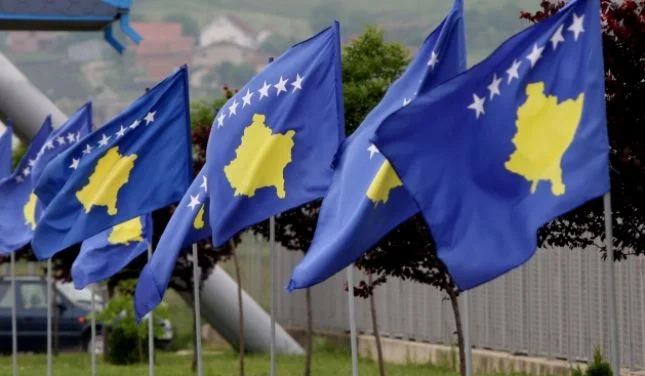
Kosovo for five years, only four recognitions
Periskopi(4 years ago)
(4 years ago)Kosovo, in the past five years, has accepted four international recognitions. Declared independent 14 years ago, Kosovo has been recognised by 117 states in total. Nearly half of them have known it in the year of their 2008 declaration of independence. Serbia, which with the Constitutions [...], is not yet recognised by Western Balkan countries yet
Declared independent 14 years ago, Kosovo has been recognised by 117 states in total.
Nearly half of them have known it in the year of their 2008 declaration of independence.
The Western Balkan countries still do not recognise Serbia, which with the Constitution continues to consider it part of itself, nor does Bosnia and Herzegovina.
European Union countries do not have the recognition of Greece, Romania, Spain, Slovakia and Cyprus.
This, despite the fact that the International Court of Justice found in 2010 that Kosovo's independence “does not conflict with international law”.
Disrecognition, in one way or another, hinders Kosovo from free movement to accession to various international organisations.
The Ministry of Foreign Affairs and Diaspora in Kosovo (MPJD) has not answered Radio Free Europe's question about the issue of lobby for recognition.
On this ministry's website, on the part of foreign policy, writes that MPJD <x0 needs strongly committed to lobby for international recognition on the part of member states of the United Nations organisation, in order to strengthen Kosovo's international position and establish diplomatic relations with most UN member states”.
The latest recognition Kosovo has received has been from the state of Israel on February 1st, 2021. This recognition has been part of an agreement with Serbia for normalising economic relations, signed in Washington on September 4th, 2020, in the presence of then-US President Donald Trump.
Before Israel, for nearly three years, Kosovo has not been recognised by any country.
Moreover, she has faced Serbia's campaign of recognition. Authorities in Serbia have said they have managed to convince some countries to attract Kosovo recognitions among them: Suriname, Burundi, Liberia, Solomon Islands, Madagascar, Togo, Central Republic of Africa, Ghana, Sierra Leone, and so forth. Kosovo authorities, however, have not confirmed any recognition.
Part of the Washington Agreement has also been a year-long mortorium on Serbia's campaign for Kosovo's recognition, as well as a one-year rhetoric on Kosovo's efforts to join international organisations.
The books have expired in September last year, and it is not clear whether Serbia has resumed its campaign. Also, it has not become known that Kosovo has applied for membership in any international foreign organisation.
Spahiu: MPJD has remained
Avni Spahiu, who has served as Kosovo's ambassador to the United States and Turkey, says the MPJD should be activated and secure new recognition for Kosovo, which would empower its international subjectivity.
“In the past, the Foreign Ministry has had a concrete programme on how to approach the country's recognition requirements, but I think there is a stagnation on the proper engagement of the Ministry of Foreign Affairs and Diasporas. Unfortunately, there is a” neglect, Spahiu says of Radio Free Europe.
According to him, the focus should be on the five European Union countries that do not yet recognise Kosovo.
GLPS: Diplomacy without strategy
Lilica Agosolli, researcher in the Group for Political and Jurydic Studies (GLPS), says Kosovo lacks the strategy for securing new recognitions.
“It is urgent to compile a clear pro-active strategy on the part of the MPJD in Kosovo. It must be worked on organisations, official visits and summits to non-recognition countries, with the aim of informing the state of Kosovo”.
“The Ministry of Foreign Affairs and Diaspora, said very clearly, has much work to do on the issue of recognising the legitimacy of the state of Kosovo”, Agusholl says of Radio Free Europe.
Even according to her, Kosovo should have intensive lobbies in the five EU non-recognising countries.
Kosovo seeks mutual recognition with Serbia
Kosovo, since 2011, has been engaged in a dialogue on normalising relations with Serbia.
The dialogue is mediated by the European Union and supported by the United States.
Authorities in Kosovo say the process should end with mutual recognition.
However, the future of these talks is unclear. Current dialogue players, Kosovo Prime Minister Albin Kurti, and Serbia's president, Aleksandar Vuciq, have not met since July last year.
One of Serbia's biggest supporters in the international arena, Russia, undermines Kosovo's membership in the UN.
Kosovo is not yet a member of the European Union, the Council of Europe, the World Trade Organisation, the International Organisation of Criminal Police (INTERPOL) and others.
But during the 14 years of independence, it has been able to membership in several international organisations among them: The World Bank, the International Monetary Fund, the European Bank for Reconstruction and Development, the Olympic Committee, the European Football Federation and the World Football Federation.











