 4 hours ago
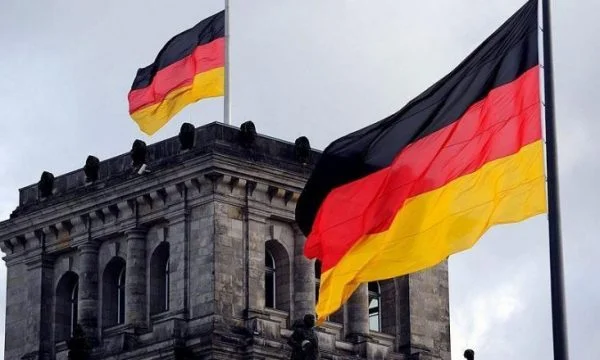
Germany shuts down Russia: The country can function without Russian gas
Periskopi(4 years ago)
(4 years ago)Germany could meet its energy-free Russian gas needs, its economy minister said Wednesday, after the government decided to ban the adoption of the controversial gas pipeline, known as North Stream 2, amid increasing tensions in Ukraine. The underwater pipeline takes Russian gas directly to Europe via Germany [...]
The underwater pipeline takes Russian gas directly to Europe via Germany and is complete, but it still doesn't work.
Asked on public radio whether Europe's largest economy could do without natural gas supplies from Russia, currently its biggest supplier, Economy Minister Robert Habeck replied: “
On Tuesday, Chancellor Olaf Schelz said the Russian pipeline's adoption would be suspended in response to President Vladimir Putin's decision to recognise two separatist regions of Ukraine.
The full deletion of Russian gas would leave a large hole in the market that would, in the first place, “create prices “, said the Green Party's Habeck.
However, Germany's energy requirements could be “compensed” with other energy sources and suppliers, including an accelerated push of renewable resources defined by the government, he said.
The North Stream pipeline 2, which was completed but was never approved by regulators, was set to increase Germany's dependence on gas from Russia to 70 percent of its total supplies.
What is North Stream 2 gas pipeline?
It is a natural gas pipeline, measuring 1,230 miles [1,230 km] long under the Baltic Sea, that runs from Russia to Germany's Baltic Coast.
It runs parallel to the previous “North Stream”, and estimates it will double its capacity to 110 billion feet in greenhouse gas annually.
That means the Russian gas company “Gazprom” can send gas to Europe's pipeline system without using existing pipelines running through Ukraine and Poland.
The new pipeline is filled with gas, but is pending approval by Germany and the European Commission.
The project was consistently supported by former Chancellor Angela Merkel, who left office late last year, as well as her successor Scholz dealt with the current crisis.
On 21 February, Putin signed the decree for recognition of the independence of separatist regions, Luhansk and Donjeck, regions controlled by pro-Russian separatists, who have fought against Ukrainian forces since 2014.
Following that decision, many Western countries, including the United States, imposed sanctions on Russia. / REL/











