 2 hours ago
Why would Donbas is in “Heart” of the Ukraine conflict
Periskopi(4 years ago)
(4 years ago)Even as Russian forces flock to the Ukrainian border, the spotlight this week has turned into a noisy, low-intensity struggle in eastern Ukraine and its possible role in preparing the stage for a broader conflict. During the last three days, there has been an increase in promotion [...]
Even as Russian forces flock to the Ukrainian border, the spotlight this week has turned into a noisy, low-intensity struggle in eastern Ukraine and its possible role in preparing the stage for a broader conflict.
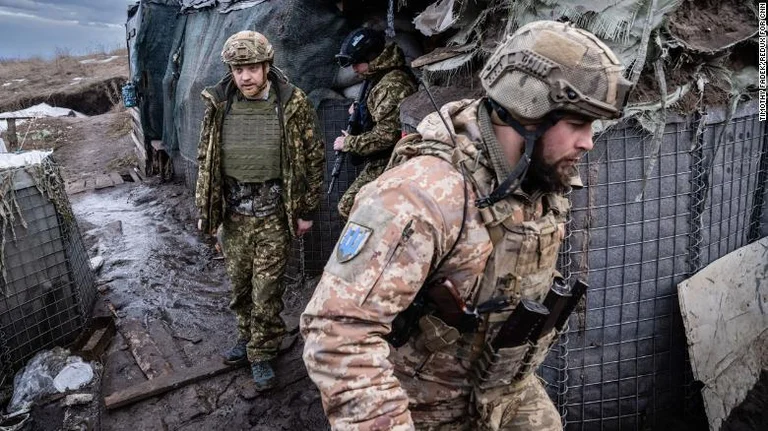
During the last three days, there has been an increase in grenades along some of the front lines. Ukrainians say grants from Russian-backed separatists are at the highest level in nearly three years, and separatists, in turn, claim the use of heavy arms by Ukrainian armed forces against civilian zones.
On Thursday, a kindergarten in Ukraine - controlled territory was hit less than five miles [5 km] from the front line. On Friday and Saturday, Ukrainian authorities reported a further increase in bombings by heavy weapons, which are prohibited within 50 kilometers of the front line by the Minsk Accords.
Ukrainian authorities say there were 60 ceasefire violations Thursday, many with heavy weapons.
Ukrainian officials repeatedly deny any such plan. On Friday, the head of Ukraine's National Security Council, Olexiy Danilov, said: “has a major risk for representatives of the Russian Federation who are there to provoke certain things. They can do things that have nothing to do with our army. “
Danilov did not give evidence, but added: “We cannot say exactly what they will do if they will blow up buses with people who are scheduled to evacuate to the Rostov region, or blow up the house we don't know.”
Danilov spoke only hours after the mysterious explosion in a vehicle belonging to a senior official in the town of Donetsk, near separatist headquarters.
The region's leader, Denis Pushil, called it an act of terrorism. But Ukrainian authorities and Western officials said it was an insurgent provocation probably created to justify a Russian intervention.
Having been relatively calm for most of this year, the “contact” has been much more active in recent days since the future of Ukraine's breakaway regions is confused in a much wider range of Russian complaints and requests.
What's the last story in Donba?
The war broke out in 2014 after the Russian-backed rebels occupied government buildings in cities and cities throughout eastern Ukraine. The intensive fighting left part of the eastern region of Donbass region, Luhansk and Donnetsk in the hands of Russian-backed separatists. Russia also annexed Crime from Ukraine in 2014, in a move that sparked global penalties.
The areas controlled by separatists in Donbas became known as the Luhansk People's Republic (LPR) and the Donetsk People's Republic (DPR). The Ukrainian government in Kiev states that both regions are actually occupied by Russia. The self-declared republics are not recognised by any government, including Russia. The Ukrainian government refuses to negotiate directly with either of the separatist republics.
Minsk Agreement II of 2015 led to a wavering ceasefire agreement, and the conflict was put into a static struggle along the line of contact that separates the Ukrainian government and separatist-controlled areas. Minsk's agreements (appointed under the capital of Belarus) prohibit heavy arms near the contact line.
The language about conflict is very politicised. The Ukrainian government calls separatist forces <x0). ” and “fractionants”. Russian media call separatist forces “milici” and claims they are locals who defend themselves against Kyiv's government.
More than 14,000 people have died in the Donba conflict since 2014. Ukraine says 1.5 million people have been forced to flee their homes, where most have stayed in areas of Donbas that remain under Ukraine's control and about 200,000 have moved to the vast Kiev region.
How did Putin start the conflict?
Separatists in Donba have had considerable support from Moscow. Russia claims there are no soldiers on the ground there, but US officials, NATO and Ukrainian say the Russian government supplies separatists, provides them with advisory and intelligence support and instills its officers in their ranks.
Moscow has also distributed hundreds of thousands of Russian passports to people in Donbas in recent years. Western officials and observers have accused Russian President Vladimir Putin of trying to prove facts on the ground by naturalising Ukrainians as Russian citizens, a de facto way to recognise the breakaway states. He also gives him a reason to intervene in Ukraine.
And this week, the Russian Parliament recommended that the Kremlin officially recognise parts of the LPR and the DPR as independent states, another escalation in rhetoric that American officials say is evidence that Putin has no intention of respecting the Minsk agreement.
Speaking Wednesday, Ukraine's Foreign Minister Dmytro Kuleba said Ukraine “will not stop until we release our territories in Donba, Crime, until Russia pays for all the damage it caused in Ukraine”.
Putin has long accused Ukraine of violating the rights of ethnic Russians and Russian-speaking Russians in Ukraine, and has said it was within Russia's rights to intervene militarily to protect them.
On Wednesday, Putin claimed that “genocide” was being conducted in Donbas. His claims are not new, but time is disturbing for Western policymakers who fear a repeat of a 2008 conflict in Georgia.
Calling genocide this week, Putin was echoing Russia's false claim that Georgia committed genocide against civilians in the separatist republic of South Ossetia in August 2008. During that brief conflict, Russia launched a massive military invasion that pushed deep into Georgian territory. / CNN











