 an hour ago
Crisis in Ukraine: Kosovo has enough grain for two months
Periskopi(4 years ago)
(4 years ago)The war launched yesterday morning between Russia and Ukraine is not expected to have significant effects on grain supply and price increases for this food product in Kosovo, as our country is not importative of this strategic product directly from these two countries, Kosovas Kos reports. While Kosovo is currently supplied [...]
The war launched yesterday morning between Russia and Ukraine is not expected to have significant effects on grain supply and price increases for this food product in Kosovo, as our country is not importative of this strategic product directly from these two countries, Kosovas Kos reports.
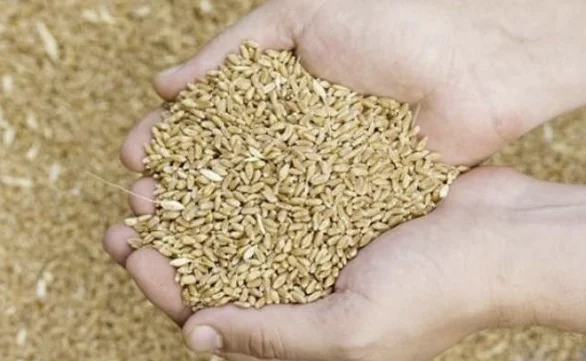
While Kosovo is currently supplied with wheat only for the next two months, the chairman of the Kosovo Milly Association Union Zejnullahu wants not to panic in the country.
Zejnullahu has asked all wheat processing in Kosovo not to exploit this situation in Ukraine for raising grain prices and miles in the country.
I don't think, (that there will be reflections), because we're not the importers of wheat from those two countries. Kosovo does not import wheat from Ukraine and Russia. Therefore, I don't believe there will be direct reflection, but it can reflect on whether these countries from us import, Hungary, Serbia and Bulgaria are affected by this situation. If demand were to increase in these three countries, there were certainly price movements. I've personally activated purchases today and no price moves until right now. So today there are no price hikes. There are sufficient amounts, although even in countries from us we import, there has been a turbulent (indistinct)”, he said.
The head of the association, Zejnullahu, showing that at the moment there are no price movements in Kosovo, has called on all wheat processing in Kosovo not to exploit the case of war in Russia and Ukraine for raising these prices.
There should be no movement and there should be no movement. I think it would have been unfair if we could use a situation like this for the price movement. So it would be unfair”, he claims.
According to Zejnullahu, Albania could be hit with a lack or increase in prices, as it is a direct importer from Russia's and Ukraine markets.
“Albania is a direct importer from Russia and Ukraine, there may have a direct impact on them, but we do not really have”, he stressed.
While Zejnullah stressed that there is no information about how much state reserves are, he added that Kosovo today is supplied with grain only for the next two months.
“In the two ministries of commerce and agriculture, as well as Prime Minister Kurti we made an urgent request two weeks ago to take action on the issue as well as on state reserves, for which we have little knowledge and information about how much they are. So the government has not been interested. How much is Kosovo currently supplied with wheat and flour? Based on the information I have, but based on the data of the biggest processors, we can have a quantity of wheat inside the country for the next two months”, he says.
According to the head of the association, today wheat prices range from 270 to 300 euros per tonne in Kosovo, while that flour of 400 to 450 euros per tonne. Ukraine and Russia are among the largest grain suppliers in the world.
On the other hand, the impact of war on global markets is expected to affect the rising price for certain products. War in Ukraine can have serious consequences for the European and the world economy.
Energy supplies with gas and oil would catch high prices, while much food uncertainty would be exacerbated due to the grain supply.
As war has begun between these two countries, international stock exchanges are associated with the movement. Economic analysts around the world have predicted the movement of stock exchanges in the event of a war between Ukraine and Russia, where, according to them, it will have immediate impact on the price of oil and gas.
Financial markets have been largely uneased by war alarms between Ukraine and Russia, but with the first crack, economists and central banks will review their interest rates.
However, the crisis has provided effects on the rise in oil and gas prices, as well as the main metals used for car production, electronic equipment, cooking vessels, and construction. In the short term, a Russia-Ukraine war, even limited, would spur a large increase in oil and gas prices, especially in Europe.
Russia brings about 30 percent of Europe's oil and 35 percent of its natural gas to Europe, which would be interrupted in the event of conflict.
The price of oil could go above $125 per barrel, while gas prices will increase even more. The next scenario where massive sanctions are imposed against Russia has a strong impact on prices.
If all European countries ban the purchase of Russian gas and oil, the impact on the price would be great, with oil increasing to 175 dollars per barrel and gas at 250 dollars. Food prices would also have increased.











