4 hours ago
Councilman KAS, Derek Chollet, prior to the visit to Kosovo and Serbia: Not a Good Time for Choice
Periskopi(4 years ago)
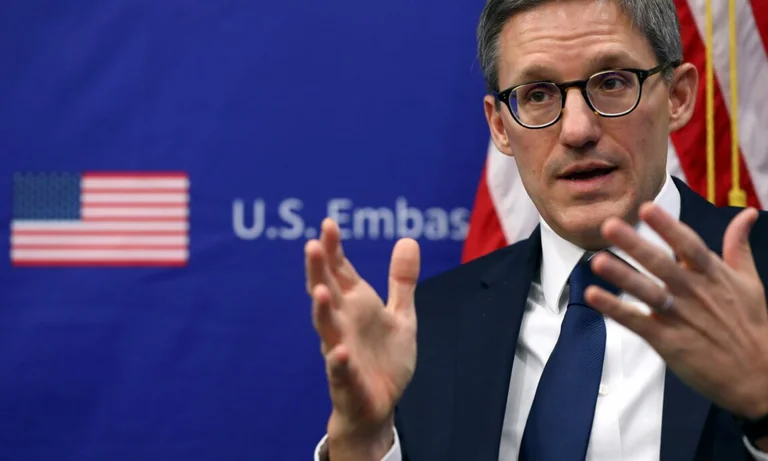
(4 years ago)State Department senior adviser Derek Chollet goes next week for a tour of the Western Balkans, with stops in Kosovo, Serbia, Northern Macedonia, Bosnia and Montenegro, among other things. On the eve of the visit, in an interview with the Chief of the Albanian Voice of America, Arben Gijo, Chollet says [...]
On the eve of the visit, in an interview for Albanian Voice of America Chief Arben Gijo, Chollet says local elections in municipalities in northern Kosovo should be postponed due to the security situation there.
The senior American official also emphasises that while normalising Kosovo-Serbia relations is essentially mutual recognition, Washington believes the current talks are a step towards this, for Kosovo to continue its integration path towards Europe.
Chooser for the function is at the level of Z. / State Secretary and performs special diplomatic missions commissioned by Secretary Blinken.
Voice of America: Mr. Chollet, this year the process of normalising relations between Kosovo and Serbia has intensified, and pressure on both countries has increased. At the same time, a escalation of tensions between the two sides has also been seen. In less than two weeks, Kosovo has planned special elections in the northern part of the country, which have been questioned due to security concerns. Should these choices be held? And if they're pushed, what message does that convey?
Derek Chollet: We have clearly expressed that we feel that it is not the right time for choice in view of the fragility of the situation right now. Only in the last 24 hours have we seen violent action, it's a very tense time, and we want to make sure that there are the right conditions for these choices to be free and honest. Kosovo is a multiethnic democracy, like the United States. We are proud of the work the United States has done over the past 20 years to help establish democracy in Kosovo. And we want to keep working to support and protect it. Therefore, we respectfully suggest that these elections be postponed until the right time comes, without causing more instability and violence.
Voice of America: Have you received any answers from Pristina in this regard?
Derek Chollet: We have repeatedly talked about this with our colleagues in Pristina. Our ambassador there Jeff Havenier has been very committed to this and I will go there next week this will be one of the main topics I will talk about with the president and prime minister, while working together to find a common denominator.
Voice of America: The main proposal being discussed between Belgrade and Pristina is the so-called Franco-German plan. Although no details have become widely known, which in itself is something mysterious, he does not foresee mutual recognition. Both sides have held talks for over 10 years, dealing with secondary issues and not with the main topic: recognition. What makes you think things will be better and more successful this time?
Derek Chollet: As you said, it has been a long way, but we strongly support this EU-led process. We have worked hard with both sides in support of the EU, to get where we are. As for talks that are under way and there will be a new round of talks in the coming weeks in Brussels. We strongly support this process. I don't want to go into detail, but one of the things I will talk about when I visit Pristina and then Belgrade will be how the United States can continue to support the European Union in its efforts to have successful negotiations.
Voice of America: The position of the United States, expressed by President Biden and Secretary of State Blinken, is for Kosovo and Serbia to recognise each other. In fact, this is what the Kosovo government requires, all these secondary issues, to be compared to resolving the key issue. What is the problem with this approach, and what are the next steps?
Derek Chollet: We want to see Kosovo continue on the road towards greater European integration and one of the messages that emerged from the very important summit between the Western Balkans and the EU in Tirana, the first of its kind to be held in the region, was a renewed commitment of the European Union to further this integration. We consider the EU-led talks between Serbia and Kosovo as a critical element in this regard. We are focused on normalisation based on mutual recognition. But we believe the talks can lead to this step and Kosovo can continue on its integration path towards Europe.
Voice of America: In recent weeks, the United States has used a harsh language towards the government in Pristina. The State Department has called Prime Minister Kurti's actions disappointing. A stance we have not seen before. What has changed?
Derek Chollet: It was a specific matter, that of applying the decision to the license plates. We had many conversations with the prime minister and others about the matter. The Secretary of State had a conversation with him. What I can say is that on November 23rd we had agreed to put that issue aside at the moment so that we could focus on what we believe is the most important issue we face today, and that is the status of negotiations mediated by the EU between Kosovo and Serbia for normalisation based on mutual recognition. This is something we will do everything we can to support, and that would enable Kosovo to walk this path towards European integration. Since conditions were not appropriate to fully enforce this tax regulation, our opinion was that it was important not to cause greater instability. We thought it would be a prudent move to set aside (the license issue) at the moment so that more time would be given to hold EU-led talks.
Voice of America: As you know, the United States has great influence in Kosovo and has even demanded that Washington be more involved. Will we see an increase in commitment by the United States regarding the negotiations between Kosovo and Serbia, though the EU leads the process?
Derek Chollet: Kosovo is an important partner of the United States. I know that Kosovo is a very pro-American country and the United States is a very pro-Kosovo country and we certainly have had a critical role in Kosovo's efforts to gain independence. Over the past few decades, Kosovo has been an excellent partner in terms of support for Ukraine, has even done more than its potential. She has also been an excellent partner of the United States, helping to accept Afghans who wanted to leave Afghanistan after the fall of the Afghan government. So we will continue to be very engaged with our colleagues in Pristina. We have regular communication with them here in Washington, at other meetings around the world, as well as visits like what I will do next week to Pristina.
Voice of America: And how do you respond to the citizens in Kosovo asking how it is possible that Serbia is “in two chairs” and is being treated differently from Western countries, from the United States. While Kosovo is being treated more severely, the pressure has increased on Kosovo, but not so much towards Serbia. What's your answer?
Derek Chollet: We don't see it like that. Kosovo is a very good friend of the United States, a close partner. We also have an important relationship with Serbia. We are trying to resolve these issues step by step and do everything we can to be a good partner for Kosovo and Serbia, while they work in the process led by the European Union, which we fully support, to achieve the best outcome, which we think would help both countries realise their full potential.
Voice of America: Do you have anything else to add?
Derek Chollet: I can't wait to return to Kosovo. My last visit there was with Ambassador Holbrooke many years ago. I look forward to seeing my friends and colleagues there and talking to the president and the prime minister again.