12 minutes ago
Joseph: The longer negotiations last, the worse it will be for Kosovo Serbs
Periskopi(4 years ago)
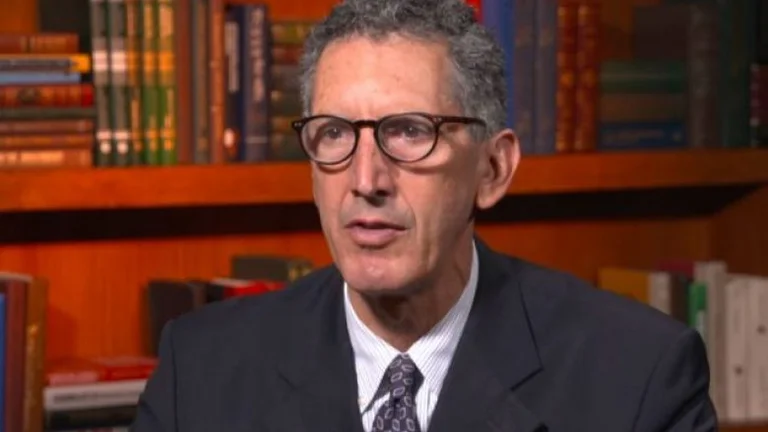
(4 years ago)Edward Joseph, legalist at the American University's Institute for Foreign Policy “Johns Hopkins” in Washington, in an interview with the Serbian medium N1, said that failure to resolve the Kosovo issue stops Serbia and the entire region on the road to progress, and that European countries do not recognise Kosovo, Serbia is given the advantage [...]
Asked what is the main problem hindering the region, which prevents the steady growth of countries, stability and their progress, Joseph says problems are not economic, that is, economic problems are in place of political ones.
This is about the unfinished breakup of Yugoslavia. The central question has always been and has become very directly what will happen to Serbs living outside Serbia. Milosevic had an answer to that, now we see that, unfortunately, Vuciq has a renewed answer. The political issue is what is unresolved, political tensions are unresolved. This impedes progress throughout the region. We have identified the key issue, which is the Kosovo issue. The reason why Kosovo is not because Serbia is a bigger country, nor because of Russia, but because the four countries Spain, Slovakia, Romania and Greece do not want to recognise Kosovo's independence. And we explained that, therefore, Serbia has the advantage over Kosovo and because of that primacy is not criticized and can continue to regrat and continue to manipulate the West. That's the essence of the” problem, estimates Joseph.
N1: When you say the problem, among other things, has created four EU nations that do not recognise Kosovo's independence. Kosovo gained its independence through armed conflict, right? With the help of NATO. We remember that the KLA was called a terrorist because they did. In that case, it is the right of EU members and other states and Serbia not to recognise the independence thus gained, right?
It's not like people can't have their own perspective. They can, but here's the point. Unfortunately, in Belgrade with President Vuciq, and the Serbian narrator in general, the Serbian Narrativa and the confession of Vucinqi and others assume that history began in 1999, i.e. Kosovo's “History began in 1999 when NATO bombed and how it was unfair that NATO bombed Serbia and that led to independence in 2008, and isn't that terrible?” History, the last story of Kosovo actually began 10 years before that in 1989, when Serbia, before the fall of Yugoslavia, prior to the fall of the Berlin Wall, while communism still existed, the SSR still existed. Then Serbia unilaterally stripped Kosovo of its autonomy. This is a widely accepted fact. Slobodan Milosevic pushed this decision within Pristina, and Serbia did so, and that was a trigger before the fall of the Berlin Wall, which signalled the end of Yugoslavia. Because what would Yugoslavia be? Serbia is the biggest country, the choice would be to remain in a subordinate position in relation to Serbia, not Yugoslavia. It was a turning point, in fact, when history began for Kosovo. And yes, the KLA has committed crimes and to be completely clear KLA responsible has given responsibility for those crimes”, the professor estimates.
He also added that it is “absolute” that the KLA leadership has given responsibility for crimes, adding that the only leader of all Yugoslav republics, including Serbia, who was forced to resign, was Hashim Thaci.
“Slobodan Milosevic was already defeated in elections. Hashim Thaci was elected to this position when he was forced to resign and go to the US-based court and the EU to answer for crimes committed mainly against Serbs. And this process is ongoing. This is reality. “No one ignored or said only crimes committed against Albanians are being taken into account, and not those committed against Serbs, but this is not accepted here, in the initiative that suggests Serbia is the victim of policies implemented by Belgrade”, he said.
Joseph also says he has recently been in Pristina and that he has met with Kosovo Serbs. He added that they have heard that they feel that they are not represented by leadership in Kosovo, i.m. The Serbian list, Serbian leadership and Belgrade.
“The focus of Belgrade, Washington, Brussels and Berlin's concern should be ensuring the status of Kosovo Serbs”. That's what this is about. But it didn't. The process, due to the primacy Serbia has, has nothing to do with what is good for Kosovo Serbs. And I repeat, the Kosovo Serbs I talked to do not share the view you have said. They think they're not represented. Of course, they do not feel that they have full rights and that they are fully secure in Kosovo. And that should be the focus. But instead we are focused on what Belgrade wants from these negotiations, not on what Kosovo Serbs need. The longer it lasts, the worse it will be for Kosovo Serbs”, delaron Joseph.
“I can give a concrete example of Kosovo's membership in the Council of Europe. For the fact that Serbia, Vice President Vuciq, is so persistent against any international recognition of Kosovo, Serbia is blocking further membership in the Council of Europe. Do you know that Kosovo's membership in the Council of Europe will immediately give Kosovo Serbs access to the European Court for Human Rights. So there will be a European institution calling Pristina and Albin Kurti or any other leaders to be held responsible for exercising their rights”, he adds.
N1: Is there no despair in that desire to exercise their rights must have the protection of the European Court of Human Rights? Shouldn't they already be able to have all those rights within the communities where they live?
I don't understand the question. There is no despair in this. I would put it differently why should Kosovo Serbs not have the same rights as EU citizens, which every citizen of the Council of Europe has? Same rights”.
N1: Why haven't they taken them yet?
Because it's an inadequate process. Albin Kurti and the government in Pristina must take responsibility. We can ask the same question even though Albanians in the Presevo Valley do not have the same rights”.
N1: What does it mean that they don't have their rights?
They believe their rights are not protected. And so we come to another reason why Serbia's stance in relation to Kosovo is not fair. Serbia's position is: Kosovo is part of Serbia. Our integrity and territorial sovereignty are threatened. And yet the fact is that from Milosevic until the time of President Vuciq, Kosovo Albanians have never been granted political rights in Serbia. The possibility of a Kosovo becoming Serbia's prime minister is not even theoretically possible, as happened in Montenegro with Dritan Abazovic, for example. The focus in Kosovo should be on improving the rights of Serbs in independent sovereign Kosovo, which is reality and fact. And the longer we focus on secondary issues and the dream of Kosovo's return to Serbia, the worse it will be for Kosovo Serbs”, Joseph said.
The Brussels agreement envisions various things, such as permits, personal documents, but also envisions something that has not yet been realised -- the Association of Serbian municipalities.
I want to say two things about this. First, it is very clear that this is Kosovo's obligation. This is repeated repeatedly by both American and European officials. Prime Minister Kurti's position is that he does not want to implement and reject it. But it is known that this is Kosovo's obligation. Second, it is not the only question - an agreement that has not been implemented. A large number of agreements since 2013 between Serbia and Kosovo have not been implemented. And finally, this issue is different. The issue of final status. The ongoing issue of the position of Kosovo Serbs cannot be solved if you have a neighbouring state, Serbia, which still claims the entire territory and, in addition, dominates and controls Serbian politics through the Serbian List. While you have a hostile Serbia, which opposes independence, you cannot have a final solution to the status of Kosovo Serbs in the country. No country would agree with that. What Kosovo has to do is agree with Kosovo Serbs for the Association of Serbian municipalities under the final” agreement, Joseph said.
N1: You basically say “know Kosovo and you'll get the rights”?
This is not what I said” You're putting words in my mouth”, the professor answers.
N1: Does that sound like it?
Maybe that's how it sounds, but I'm not saying so. Serbs still have rights in Kosovo, so that's not true. The OSCE makes a report every five years, and according to its latest five-year review report, shows there is an improvement in the human rights of Kosovo Serbs. So it's not true. Serbs have rights and rights should be respected. But since Serbia does not give up its hostile stance and continues to control Serbian politics in Kosovo, then the issue of final status will not be resolved”, Professor Edward Joseph for N1 has concluded.