3 hours ago
Interview: Dr. Hristov: Heart disease can be treated, “bypass” is one of the solutions
Periskopi(4 years ago)
(4 years ago)Of course, each of us has heard, at least once in his life, about heart disease, which affects human health and in case it can cause fatality. Coronary arteries at the initial stage have different symptoms, starting with chest pains, chest handshakes and panting. As the disease progresses, so [...]
Corone arteries can and is treatable. According to Dr. Nikola Hristov, a specialist in cardiovascular surgery at “Zhan Mitrev”, artery diseases can be treated with the help of operations called “bypass”.

“Our hospital, as standard procedure, uses the patient's own arteries, using the left radio artery from the left forearm and two internal Thracian/magare artery, left and right. This bypass operation is called complete arterial revassation“, points out Dr. Hristow in this interview, which you can read full below.
Interview:
What is coronary artery disease, and how does it appear?
Coronary artery disease is caused by atherosclerosis that affects the coronary arteries and leads to narrowing their river or, in more serious cases, leads to a total deadlock. The initial stage of the disease manifests itself with chest pain, chest handshake, gasp, and advanced stages of disease, the impasse leads to a heart attack, which manifests itself with intense pain and arror and can result in fatal consequences because of a heart function.
What are possible solutions?
Treatment of coronary arteries in earlier stages of the disease consists of preventive measures and medical treatment. In the most advanced stages of the disease, however, there is a need to take more aggressive measures to prevent disease progress and its treatment from showing heart attack and possible fatal outcome. Under certain circumstances and at an early stage of the disease, the rate of the coronary artery is used, which is an invasive procedure of placing the stenti in the coronary artery to open up narrowness or impasse. Coronary fighting is especially important in the acute Miocard heart attack, opening the blocked coronary artery that has led to a heart attack and thus preventing the most serious complications from a heart attack.

When coronary disease affects two or more coronary arteries, it is called a difune coronary disease. In that case, the only choice of treatment is with the help of the operating treatment of coronary disease, or so-called “byps” of the heart. Bypass surgery involves bypassing the sick part of the coronary artery narrow or blocked. Bypass surgery is used by the patient himself, from the left or right foot, which is placed in the heart, from the aorta to the heart, and is called the aortho-conronar Bypass. These vinoous vessels have a limited life span, after several years they're usually blocked, so we have to re-opposit to place new aorto-coronal bypass.

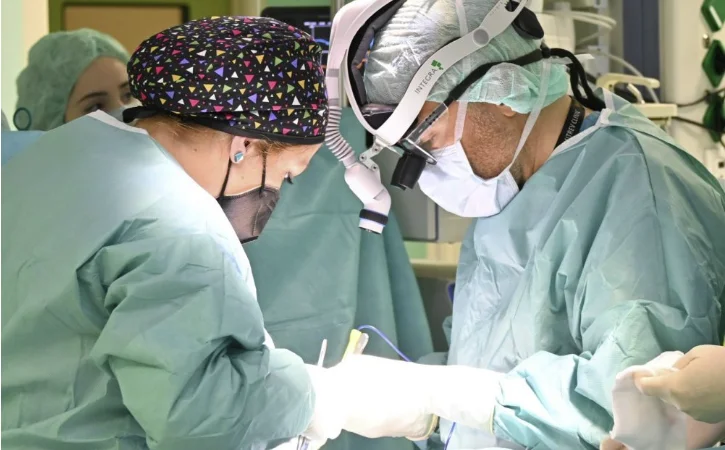
Our hospital, as standard procedure, uses the patient's own arteries, using the left radio artery from the left forearm and two internal Thracian/magare artery, left and right. This bypass operation is called complete arterial revasization (photo 1 and 2). It's technically harder to carry out, but the advantages are multiple. The biggest advantage is the fact that bridges or anasons made using the patient's own arteries are much longer-term/are permanent.

It has been scientifically proven that during the use of the Thracian/left and right artery, even after 15 years to more than 95% of patients, arteries remain functional, thus avoiding the need for reopertion. A second advantage is that I avoid manipulation of the patient's ascendent aorta, which can also be affected by atherosclerosis, thus avoiding complications such as the appearance of a heart attack. Third, the veins of the legs are preserved for their possible use in the event of the promemic appearance of the leg arteries, for operation by the back of the feet. It also reduces the number of operating wounds, avoids surgical cutting in the leg, which can cause problems with healing and the appearance of possible infections.

The complete revassation of arteries is a standard operating procedure in our hospital. For more detailed information on the procedure, you can contact our cardiovascular surgeons via email or book your consultant at 02 3091 484.