11 minutes ago
Financial Times: Three scenarios for Russian nuclear weapons use
Periskopi(4 years ago)
(4 years ago)In deciphering Vladimir Putin's intentions, under the shadow of publications for Russian nuclear weapons movement, the Financial Times tries to predict the three scenarios of how Moscow can use nuclear weapons. As the Financial Times points out in its analysis, “this is the world's biggest nuclear threat since the Cuban missile crisis [...]
As the Financial Times points out in its analysis, “this is the world's biggest nuclear threat since the Cuban missile crisis in 1962 “, recalling statements by Putin's loyal soldier Ramzan Cadyrov, that Russia should consider using nuclear weapons in Ukraine.
For his part, Kremlin spokesman Dmitry Peskov responded that “has no other consideration” besides the use of nuclear weapons based on Russian military doctrine, which allows for their deployment in case Russia receives a blow or is in danger of the state.
At the moment, Western officials and military analysts see Putin's risk of developing nuclear weapons as low, though they acknowledge it is increasing as Russian armed forces strike and retreat to southeastern Ukraine.
US is looking into answers if Putin uses nuclear weapons
Tactical and strategic nuclear weapons: their differences, as the Financial Times reminds us, the Cuban missile crisis involved nuclear weapons “Rugic” that are powerful enough to destroy cities thousands of miles away from the battlefield.
On the contrary, in the case of Ukraine, until now literature has to do with smaller nuclear weapons, the so-called “tactic”>. The nuclear weapons of this class are designed to be used in the battlefield to destroy specific targets in specific areas.
However, they are still more powerful than the US atom bomb thrown at Hiroshima, which had a power equal to 20 kiloton dynamite. The so-called tactical weapons have a range of powers from 1 to 50 kiloton dynamite to destroy areas up to two square miles ,”, the former British Armed Forces chief explained to the BBC.
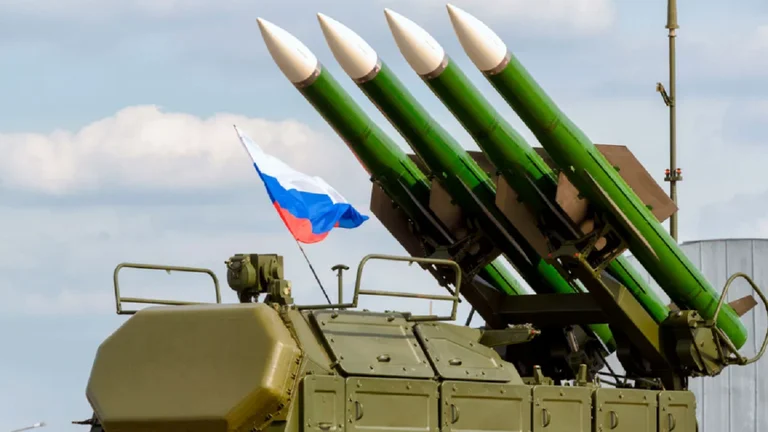
It is estimated that Russia has in its arsenal about 2,000 such nuclear tactical weapons that could be <x0-capen” in different systems, such as the Calibr missile or the Iscarnder missiles, and could be released from land or sea.
Stage One Which analysts have developed for the use of nuclear tactical weapons is in a sense a victimless demonstration. It may be, writes the Financial Times in their analysis, an underground explosion or the Black Sea at a large height over Ukraine or some uninhabited area like Fedons.
The electromagnetic pulse from such a shock would be “burning” all vulnerable electrical devices, while radioactive fall, though initially high, would decrease to 1% within the first 48 hours. However, radioactive dust that will be placed in the first 24 hours poses an extreme biological danger, while winds can carry radioactive particles in many parts of the world.
According to analysts, even such a blow could cause an escalation and increase the risks of a Russian attack in a large city.
Stage two: Hit a Military Target
The second scenario includes a blow to a Ukrainian military target in a key infrastructure, for example. a missile attack at the Zaporizina nuclear power plant. The question of whether and to what extent this would be beneficial remains open. Ukrainian forces, according to the FT, are widely distributed, and American studies have shown that a warhead of kilotons would have to be blown up within 100 yards of an armored vehicle to cause serious damage.
Some analysts argue that it would make no sense for Russia to crack down on military targets located in areas Moscow considers its own, because the Russian army, whose morals are already low, would also be exposed to radioactive waste.
Stage Three: Attack on NATO Member States
The third scenario, which is even the most extreme and most influential, would be a nuclear attack on a NATO member state, including the US, a suggestion Russian groups have made, which argue Russia should show that it was serious when threatening with a nuclear attack.
The Western world's response in this case, in an attack on a NATO member state, is difficult to predict. Article 5 of the NATO Charter, which envisions a collective response from other member states, would be put into effect and Russia would risk a comprehensive nuclear response from the US.
Last month, American National Security Adviser Jake Sullivan said any Russian nuclear attack would have “catastrophic consequences” without elaborating, adding that Washington had informed Moscow in private discussions on the Western response.
Sunday, Secretary General NATO, Jens Stoltenberg warned of “severe consequences for Russia, which, according to former CIA Director David Petraeus, could include a conventional military attack that would destroy the Black Fleet.