4 minutes ago
Weber: Continued dialogue hinges on unlocking European perspective
Periskopi(4 years ago)
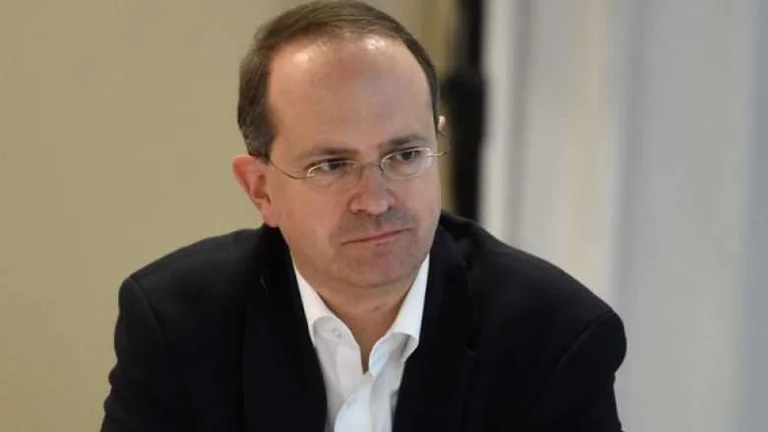
(4 years ago)The unblocking of the Western Balkan countries' perspective for membership in the European Union is a prerequisite for the revival of the Kosovo-Serbia dialogue process, says in an interview for Free Radio Bdo Weber, expert for the Balkans and senior associate of the Council for Democratic Policy in Berlin. According to him, this unblock must occur, [...]
Radio Free Europe: Mr. Weber, diplomatic sources in Brussels have said that in late January and early February, the European Union's Special Envoy for Dialogue Miroslav Lajcak will visit Kosovo and Serbia, within efforts to organise new dialogue meetings. Those sources have not denied that at several meetings in Pristina and Belgrade, Lajcak may be accompanied by US envoy for the Western Balkans Gabriel Escobar. Can the eventual arrival of Lajcak and Escobar create another dynamic for continuing dialogue between Kosovo and Serbia?
Bodo Weber: In general, I see this as an attempt to revive negotiations, which have not moved from the sticking point since last year, despite the government's (US President Joe) Biden's coming to power. But I'm pretty skeptical and I don't think they'll succeed. We have seen last year that strengthened commitment is not the result.
Meanwhile, this year, I'm afraid we have the same situation. Simply, certain preconditions are lacking to achieve to something serious, which is necessary now and several years, and is at last the resumption of comprehensive agreement talks. There are at least two preconditions. First, it must be achieved to unlock the perspective of Western Balkan countries for membership in the European Union, because this is the important precondition for the EU to have any influence in Serbia, in the sense of a final agreement, which, as all of them have it, should ultimately contain the recognition of Kosovo by Serbia.
The second precondition, which we have not yet achieved, has to do with this unblocking, which must occur between the German government, which is engaged in the revival of the French enlargement policy and president, Macron, who has been the biggest inhibitor of the prospect of membership. When this precondition is fulfilled, then it must be achieved to something similar, which Mr. Lajcak and Escobar are trying to do at the end of this month. This is kind of a start-up (of the talks), but I think this relaunching would have to come from the highest level of the European Union and the US, either way from Berlin or Washington.
Whether it will be at the level of presidents and Chancellors or perhaps enough at the level of foreign affairs ministers, this issue is less important. However, this would have to be done at the highest level.
So, as a conclusion, these warned visits I see as the attempt to move dialogue from the point of impasse, this dialogue that didn't lead anywhere last year, but that I don't see any preconditions here for any fruit.
Radio Free Europe: Kosovo Prime Minister Albin Kurti, and Serbia's president, Aleksandar Vuciq, have not expressed any particular will for continuing dialogue. Why do you think that this will is lacking, and do you think they can change attitudes?
Bodo Weber: It is clear from President Vuciq in Belgrade that in the last half-decade, he experienced going too far, although the previous year failed to push the dangerous idea for the exchange of territories, which was contrary to the spirit, principles and goals of political dialogue. He has seen that there is currently no political pressure from the West to continue where dialogue had started and where from the very beginning it was clear that it must end, therefore, with the establishment of bilateral relations and the acceptance of the reality that Kosovo is independent, that it will not return to the framework of Serbia and to Kosovo's formal accession. So he costs it to keep pushing it.
As for Chief Prime Minister Kurti and Pristina, they have similarly experienced that the negativeity of former negotiating leaders from the European Union and the US, in the episode of exchange of territories and are now more careful and want to have clear signals that there will be serious negotiations and that they will be serious about the Kosovo status issue.
Something like this has not been or even had during the past year, unfortunately, on one side because of the entry into power and the movement of politics by the Benden administration and, on the old side, because of the invisibility of the European Union that connects with the removal of the Merkel government (German Angela).
So, until this lasts, until the situation is clarified and we don't see the dialogue resume, it's clear that the Pristina side and the Government of Kosovo will withdraw to its principled positions, even there are some elements of the dogmatic positions of Kosovo's sovereignty. Also, some unilateral actions will be taken, as we have seen in the license case, or as we see these days in order for the issue of Kosovo Serbs to participate in the elections (of Serbia), in the sense whether it will be like the referendum held last week or holding Serbia's general elections in April.
Radio Free Europe: Do you expect Escobar and Lajcak will consider the issue of holding parliamentary elections and expecting Serbia as well as Kosovo on April 3rd? What can be expected?
Bodo Weber: I'm waiting for this. I'm hearing this will be one of the themes, beyond the general subject of dialogue and negotiations. We have seen QUINT's attempts to convince Government in Pristina last week, prior to holding the referendum in Serbia, they failed. So I'm not sure or doubt they will succeed in this political context, in which they will achieve hands in terms of the overall influence of the European Union, the United States and the West.
Their role is to push political dialogue again seriously. They will be in trouble because they have nothing to offer or to persuade Pristina's side, so that it can return to a serious path again, as it has been at the beginning of political dialogue, and since this context, the government of Pristina, whose approach and attitudes are already known to be inclined for any compromise solution.
Radio Free Europe: We saw last year, but even now there are tense reports between Kosovo and Serbia. Who does this situation meet with tense reports, Vuchiqi or Kurti?
Bodo Weber: It remains a question of which one is most convenient. I think they're a mirror of the situation they're in, just as in last year regarding negotiations and dialogue -- of a transitional phase, in which it's not possible to make the move forward.
So, in a sense, tensions are the natural consequence of the transitional situation, in which European Union and US negotiators are trying to pretend that there are negotiations or that the end is to simulate them. Everyone is aware that there is no real negotiation, and there cannot be. Hence, there is a natural consequence of constant tension. On the other hand, the character of Kosovo's current government should be taken into account with Prime Minister Kurti at the helm and Mrs (Vjosa) Osmani as president. We are looking for the first time that the Government of Kosovo and the top officials who are participating in negotiations are representing a much more principled political position on negotiations, combined with some elements of the dogmatic policy, which elements are well known on the side of the current government and the prime minister.
On the other hand, I would say that there is general policy and the regime of President Vucic, which consistently relies on “ ” or “interface” and on the ongoing invention of crises, tensions and various internal and external enemies. However, these continued tensions -- which ultimately do not lead to any major conflict -- fully counter the character of the regime in Serbia.
Meanwhile, on Pristina's side last year, we have seen Kosovo being accused of some analysts and opposition, of tensions that have been raised over the license plates, that this issue has instrumental functions for raising tensions, looking towards the ascohospitable local elections. Admittedly, that policy of raising tensions has not been very successful, given the results of those elections. But, anyway, I would say that the tensions most convene the character of the regime in Serbia.
Radio Free Europe: Does this even mean that there are choices in April?
Bodo Weber: Of course, even in this context, it does. Although, in some way, since Vuciq is in power in Serbia, it seems that we constantly have some early elections. Nearly no year has passed without an election year, and this remains within the framework of the mission of this regime, “the ongoing <x1-second approach, the mobilization of citizens. So this time again, it reverses the Vuciqi regime, in the context of upcoming elections, although it seems that it seems to be a little bit more nervous than the past years, in light of civic protests regarding Rio Tint and a certain kind of increased the reputation of the opposition and its participation in the elections.
Radio Free Europe: Mr. Weber, to what extent can the United States sanctions push politicians to approach problems that almost every country is currently facing?
Bodo Weber: In my opinion, this is highly controversial, although these sanctions were surprising, which at the end of last year have been imposed on Serbia against a part of Kosovo-origin organised crime, especially from the north and which is linked to the Vuciqi regime.
We have two issues here. The first issue is general, of the extent and effect of sanctions. This is a long topic and discussion in the West, in the context of international politics. Meanwhile, the second issue, which is much more important to me, is what the US and the Benden administration are willing to achieve with these sanctions. The question is whether those sanctions are parts built on a clearly defined policy of the Western Balkans in concrete context, towards Serbia and the Vuciki regime, or in the context of the Kosovo-Serbia dialogue.
I must admit that so far I am not seeing a clearly defined policy of the Biden administration towards the Western Balkans. I can't identify what these measures serve to impose sanctions like we've seen these in Serbia or the new ones that were deployed in Bosnia and BiH and whether they are based and embedded in a clear and defined policy, let alone in a strategic policy.