36 minutes ago
Report: Yugoslavia's breakup closes where it started in Kosovo
Periskopi(4 years ago)
(4 years ago)University-advanced International Studies School “John Hopkins” and Centre “Woodrow Wilson”, one of America's prestigious academic institutions, has released the <x4 report today. > From the crisis to the convergence ) strategy for fighting the Balkan instability to its” source. This report, the authors of which are experts from several countries, is said to be [...]
In this report, authors who are experts from several countries, it is said that the convergence strategy, the gradual approach of opposing views and opinions respectively, is a guide that should be used in resolving the ten-year dispute between Kosovo and Serbia, and in the long-term plan such an approach would contribute to the stabilisation of the entire Western Balkans.
The report offers a strategy for a turning point not only in terms of, as it estimates, the disturbing deterioration of the situation in the Balkans, but also in the growing Russian and Chinese influence in the region.
“Basically of strategy is a clear argument: Yugoslavia's three-decade break-up should end where it started in Kosovo. That is also true of the ongoing crisis in Bosnia and Herzegovina. US sanctions imposed in early January, even if they extend to a wider range of corrupt figures in the country, will not solve paralysis for decades and unbearable in Bosnia”, the report says.
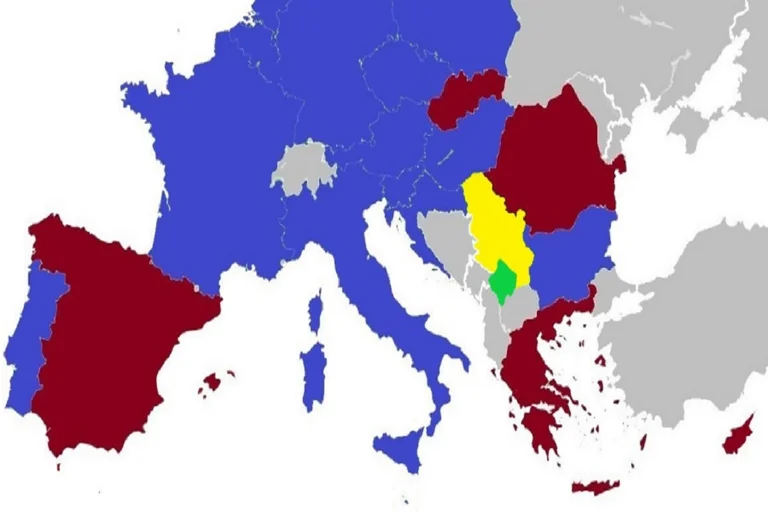
Further, recognition of Kosovo's independence by four NATO members, who have not yet done so -- Spain, Slovakia, Romania and Greece -- would contribute to the transformation of dialogue, which is estimated to be dying, as well as the entire region, including Bosnia and Herzegovina.
“To convince those four NATO member states, as well as the fifth, Cyprus, which is a member of the European Union but not of the Alliance, is not easy. It will take a determined effort by the administration of US President Joe Biden, together with key allies, to convince countries that do not recognise Kosovo's independence to change their stance. Policymakers across the Atlantic will invest in this effort only if they are convinced of the necessity, broad benefits and sustainability of such an approach, and if they accept that their actual approach will not function”, the report says.
Instead of putting pressure on parties that are unwilling to recognise Kosovo, the report advocates a strategy of bringing together or converting the positions of those countries with an approach of a majority protecting the European Union and the North Atlantic Alliance. This can be achieved if the West determines a common position for Kosovo. This thesis is based on the claim that progress in the Balkans depends on whether Serbia will accept the establishment of order in the region based on Western values.
The “in Serbia's case depends on the report of states that have not recognised Kosovo on this issue. In short, European countries that have not done so, as well as what they have done (recognised Kosovo) are the key to regional stability”, said further in the report.
As one of the potentially successful methods is the identification and implementation of procedures that, as warned, do not represent recognition of independence, but reduce Serbia's influence and signal Belgrade and Pristina for a possible change of attitudes of countries that do not recognise Kosovo.
Here, it is mostly alluded to co-operation and dialogue with Greece, one of the five EU member states, which is considered by the international community as the first to give up the current principled stance regarding the non-recognition of Kosovo independence.
Also, part of the report's attention has focused on Kosovo's progress towards NATO entry.
“What would contribute to lowering the number of states whose recognition is needed is four Ssh. That leaves Cyprus with a country that will at least be determined to take a step towards recognising Kosovo's independence. At the same time, the United Kingdom (NATO member) and one of the most important supporters of Kosovo's independence is introduced. At the same time, a strong and convincing message of Russian and Serbian adventure is sent to the region”, the report said.
Also reportedly the administration of US President Biden should appoint a new diplomatic representative, as it was said, as special envoy for Kosovo recognition. Such an action, reportedly in the report, would be combined with a clear US warning to sanction any leaders in Albania or Kosovo promoting any kind of union between the two independent countries.
Explaining the role and importance of opening the road to Kosovo towards NATO, the authors say it would eliminate Serbia's current advantage over its neighbours and in relation to the US and the EU.
Instead, a balance would allow Belgrade and Pristina to negotiate a single solution to the dispute that would contribute to stabilisation: mutual recognition based on the Republic of Kosovo fully sovereign, unitary and functional, with full protection of the Kosovo Serb community. The benefits of such an agreement go beyond Kosovo. The more integrated the north of Kosovo is dominated by Serbs, the less feasible is any union of Kosovo and Albania or possible partition that is a permanent obstacle for Greater Albania and Greater Serbia”, the report's authors say.
This would make Kosovo, according to them, instead of a bastion used by Russia for destabilisation and China to expand its political influence, in a barrier to ethno-territorial aspirations and the national overthrows promoted by Moscow and Beijing.
The report also reportedly saw the advantages and possibilities of pursuing an insulting policy towards Kosovo, Belgrade's strategic calculations would change.
Russia's and China's “Veto to Kosovo at the UN Security Council will be of little value to what Belgrade considers the main political and security challenge. Vuciq's regime will no longer be able to carry out a campaign to attract recognitions of Kosovo's independence or to use Kosovo to advance the ideology of the Serbian world, or to avoid responsibility for the regime's attack on democratic rule”, the report said, with emphasis that Belgrade should not seek to recognise Kosovo's independence.
“Without considerable support from Moscow or Beijing on the issue that is most important for Belgrade, the regime there will fight to use a policy of bringing up attitudes (convergence) into the internal plan and will fight to explain to citizens how it lost the advantage it had in the process between Kosovo and Serbia. The order the West is engaged in, which Belgrade has been stubborn and which it actively undermines, will finally be accepted universally. The precondition for implementing the Western strategy and implementing reforms in the region will be fulfilled”, the report said.
The authors believe such development could contribute to improving the situation in BiH.
It opens the way for new negotiations on the shortcomings of the Dayton Agreement Bosnia and Herzegovina is held hostage with. As Bosnian Serbs accept the Western-proposed solutions, Croatian separatism and the Bosnian demographic opportunism will disappear. Of course, resolving the Kosovo issue does not close all painful dilemmas in Bosnia but meets the precondition for this Serbian acceptance of the Bosnian state's life expectancy and sustainability, the report notes.
It is also believed that if the four NATO members recognise Kosovo it would enable Serbs and Montenegrins to find a way to co-exist in Western-oriented Montenegro.
The growing transatlantic policy of harmonising attitudes for Kosovo will encourage a common approach to Bulgaria's destructive and unilateral blockade of opening negotiations with the EU for northern Macedonia and Albania. Instead of solving certain crises across the region, convergence focuses directly on Serbia's main source of instability to Western order and offers means to overcome it. Instead of calling for EU enlargement and NATO membership, the report sees differences between them and points the way to two goals”, the report says.
The report's authors say that the harmonisation policy, which offers, eliminates, as they say, the main excuse for skeptics for EU enlargement policy ?
“The convergence strategy can start quickly, with moves not posing recognition of Kosovo's independence, but can offer a quick incentive for dialogue between Serbia and Kosovo, which the EU brokers”, says the document, which authors see as a kind of fulfillment of transatlantic goals, including efforts to prevent Russian aggression in Ukraine.
Russian President Vladimir Putin has in some cases been called in the case of Kosovo, using it as justification and rationalisation for annexing the Crime from Moscow. The West's common stance on Kosovo rejects the unfounded claim for Ukraine and deters BiH's destabilisation from Russia. The Kremlin's election in BiH depends on Belgrade and not vice versa”, the text says, stressing that Western influence with implementation of the convergence strategy would replace, as reportedly the Western poor demands on the Vuciq regime.
At the same time, authors consider convergence a kind of antidote to China's economic and political influence in the region.
Beijing's strategic partnership with Belgrade in part links Kosovo. The EU's unified position on Kosovo restores the bloc's substantial advantage over China”, the report said.
The authors conclude that led by US President Joe Biden's administration, convergence strengthens Brussels, enabling it to The EU will finally play its role in ending the three-decade Yugoslav drama.