13 minutes ago
Population evacuation is destroying Western Balkans
Periskopi(4 years ago)
(4 years ago)Neither country in the Balkans has been spared from a dangerous combination of migration and population aging. Demographically, the small nation of northern Macedonia has suffered very little. The Balkan nation has lost a quarter of its population since the early 1990s. Last census [...]
By Cristian Gherasim
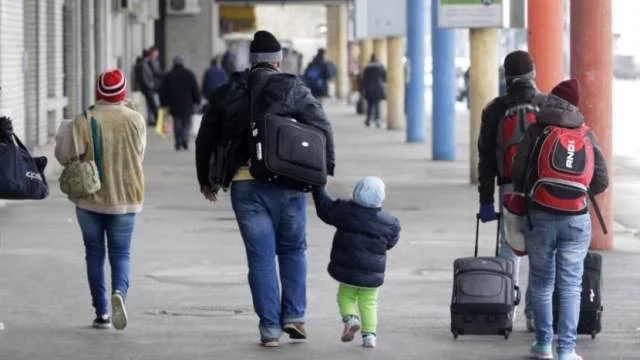
No country in the Balkans has been spared from a dangerous combination of migration and population aging. Demographically, the small nation of northern Macedonia has suffered very little. The Balkan nation has lost a quarter of its population since the early 1990s.
The last census conducted late last year shows a population decline of 10 percent in just the last 2 decades. Nearly 600,000 Macedonians were displaced abroad in decades after the country's independence. In neighboring Albania the situation is even more serious.
1.7 million people, or 37 percent of the population, have left the country for the past three decades. According to the UN report on population prospects, the population of almost 3 million is expected to drop below 1 million by the end of this century.
The two countries hope that a quick membership in the European Union will ensure a better future, and change the migration model. Northern Macedonia's accession talks in the union were blocked in the past by Greece because of a long conflict over the name of this state.
Currently, progress towards the EU of Northern Macedonia and Albania has been blocked because of Bulgaria's veto. Another Balkan country severely affected by the population decline is Serbia. According to World Bank data, the country of nearly 7 million people is expected to have 1 million fewer inhabitants by 2050.
Serbian authorities themselves say this country is losing a city every year. Hundreds of thousands of Serbs fled the country after the former Yugoslavia's breakup wars in the 1990s. The Serbian economy was deeply influenced even after sanctions preceding the 1999 NATO bombings to end the bloody conflict in Kosovo.
According to an O analysis The ECD on the willingness of the Serbian health system to fight the Pandemia of Cavid-19, data shows that over 10,000 doctors fled Serbia to Western Europe over the past 20 years, and the health system currently lacks 3,500 doctors and 8,000 nurses.
Some of the reasons why the Balkan region has had an migration at such high levels over the past few decades can be traced to the breakup of the former Yugoslavia, the civil wars and economic difficulties that followed.
Bosnia and Herzegovina is probably the most hit country in the region. Some studies claim that nearly half of the citizens born in this country no longer live there. Another outstanding example is Kosovo, which has lost 15.4 percent of its population between the years20075018.
Croatia has been a member of the European Union since 2013. Since then, more than a quarter of a million Croats have left the country, demanding jobs with better salaries abroad. The population of just over 4 million has contracted by almost 10 percent in a decade.
The Zagreb government is trying to change the situation and has recently promised diaspora Croats up to 26,000 euros if they return to their country and open a business. Greece is showing the same disturbing trends. According to the Greek statistical agency, between 201120s the country's population contracted by half a million.
The decline of the Greek population over the past decade has occurred due to several factors.
It is clear that the 2009 financial crisis played a big role, where many of them either moved abroad or hesitated to establish a family in Greece because of an uncertain future.
Aging plays a major role in accelerating population decline in the region. According to Eurostat's recent projections, by 2050, the average population age in Romania and Bulgaria is expected to grow by at least 8 years.
Statistics Institute data in Romania shows how rapidly the population has grown in recent years. Valcea County passed from 126 elderly citizens to 100 young people, 185 older for every 100 young people, within just 10 years.
An elderly population means lack of the workforce available but also increased government spending on pension schemes and health care. The cost of a declining number of young people in the Balkans is estimated by the Westminster Foundation for Democracy and the Institute for Development and Innovation.
Research shows that the Western Balkans region is losing billions of euros annually due to youth migration. To assess the economic consequences of this phenomenon, the study considers both education-related costs of 2.46 billion euros and possible losses in GDP growth due to the departure of young people from these countries.
It is estimated that Western Balkan countries lose because of youth migration of around3.08 billion euros annually in potential GDP growth and consumer decline. If this figure is added to spending on their education, then the total cost is about 5.5 billion euros a year.