an hour ago
Krasniqi: Government defends corporate interest, not citizens
Periskopi(4 years ago)
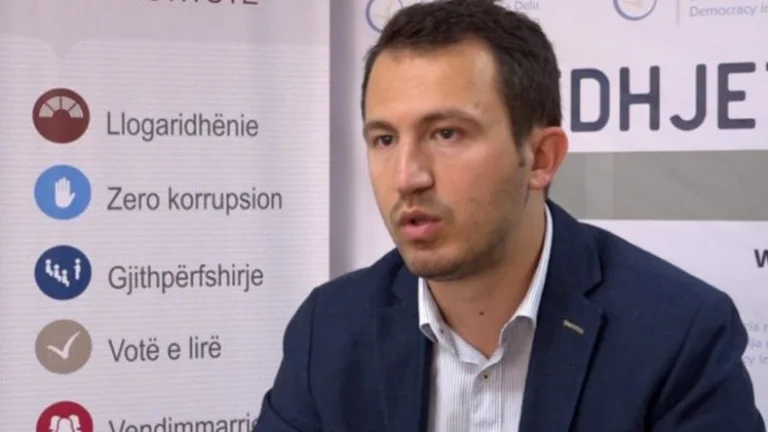
(4 years ago)Political Affairs Recognator Albert Krasniqi from Democracy Plus has criticised Kosovo Government for allowing electricity prices to rise, saying it comes from “sinkrini - KEDS\x1> Through a Facebook post, Krasniqi has said that “after the prime minister declares in the country that the current in Kosovo is too cheap, [...]
Through a Facebook post, Krasniqi has said that “as the prime minister declares in the country that the current in Kosovo is very cheap, the following day KED wants the ZRE to expensive electricity tariffs”.
The result of this sync - KEDS, today, peaks at the cost of electricity bill for 200 thousand families. This is the result of a Government that protects corporate interest instead of the interest of citizens”, Krasniqi wrote, sent in the Telegraph.
This is discrimination against those who have no alternative for heat during the winter. The extent to those who spend more would make sense only when alternatives to choice are offered. The alternatives offered as gas project were rejected”, he wrote.
The Union of Independent Trade Unions of Kosovo (BSPK) has reacted to the decision to raise Jmitt energy, saying the government has made urgent action by accepting the proposal for setting up the electricity price.
In the media communique, BSPK has reportedly been waiting with concern for KED's Z-led proposal The RRE for the expensive electricity.
And the opposition parties in the House, The PDK and LDK have rejected the establishment of the electricity price.
Kosovo Democrat League MP Besian Mustafa has said that the government's inactions related to the price of electricity would burden the citizen's wallet by 42 per cent.
The Democratic Party of Kosovo (PDK) has said it is one of the hardest strikes on citizens.
PDK chairmanship member Blerand Stavileci at a media conference has said the measures proposed by the Kosovo government do not coincide with the current family situation.
Energy Regulatory Office (ZRRE) reports that they are obliged by law to determine tariffs that reflect the cost of providing energy to consumers and to design tariffs that promote energy efficiency.
ZERE through an announcement has stressed that the bloc's tariff structure favours consumers to save energy, for which it has proposed two blocks for household consumers.