an hour ago
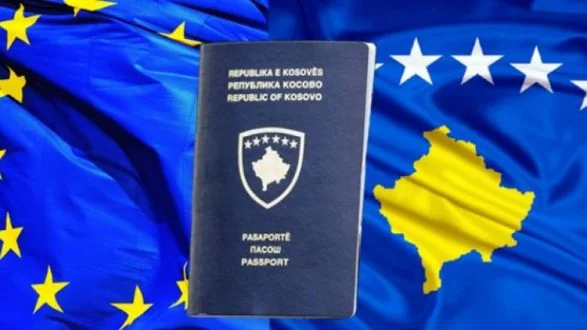
Kosovo alone without visa liberalisation in the Balkans ? Is the EU at risk of asylum seekers?
Periskopi(4 years ago)
(4 years ago)With the exception of Kosovo, for more than 12 years, all other countries in the Western Balkans enjoy visa liberalisation with the European Union. This enables their citizens to travel visa-free for a period in the Schengen area countries, which other than most EU countries included Switzerland, Iceland, Liechtenstein [...]
With the exception of Kosovo, for more than 12 years, all other countries in the Western Balkans enjoy visa liberalisation with the European Union. This enables their citizens to travel visa-free for a period in the Schengen area countries, which other than most EU countries included Switzerland, Iceland, Liechtenstein and Norway.
But during this period for several European Union member states, this liberalisation has presented a challenge after it has caused the arrival of a large number of citizens who have misused visa liberalisation to stay illegally in them to seek asylum without any basis or even to engage in criminal activities.
The experience of such examples even today is cited as a rationale for their scepticism on visa removal for Kosovo citizens, though Kosovo has met all conditions four years ago.
France has been among the most skeptical states in this regard. And, indeed, if the figures for requirements based on political housing (azil) are looked at, especially from Albania, France has been the biggest destination and this has constituted a burden to this country's administration. But there have been other countries with similar experiences.
When visas for Albania and Georgia have been liberalised, the Commission also said all conditions have been met. But after the removal of visas, we had many people who came to our countries, including criminals and extremists. This liberalization was misused and the number of false asylum seekers increased. A senior EU diplomat said a few days ago.
He has argued that sceptical countries now want Kosovo's “case first to be convinced that he is fully confident with authorities that there will be no problem, and then to liberalise visas”.
But, over time, according to EU experts and member states, with some of whom have spoken to Radio Free Europe, this problem has been significantly reduced. Although there are still a considerable number of unfounded asylum requirements and a stay of over 90 days in EU countries, which is a violation of law and misuse, especially by the citizens of Albania since 2014, this number has been in decline.
Albanians are no longer among the largest groups of unbased asylum seekers in EU countries. And Albania contributes on the other side to joint efforts with the EU to manage illegal migration.
Such a positive role for countries in the region, which has been a refugee home in 2015 and 2016, has been accepted by the EU Council in recent conclusions for countries in the enlargement process. The Council, on that occasion, has praised the level of Balkan countries' co-operation with the EU on migration control issues.
“As far as migration is concerned, Albania is the first country in the Western Balkans where the European border and coastal guard status agreement has entered into force. The EU's first joint operation with Frontex has proved successful. The total number of unfounded asylum demands has been significantly reduced, but this should be monitored closely by Albania's authorities, as well as the following”, EU ministers have said.
Although the number of unfounded asylum demands by Albanian citizens had been reduced annually, France remains the state with the largest percentage of Albanian citizens for asylum among EU states.
Since 2014, the number of asylum seekers from Bosnia and Herzegovina and Serbia has also steadily decreased. But even few who choose to do so have mostly moved to France.
In Serbia's case, the EU has underlined “the need for Serbia to fulfil obligations for adapting to EU visa policy”. This is a problem because citizens of countries whose EU entry is required can come to Serbia without visas and from there illegally head towards the EU. In the past, there have been many such cases for several countries from Asia for which Serbia had removed visas. The EU requires that countries in the region decide visas, as much as possible, for countries for which the EU itself has visa regimes.
Northern Macedonia has also been praised for its role in migration management. The Council welcomes the fact that the Republic of Northern Macedonia continues to play an active and constructive role in managing different waves of migrants by effectively co-operating with neighbouring countries and EU member states”.
Bosnia and Herzegovina may have the biggest migration challenge, but not because of its citizens going to the EU, but more because of pressure from immigrants from third countries who have come to this state and tend to enter the European Union. But, the EU, too, has praised this country for its role.
The Council welcomes the positive steps taken to improve migration management and co-ordination, and such efforts must continue” is said in the EU's recent conclusions since December and it has been required that this state ensure a proper functioning of the asylum system to meet the challenge of migration.
Although from time to time some EU states express concern when they see an increase in the number of asylum seekers, which occurs from one month to another, depending on the circumstances, at EU headquarters in Brussels, think that a given risk does not exist. For them more challenge is the arrival of refugees from third countries through Balkan countries than the risk of reaching citizens from this region.
One of the problems European experts cite is that there are also several shemas to grant citizenship to people from other countries who invest specific sums, and with those passports can travel visa-free on EU territory. The European Commission has consistently invited states that have visa liberalisation to give up such a practice.
In cases of increased risk for the EU or member states, mechanisms for temporary suspension of visa liberalisation were also adopted. But, in practice, this has not happened so far, although there has been a request from the Netherlands several years ago for this to happen for Albania. But the European Commission had not agreed that the existence of visa liberalisation for Albanian citizens poses significant risks to the EU.
Consumption mechanisms for visa liberalisation predict that they can be temporarily restored in the event of increased abuses, more than 50 percent increase, either through an unfair long-standing attitude, rejection of entry or unfounded asylum demands. Also, they can be restored if a state with visa liberalisation refuses the repatriation of those who have stayed illegally in EU countries.
Although there is a positive <x0nderend” and increased co-operation of Balkan countries, EU experts require continued attention because waves of migrants depend on various factors. And the huge reduction of their number from Balkan countries in 2020, taken as a reference year in recent EU reports, may have been partly due to pandemic.
But, at least no longer seen as a problem the lack of countries in the region to co-operate in preventing visa liberalisation abuses -- what they think in the EU -- has also helped exist in opportunities for liberalisation to also be suspended.