17 minutes ago
Kosovo has no real possibility of candidate status
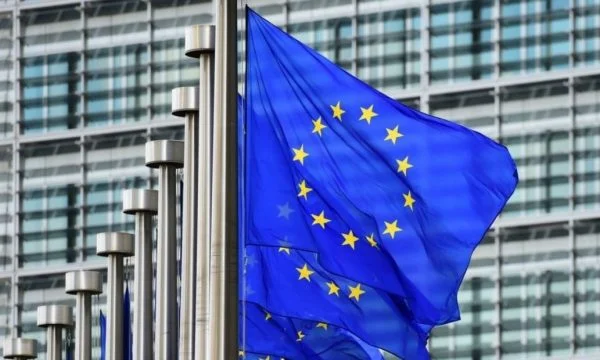
Periskopi(4 years ago)
(4 years ago)The Kosovo government plans this year to also submit formal application for membership to the European Union. This was said by Prime Minister Albin Kurti late last year, while the first Deputy Prime Minister, Besnik Bislim, has recently repeated it in a tweet after meeting with [the] chiefs of representatives....
It is not the first time Kosovo authorities have warned the EU application, but Kosovo has never taken this step so far.
This, according to diplomatic sources, because of the <x0killls of friends”, who have warned that such a request would not be likely to be passed to the Council because Kosovo is not recognised by all EU member states and the enlargement process at each step, is the process in which decisions deal with the consensus of all member states.
Thus, Kosovo continues to remain the only state of the Western Balkan region that has not formally requested EU membership, while the EU reiterates that “Kosovo has European perspective”.
This time in Brussels, they do not want to respond directly to specific questions about how the EU will act after Kosovo formally submits the application for membership. But sources in EU institutions say this is an issue belonging to Kosovo on the one hand, and EU member states on the other. Despite the reluctance to speak publicly, some co-ordinators of Radio Europe Free in Brussels have said that “see no real possibility that Kosovo's application for membership is transferred to Council”.
From the European Commission, the EU executive body that has a role to analyse and recommend the enlargement process, but not to make decisions, also did not want to answer the question of how they will act if Kosovo applies for membership.
In a response sent on behalf of the European Commission, Ana Pisonero, spokesperson for neighbourly and enlargement issues, has said:
Kosovo has a clear European perspective. The EU continues to support Kosovo to get closer to the EU, starting through the implementation of the EU-Kosovo Stabilisation and Association Agreement, which went into effect in 2016. Kosovo's European path depends, too, on normalising reports with Serbia”.
It has then added that the European Union's <x0th Treaty (Nen 49) is clear in terms of criteria and procedures for application to become a member of the EU, including the fact that the apps are subject to the Council's decision with unanimousness”.
As for the Kosovo status stance, this spokeswoman has reiterated that the European Commission is neutral”.
In the past EU spokesman for Foreign Affairs and Security Peter Stano had said that “Kosovo cannot apply because for the EU it is not a sovereign state because it has not been recognised by all states”, and later improved that “each can apply, but it is another issue how real that app would be to pass”.
But there are also diplomats in Brussels who say they understand Kosovo as well when it says it should apply in order to make more concrete what is called the “European perspective”, especially given the huge gap that has been created in this “European path” between Kosovo and all others in the region.
However, even those diplomats do not see it real in these circumstances to have any positive answers from the EU. As a cause, they cite very tough, and in some cases even aggressive, positions of some EU member states against any Kosovo treatment as a state on the part of European Union institutions.
Only the European Parliament in the reports treats Kosovo as a state, using the flag and not using asterisc and placing it in the name of Kosovo, and in the Parliament Resolution repeatedly calls on the five member states that have not recognised Kosovo to do so. But European Parliament resolutions are not binding for member states.
Some diplomats recall that Spain, even indicted the European Commission for an agreement with Kosovo at the European Court, arguing that “Kosovo is not a sovereign state”. However, Spain in this case had lost with the European Commission's admission of reasoning that there is competency that in some areas there are “agreements even with entities that are not sovereign states”.
In the case of Kosovo's application for EU membership, it will be much harder to overcome the veto of states that have not recognised, as those called “Copenhagen Criteria” name “states”.
“Each European state, which respects the values mentioned in Article 2 and is dedicated to promoting them, can apply for membership in the Union”, says in chapter 49 of the European Union Treaty, which in the event of enlargement are known as the “Copenhagen Criteries”.
In Kosovo's case, diplomats suspect that there are no formal conditions for obtaining candidate status, as Kosovo for the EU does not meet the criteria to be <x0-state”, because it is not recognised by five member states. And decisions on the Council on candidate status are unanimously adopted by all states.
Usually the application for membership by any country aimed at EU integration is handed over to the state, which has the rotating EU chairmanship. If Kosovo will do this during 2022, then it should either hand over France by the end of June, or Czechia, which takes over the rotating EU chairmanship in the second half of this year.
Then, that state consults with other member states, and if there is reconciliation, the Council gives the European Commission the duty to prepare the thought of whether the terms for candidate status have been met and the start of membership negotiations. After the Commission's opinion and the consent of the European Parliament, the Council decides on each step in the membership process.
The negotiating phase, which includes opening or closing specific chapters, is the phase of <x0-intergovernmental-government reports”. Therefore, even meetings where negotiations open or close, or close chapters or separate chapters of chapters, are called “Intergovernmental Conference”.
Some diplomats in Brussels cite the latest case with Northern Macedonia to describe how difficult it is to reach consensus in the enlargement process. A single member state, in this case, is Bulgaria, for whatever reason it will not consent to block the decision. Therefore, membership negotiations have not begun, although all other countries have agreed that all conditions have been met.
Who withdrew from the EU membership negotiations process?
Currently, there are only three candidate states which are formally negotiating for membership in the European Union.
Turkey, Montenegro and Serbia. Albania and Northern Macedonia have candidate status, with the decision to launch negotiations provided the EU negotiating framework is approved, but have not started negotiations.
Bosnia and Herzegovina has applied for membership, but the European Commission has not yet given a positive opinion on meeting the conditions for granting candidate status to this state.
Kosovo is the only country it is said to have “European perspective” that has not applied for membership. Iceland has been the only country, which itself, unitally, has given up the goal of becoming a member of the EU and has withdrawn from the membership negotiations process.
Norway has been the only European country to have completed membership negotiations, signed the Treaty for EU membership, but this has been rejected by its citizens in the referendum, so it has never become a member.
The UK is the only state to have left EU membership.
Morocco had also applied for EU membership, but this requirement was not considered with the reasoning that it did not meet the geographical criteria, so it is not the European “”.
The main criteria for becoming an EU member of a candidate country are divided into three groups: political, economic and administrative institutional. Those policies include ensuring the stability of democratic institutions, rule of law, human rights and protection of minorities. Economic criteria require that the state have functional market economies, ready to face competitive forces in the market. The administrative institutional criteria require that the relevant state have all structures established to implement common EU laws and obligations as an almighty member.
When the political decision is made to grant candidate status to a country, then it is analysed in detail how willing that state is to join the EU. And, depending on the level of meeting EU standards, the negotiation process is under way to membership. But now the EU, apart from the candidate country's readiness to become a member, has decided as a condition that the EU is ready to expand and accept new members.